Himalayan Herders
Overview
John Bishop and Naomi Bishop present a portrait a peculiar life style of the Himalayan indigenous Sherpa people in their documentary , the Himalayan Herders. The 76 minutes long film is about the diverse culture and life style of herders community near Mt. Everest region of Nepal.The film was made in 1997 as a part of Case Studies in Cultural Anthropology Series.
Key Film Crew
Production Stats
You May Also Like
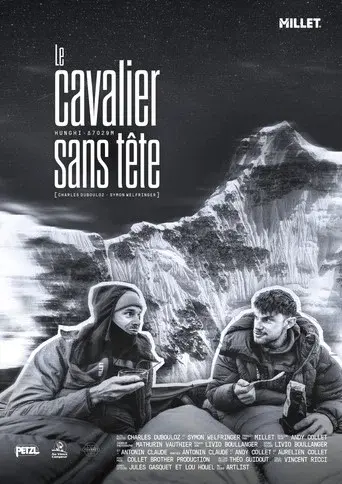
When you embark on an expedition to the other side of the world, things rarely go as planned. In the spring of 2024, mountaineers and friends Charles Dubouloz and Symon Welfringer flew to the Himalayas with the goal of climbing Gyachung Kang, a peak of over 8,000 meters on the Tibetan side. But faced with the conditions they encountered there, they revised their plans and headed towards Hungchi, on the Nepalese border. There, they opened a 1,700-meter route in pure alpine style, named The Headless Rider.
The Headless Horseman

In July 2024, Liv Sansoz and Bertrand Roche (aka Zébulon) made history in Himalayan mountaineering by climbing K2 (8,611m) without supplemental oxygen, then paragliding from the summit. The couple achieved a highly coveted first, and for Zébulon, the feat was all the more impressive as he had already completed the first tandem paragliding flight from Everest in 2001. More than just a climb, this film is a love story where Liv and Zeb share their doubts, emotions, and determination, carrying a shared dream where every step is taken together, united to the very end.
K2 Mon Amour

Children and teenagers throw sticks, berries, and leaves at each other from perches in a large baobab tree.
Baobab Play
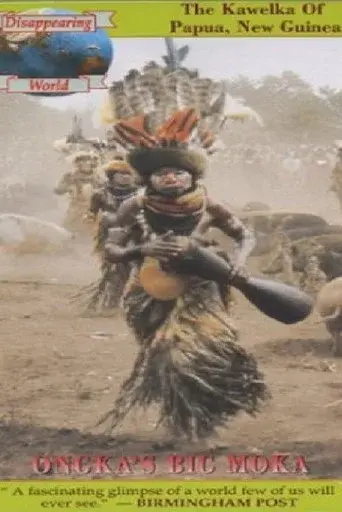
The film follows Ongka's struggles to accumulate huge numbers of pigs and other items of value to present at a Moka ceremony to another tribe.
Ongka's Big Moka

"Louceiras" portraits the daily life of the last ceramists of the Brazilian indigenous ethnic group Kariri-Xocó, who earn a living from clay. They inherit a tradition passed from mother to daughter concerning the art of choosing, manufacturing and cooking clay pots and pans. Living in a village by the São Francisco river in the city of Porto Real do Colégio(AL), they share with their people the secret of medicinal herbs, the Toré dance, the labour songs (rojão) and the secret of Ouricuri.
Louceiras

Video dedicated to the celebration of the centenary of Edison Carneiro’s birth, one of the great exponents of folklore studies in Brazil, whose contribution remains present to this day, forming important documentary collections and influencing the institution’s mission.
Mestre Edison Carneiro

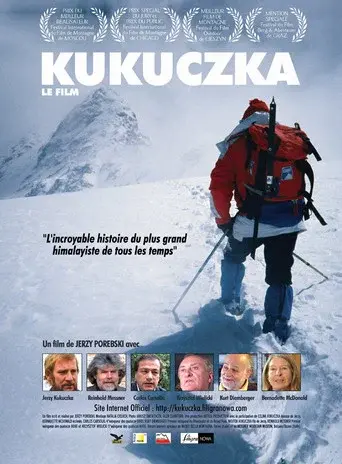
Jerzy Kukuczka is today considered the greatest Himalayan climber of all time. He was the second man to conquer all fourteen peaks over 8,000 meters. He accomplished this feat in just 8 years, an absolute record, and by multiplying winter ascents and new routes. A true force of nature, he died tragically in 1989, falling 3,000 meters during an attempt to climb the legendary south face of Lhotse (8,516 m). This powerful and moving film retraces the life, exploits, and career of a mountaineering legend, a modern-day hero, through previously unseen footage of his expeditions.
Kukuczka
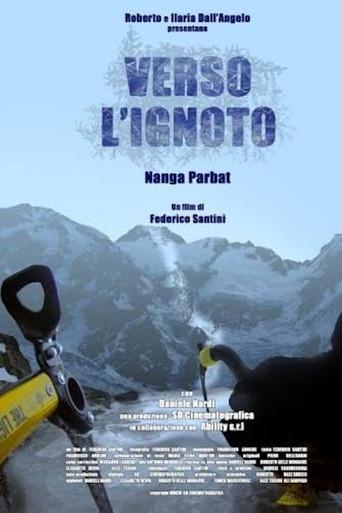
"Verso L'Ignoto" (Towards the Unknown) is an Italian documentary that follows mountaineer Daniele Nardi and his team in their attempt to achieve the first winter ascent of Nanga Parbat, an 8,000-meter peak in Pakistan, nicknamed the "killer mountain" due to its exceptional danger. For three years, the camera follows the preparation and several successive expeditions, showing the extreme cold, avalanches, fatigue, and the setbacks that constantly force the climbers to choose between continuing their quest for the summit or preserving their lives. More than just a story of sporting achievement, the documentary highlights doubt, defeat, and human fragility, showing that the "unknown" is not only the mountain, but also the element of risk, desire, and need for self-transcendence that each of us carries within.
Through the Unknown
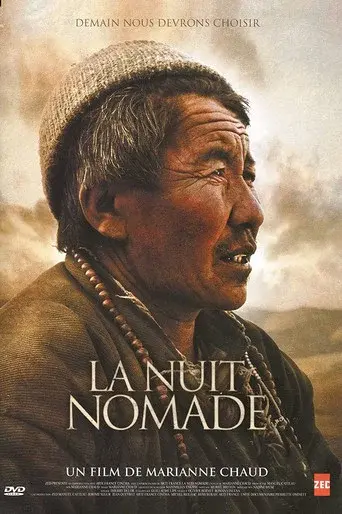
At an altitude of 4500 meters, on the highest plateaus of Karnak in the Himalayan région of Ladakh, in a lunar setting where the sky blends with the mineral immensity, director Marianne Chaud filmed the movements of these last nomads. Immersed for months in their community, speaking their language, she placed her camera as close as possible to their voices and gestures, offering viewers encounters of a rare intimacy. As much as the splendor of the landscapes, the extreme harshness of the living conditions or the emotion shared with these nomads, it is this closeness that creates the magic of the film.
La Nuit Nomade
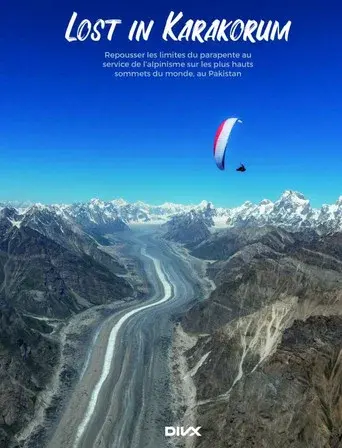
The epic 1500km bivouac flight of Damien Lacaze and Antoine Girard, two French paragliders and mountaineers, through the heart of the Himalayas and the Karakoram ranges. This journey is actually a prelude and acclimatization for their attempt to climb Spantik (7027m) from the nearest town in two days, using only paragliders. Is it truly feasible? What are the limitations of such an ascent? Can they earn a living from it?
Lost in Karakorum

David and Judith MacDougall are exploring the marriage rituals and roles of Turkana women in this ethnographic documentary. The film's biggest part is taken up by talks between the Turkana people. As one of the first ethnographic documentaries "A Wife Among Wives" subtitles these talks so that the viewer can get a better and probably more personal understanding of the life of the Turkana.
A Wife Among Wives
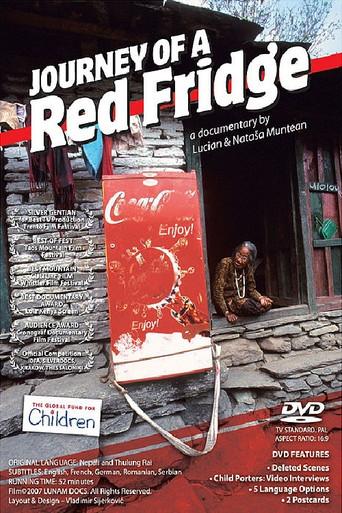
This is a story of a 17-year-old boy named Hari Rai, who lives in a small village in the Himalayan Mountains of Nepal, and his extraordinary journey. Hari is a student. However, he also works as a porter so that he could pay for his tuition and cover his living expenses. Although very young, he already has three years of experience carrying loads up and down the mountain, mostly tourists' backpacks. This time, he gets a job to carry a huge red refrigerator from the top of the mountain, to the nearest town. We follow Hari Rai on his journey through the fascinating Himalayan landscapes, we discover Hariâs inner life, his thoughts, hopes and dreams and we also get to know the culture and the local peopleâs way of life in this region.
Journey of a Red Fridge

A celebration of the diversity of Ethiopia's culture and wildlife. It journeys from North to South - spanning mountains, rainforests and the hottest place on Earth. It documents Muslims mixing with Christians as they have for over a millennia and the 'honey people' of the forest, filmed here for the first time. Visually stunning and unsentimental, this is Ethiopia as you've never seen it before.