

Louceiras
Overview
"Louceiras" portraits the daily life of the last ceramists of the Brazilian indigenous ethnic group Kariri-Xocó, who earn a living from clay. They inherit a tradition passed from mother to daughter concerning the art of choosing, manufacturing and cooking clay pots and pans. Living in a village by the São Francisco river in the city of Porto Real do Colégio(AL), they share with their people the secret of medicinal herbs, the Toré dance, the labour songs (rojão) and the secret of Ouricuri.
Top Cast

Maria Isabel Pires de Almeida
Self
Maria Isabel Pires de Almeida
Self
Renilda Florêncio dos Santos
Self
Neci Nunes
Self
Key Film Crew
Production Stats
You May Also Like

"Heart of the Country" is the story of Shinichi Yasutomo, the extraordinary principal of a rural elementary school in Kanayama, central Hokkaido, Northern Japan. Yasutomo is a man driven by his vision for learning and his passion for educating the heart as well as the mind. The film follows Yasutomo, his teachers and staff, students and their families over the course of one entire school year. The film is also the story of the families of Kanayama. Parents and elders of this once impoverished town embrace Yasutomo's vision, but not without wary glances back to the past. This small community, bound together by love for its children, is also defined by its journey through the cultural upheavals of postwar Japan.
Heart of the Country

Inspired by Steven Blush's book "American Hardcore: A tribal history" Paul Rachman's feature documentary debut is a chronicle of the underground hardcore punk years from 1979 to 1986. Interviews and rare live footage from artists such as Black Flag, Bad Brains, Minor Threat, SS Decontrol and the Dead Kennedys.
American Hardcore
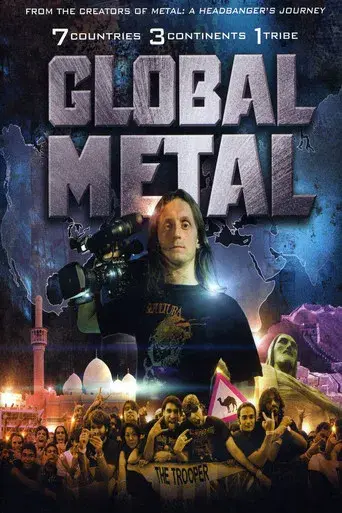
In GLOBAL METAL, directors Scot McFadyen and Sam Dunn set out to discover how the West's most maligned musical genre - heavy metal - has impacted the world's cultures beyond Europe and North America. The film follows metal fan and anthropologist Sam Dunn on a whirlwind journey through Asia, South America and the Middle East as he explores the underbelly of the world's emerging extreme music scenes; from Indonesian death metal to Chinese black metal to Iranian thrash metal. GLOBAL METAL reveals a worldwide community of metalheads who aren't just absorbing metal from the West - they're transforming it - creating a new form of cultural expression in societies dominated by conflict, corruption and mass-consumerism.
Global Metal

Vaastu Marabu documents the theory and practice of the Vaastu tradition of Indian art, architecture, craft and design. One of the foremost shilpis (designer-builder-sculpter) of India, Shri. V. Ganapati Sthapati of Mammallapuram, meditates on his art and his occupation. The film shows the process of making stone idols at Mammallapuram, near Madras, of casting bronzes in Kumbakonam, and of building stone temples at Kamudhi, near Madurai and at Ratnagiri, near Vellore. It illustrates the continuity of the tradition and reveals a technology that is ancient, yet still relevant today. The film explores the process of translating inner experience into art, and invites us to experience the naked beauty of the form while understanding the metaphysical message. The art of the Vishwakarma has given form and expression to all denominations of metaphysical thought in India. The film also probes the underlying scientific and mathematical principles.
Vaastu Marabu
Men and women in the Horn of Africa and adjiacent regions of the Middle East tell stories of their relationships and contacts with demons and spirits in their life and culture.
Archipelago
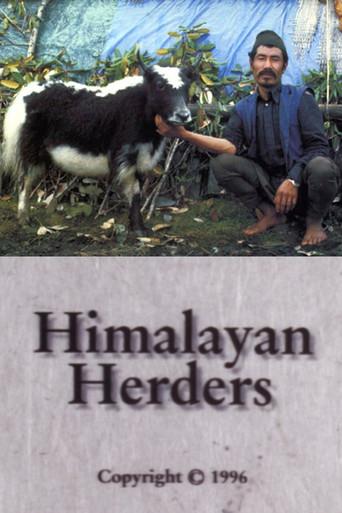
John Bishop and Naomi Bishop present a portrait a peculiar life style of the Himalayan indigenous Sherpa people in their documentary , the Himalayan Herders. The 76 minutes long film is about the diverse culture and life style of herders community near Mt. Everest region of Nepal.The film was made in 1997 as a part of Case Studies in Cultural Anthropology Series.
Himalayan Herders
An experimental ethnographic documentary that criticizes the colonizer view of anthropology.
Congo
A deep dive into contemporary Brazilian music. Guided by the composer, anthropologist and ethnomusicologist Kilza Setti and the Hésperides Música das Américas nucleus, the documentary takes us to a world where contemporary music, the Guarani and Timbira peoples, the colonization of America and poetic professions meet.
Filme Hõkrepöj

Raised in one of the most violent outskirts of Fortaleza, the Cruz brothers had their lives shaped by music to the point that their parents turned the house where they live into a school.
Canto de Família

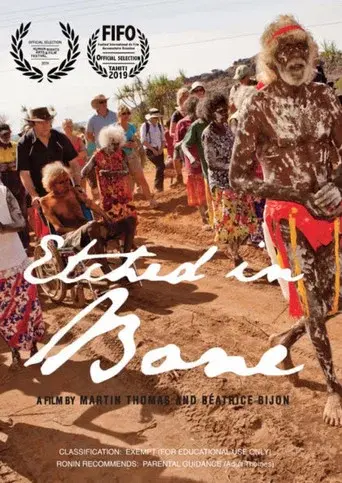
Drawing on original footage from National Geographic, Etched in Bone explores the impact of one notorious bone theft by a member of the 1948 American-Australian Scientific Expedition to Arnhem Land. Hundred of bones were stolen and deposited in the Smithsonian Institution in Washington DC, until it became known to Arnhem elders in the late 1990s. The return of the sacred artefacts was called for, resulting in a tense standoff between indigenous tribespeople and the Department of Anthropology at the Smithsonian.
Etched in Bone

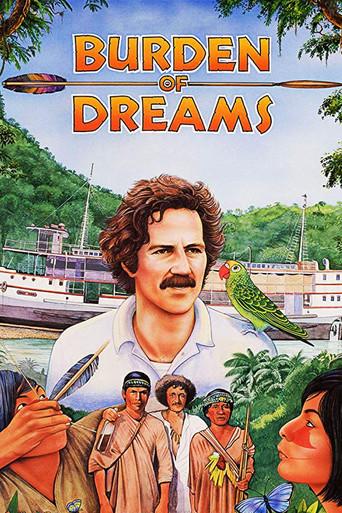
The Amazon rain forest, 1979. The crew of Fitzcarraldo (1982), a film directed by German director Werner Herzog, soon finds itself with problems related to casting, tribal struggles and accidents, among many other setbacks; but nothing compared to dragging a huge steamboat up a mountain, while Herzog embraces the path of a certain madness to make his vision come true.
Burden of Dreams
Ano Ravenia, a mountain village in Greece, young men leave to find work, learn a trade or serve in the Army while a young woman may leave her father's house only to enter that of her husband. The unmarried girls remain in the village amoung the elderly folk, meeting together to embroider their trousseaus and chat. In a rural Greek community, it is not the role of women to express their point of view in public. The film allows the spectator to sit in one of these casual sewing sessions where the girls talk about their wishes and problems, most of which revolve around marriages that will change their lives.
Thread of the Needle
Thanassakis, a 13-year-old boy, is staying with his grandparents in the Greek village of Ano Ravenia, while his parents stay with his younger brother in Zurich, Switzerland. It was filmed during three periods: winter in the village, summer in the village (while his parents, as most migrants, come back for the holidays), and Christmas in Zurich when the grandfather and the young boy visit their family. Who is most important to the young boy - his father or grandfather?