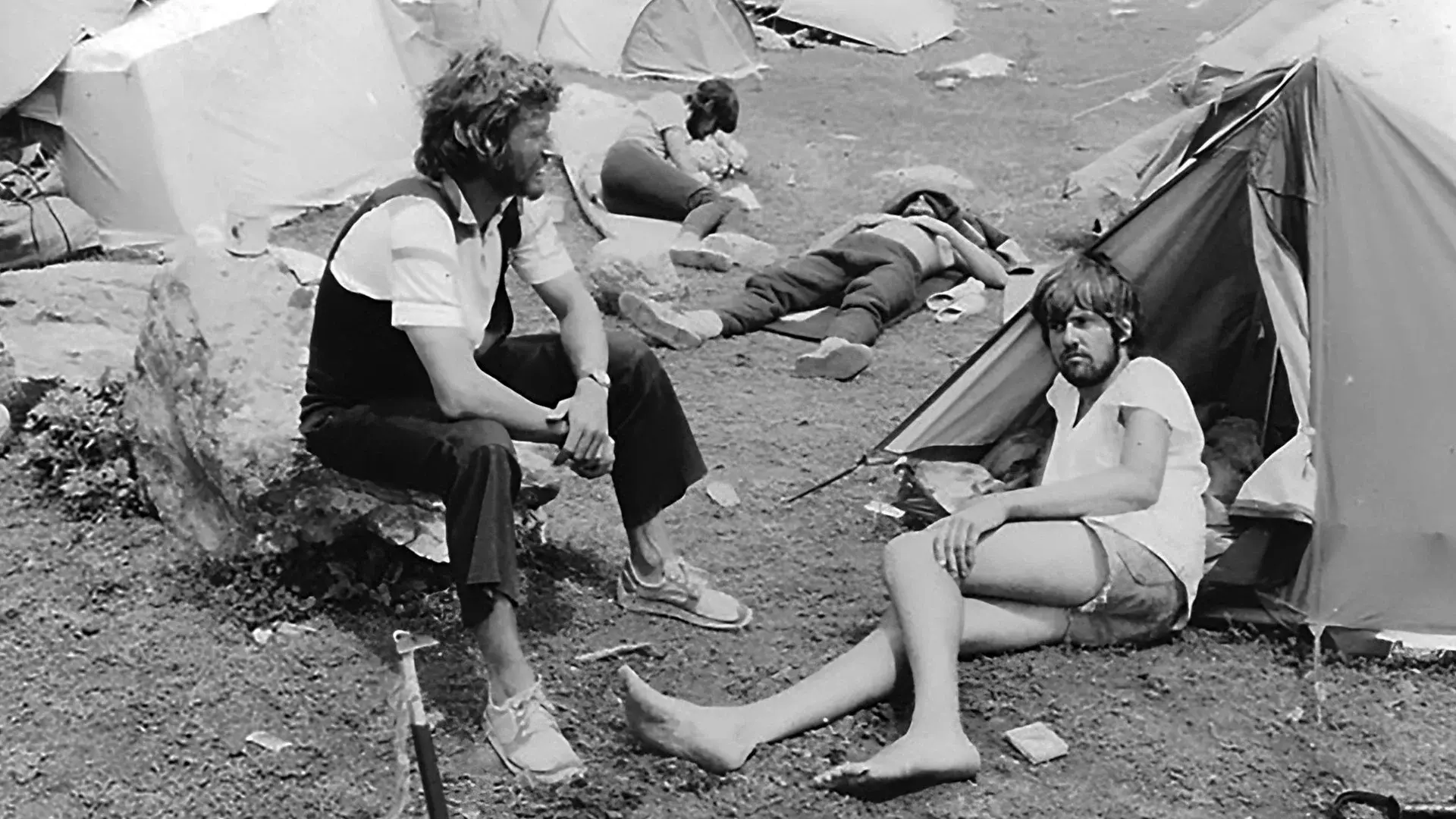

Nanga Parbat 80, La revanche de futur
Overview
No overview summary available for this movie.
Top Cast

Yannick Seigneur
Self
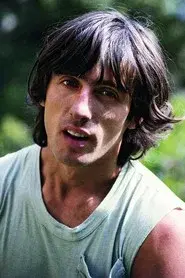
Patrick Berhault
Self
Key Film Crew
Production Stats
You May Also Like

Les Etoiles de Midi is an engaging docudrama about some of the more spectacular exploits of French mountain climbers over the last several decades. In one re-enacted story, there is a wartime escape through the mountains, and in another, a daring rescue of a pair of climbers who had been missing. The actors themselves are adept at the sport of climbing, and they give the scenes an immediacy and real daring that brings the stories alive. A combination of their acrobatics and skill and the outstanding episodes in the history of French climbing creates a winning 78 minutes.
Stars at Noon

Following in the footsteps of his father, Folco Felzani embarks on an epic journey on foot in search of Mustang, the last lost kingdom, in northern Nepal. The story of a king without a kingdom. The adventure of a son without a father.
The Last Lost Kingdom


A screen adaptation of the well-known novel by Roger Frison-Roche about the harsh lives of mountain guides and their families in the French Alps, near Chamonix and the French/Swiss/Italian borders... Like his father, Zian Servettaz is a dedicated mountain man. His Italian-born wife Bianca does not adjust well to his mountain village in France, and to the ever life-threatening dangers presented by his mountain guiding and climbing. She briefly returns to Italy and to her family. However, after Zian's insistence and trip to Italy, she returns to mountain life in the French Alps. Once back there, events will unfold, changing their lives as well as those of other mountain people forever.
First in Line
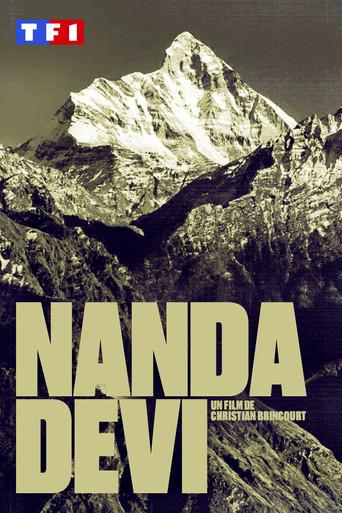
In 1975, Raymond Renaud, Yves Pollet-Villard, Maurice Gicquel, Maurice Cretton, Jean Coudray, Yvon Masino, Walter Cecchinel, all teacher guides at ENSA in Chamonix, with the help of the Indian Mountaineering Foundation, set out to cross the 2 peaks of the highest mountain in India. After 43 hours in a truck, 10 days of slow and difficult approach walking, helped by goats for the portage due to lack of sherpas, the base camp is set up on the Nanda Devi glacier. Two groups share the two eastern and western slopes, 3 kilometers separate them: the goal being to meet between the two summits by the ridge. But on the big day, with the monsoon, bad weather arrives with wind and snow, we will have to give up. Like the French expedition of 1951 which lost two mountaineers, Roger Duplat and Gilbert Vigne, to whom Paul Gendre and Louis Dubosc pay tribute.
Nanda Devi

TSR documentary on the 1979 expedition to Algeria in the Atakor massif (Hoggar desert), organized by Geneva mountaineer Michel Vaucher and Jean-Blaise Fellay. The climbers make a dozen ascents including the famous summit of Adaouda (which means "finger" in Tamasheq, the Tuareg dialect), by several routes. Then a new route on the peaks of the southern Tezoulegs. They discover the volcanic geological characteristics of the Atakor massif and meet the nomadic inhabitants of the region, the Tuaregs, who are increasingly settling in the town of Tamanrasset.
Hoggar Expedition 79

In February 1966, Pierre Mazeaud and Lucien Berardini traveled to the Atakor massif, in the Hoggar mountain range of the Sahara in southern Algeria. There, they attempted a challenging first ascent: the Takouba spur, one of the peaks adjacent to Garet El Djenoun, a legendary mountain in the Hoggar massif, first climbed by Roger Frison-Roche and Raymond Coche in 1935. The documentary, superbly filmed by Jacques Ertaud, won the Grand Prize at the Trento International Mountain Film Festival in 1966.
Anatomy of a First


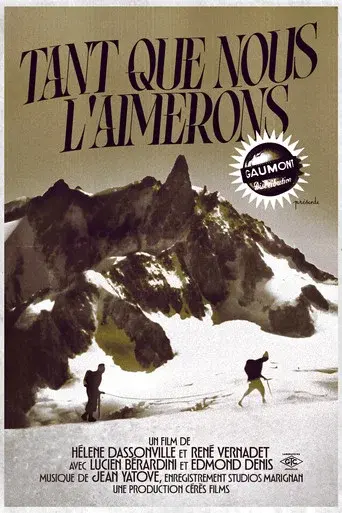
Lucien Berardini and Edmond Denis are two mountaineers who took part in the French expedition to Aconcagua (Andes Mountains) in 1954. Both suffered severe frostbite to their fingers and toes, and three years later, they set out to climb the Aiguille du Géant, a legendary route in the Mont Blanc massif. The camera closely follows the efforts of the roped party, an example of strength and self-sacrifice, until their victorious arrival at the summit.
As Long As We Love Her

Keeper of the Mountains is a portrait of Elizabeth Hawley and her unlikely key role in the Golden Age of Himalayan mountaineering, her defiance of the traditional gender roles of her day and her decision to settle alone in Kathmandu in 1960, where she has famously lived life on her own terms ever since. Hawley, 91 and a former journalist, maintains the world's largest and most treasured archive of Himalayan mountaineering expeditions and her work is trusted by news organizations and publications around the globe. All this despite never having climbed a mountain herself.
Keeper of the Mountains

The north face of Chamlang, nearly 2,000 meters high and culminating at 7,200 meters, is one of the last great unclimbed faces in the Himalayas. Benjamin Védrines, who had scouted the face during a previous ascent of Chamlang in 2019 with Nicolas Jean via the northeast couloir, decided to tackle it with Charles Dubouloz, a very strong mountaineer but a novice at high altitude. Snow slides, suspended bivouacs, pitches of mixed climbing and vertical ice… The gamble paid off for the Frenchmen, who opened a new route, "À l'ombre du mensonge" (1,600m, 5+, m5+, 90°), after four intense days on the north face—a magnificent first ascent of a coveted summit, as a duo, in alpine style.
À l’Ombre du Chamlang
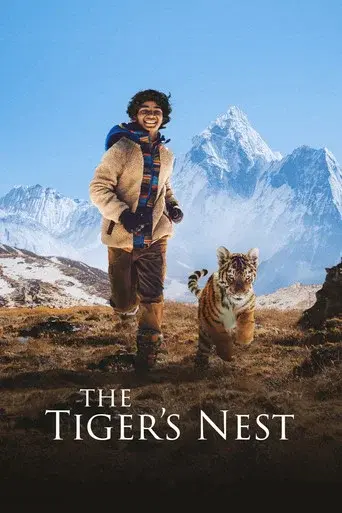
In the valleys of the Himalayas, an orphan boy saves a Bengal tiger cub from the ruthless poachers who killed the tiger's mother. Together they set out in the Himalayan mountains to the Taktsang monastery in Bhutan known as "The Tiger's Nest" where Buddhist monks took refuge after the 1950 Chinese invasion of Tibet and protect the big cats. A new great film for the whole family that talks about the importance of defending animals through the story of the friendship between two orphans, a tiger cub and a child, in a tale of brotherhood and the discovery of life.
The Tiger's Nest
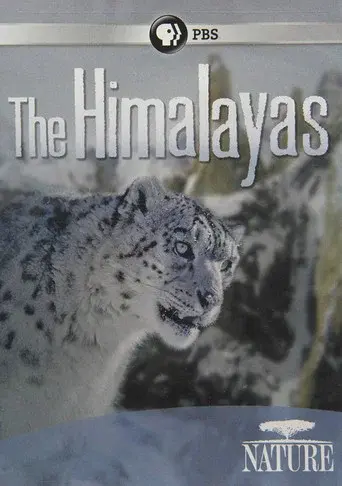
The highest mountain range in the world, the Himalayan range is far reaching, spanning thousands of miles, and holds within it an exceptionally diverse ecology. Coniferous and subtropical forests, wetlands, and montane grasslands are as much a part of this world as the inhospitable, frozen mountaintops that tower above. The word Himalaya is Sanskrit for abode of snow, fitting for a stretch of land that houses the world’s largest non polar ice masses. Extensive glacial networks feed Asia's major rivers including the Ganges, Indus, and Brahmaputra. More than a billion people rely on these glacier-fed water sources for drinking water and agriculture. The Himalayas are not only a remarkable expanse of natural beauty. They're also crucial for our survival.