Overview
No overview summary available for this movie.
Top Cast

Michel Vaucher
Walter Bonatti

Walter Bonatti
(related character)
Key Film Crew
Production Stats
You May Also Like
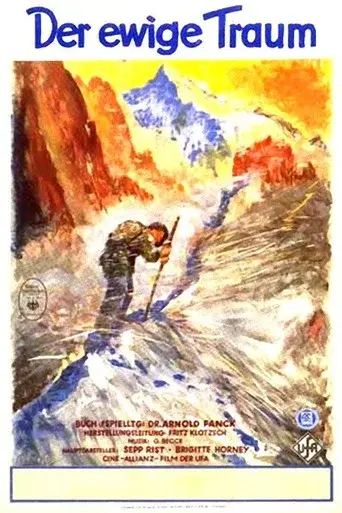
At the end of the 18th century, the wealthy French scholar Saussure comes to a small Alpine village and offers 1,000 pieces of gold to anyone who can lead him to the summit of Mont Blanc. The young farmer's son Jacques Balmat wants to take on the dangerous task, even though his father has told him from an early age about the mighty mountain spirits who guard a legendary treasure of gold on the mountain peak.
The Eternal Dream

Rotpunkt documents the advent, the agony and the art of the redpoint through Alex Megos’s efforts to redefine the boundaries of the form. The film traces the redpoint—which transformed rock climbing from an engineering problem into a brilliant test of mental and physical strength—from its origins with a ragtag bunch of tights-wearing revolutionaries in rural Bavaria, to its golden era with Wolfgang Güllich, to its new ideal in the German phenom Megos as he battles to unlock new levels of human potential.
Rotpunkt

Les Etoiles de Midi is an engaging docudrama about some of the more spectacular exploits of French mountain climbers over the last several decades. In one re-enacted story, there is a wartime escape through the mountains, and in another, a daring rescue of a pair of climbers who had been missing. The actors themselves are adept at the sport of climbing, and they give the scenes an immediacy and real daring that brings the stories alive. A combination of their acrobatics and skill and the outstanding episodes in the history of French climbing creates a winning 78 minutes.
Stars at Noon
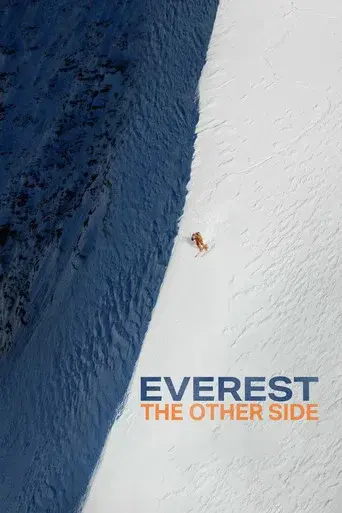
An intimate portrait of two people bound by love, ambition, and the pursuit of the impossible. Elite ski mountaineers Jim Morrison and Hilaree Nelson fell deeply in love while reaching the pinnacle of their sport. Their drive sharpened into a shared dream: to climb and ski the direct North Face of Mount Everest—the most difficult and dangerous climb on the mountain and the most coveted ski line on Earth—something only a handful have ever achieved, and no one has successfully skied down.
Everest: The Other Side

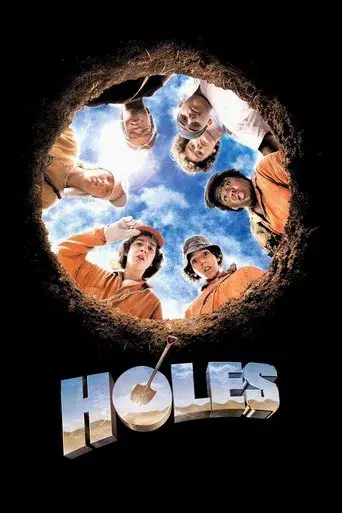
After being wrongfully convicted for stealing a pair of shoes, Stanley Yelnats is sent away to Camp Green Lake, a boys detention facility where inmates are forced to dig holes all day in the hot desert sun as a form of character building. As he endures the brutal routine, Stanley begins to uncover a hidden truth behind the camp, one that connects to a dangerous secret—and possibly Stanley’s family itself.
Holes
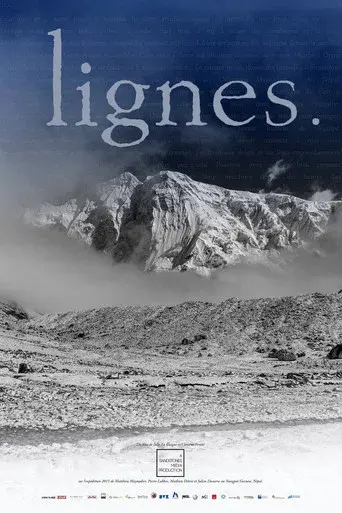
Lignes chronicles the sublime interplay between alpine literature and an expedition seeking the true meaning of mountaineering. Four high-mountain guides—Matthieu Maynadier, Pierre Labbre, Matthieu Détrie, and Julien Dusserre—embark on a project: to summit Nangpai-Gosum, an unclimbed 7,000-meter peak in Nepal, using the "alpine style" adapted to the Himalayas—the toughest and purest approach of all. Through this expedition, Lignes attempts to answer the question: "Why do we climb mountains?" Why, despite the harsh conditions and exhaustion, do these four Alpine guides pursue a perilous dream in a realm that belongs to no one? Lignes finds some answers in the past, drawing on 150 years of alpine literature. Serving as both narrator and seasoned guide, Raymond Renaud takes us on a tour of his books and speaks of the "conquerors of the useless"—from the turn of the century to the present day.
Lines

Nicolas Jean, a 14-year-old climber, decided to meet climbers who have left their mark on their era and contributed to the evolution of climbing in their own way. Among them is his coach, Laurent Perez, who will guide him on an original project: re-equipping a 7c+ route and adding a variation that will make it his first 8a if he manages to complete it! Nicolas Jean will later become a high-mountain guide and the alter ego of his climbing partner, Benjamin Védrines, with whom he will achieve numerous first ascents, including the summit of Jannu Est (7468 m) in October 2025.
Il Était Une Voie

Miha invites his fiancée Minka to the dance, but he's tempted by another big desire of his - climbing. Frustrated Minka insists on the festivity, where she finds herself in a company of older hiker. However, all ends happily, as Minka and Miha, after many smaller adventures, meet at the top of Mount Triglav, where they sign the marriage contract, but also confirming their love for the mountains. In addition to its charming story, the movie features footage of picturesque Slovenian mountains.
The Slopes of Triglav

Via Annaba takes us to the 2023 Annaba Mountain Week in Algeria, an event organized by the French Institute of Annaba and produced by CSPS Aïn Beïda and Nephrops Prod. During this event, climbers from Algeria, France, and Spain gathered for numerous outdoor sports workshops along Annaba's magnificent, rugged coastline: rock climbing, setting a via ferrata route, deep water soloing, scuba diving, and more. This film, a true postcard of Annaba, a city nicknamed "the charming one," is also, and above all, a pretext for inspiring encounters and a contribution to the development of mountain sports in Algeria.
Via Annaba
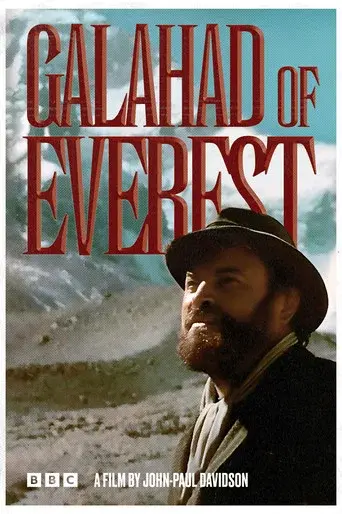
Brian Blessed plays George Mallory in this intrepid recreation of his ill fated 1924 climb to Everest. Meeting Sir Chris Bonington, Rheinhold Messnerhe learns of the pitfalls that await him before setting off for his epic struggle with the mountain. Against all odds he reaches 26000 feet on the North face of Everest, and is a changed man
Galahad of Everest

In October 2014, Steve Wakeford, a sports broadcast editor, fell 70 metres whilst climbing a mountain known as Les Petites Jorasses in the French Alps. It was a fall that required him to be airlifted out of the mountains suffering from a number of serious injuries and resulted in him being temporarily left in a wheelchair - he is lucky to be alive. At the start of a long journey of rehabilitation, he began to ask himself some serious questions - 'Regardless of injury or trauma, why are we drawn to the mountains in the first place? Is risk an essential part of what we do? Perhaps most importantly, why is it that I am planning to climb the same route from which I fell?'