

Gipuzkoa
Overview
Documentary directed by Pío Caro Baroja, divided into eight distinct parts: Man, Stone, Meadows, Trees, Rural Environment, Iron, Sea, and Villages. This eminently ethnographic work is a compendium of the customs and traditions of a people with an ancient history, which today remains a witness to many images that will never again be part of everyday life.
Key Film Crew
Production Stats
You May Also Like


A documentary on the experiences of the Nubetya Yaptiks nomadic family in the Yamal Peninsula, Eastern Siberia, from 1992 to 2001.
Mothers of Life
Rites and operation of the circumcision of thirty Songhai children on the Niger. Material of this film has been used to make "Les Fils de l'Eau".
Circumcision
This ethnographic short portrays a ritual using masks among the Dogon people of Mali.
Under the Black Masks
A woman narrates the thoughts of a world traveler, meditations on time and memory expressed in words and images from places as far-flung as Japan, Guinea-Bissau, Iceland, and San Francisco.
Sans Soleil
The film tells the story of ancient Ingush lullabies - Ingush women and men tell the lullabies of their families and the stories associated with them: love, friendship, blood feud.
Live, song, live!
An ethnographic documentary about the Mangbetu tribe of the Belgian Congo (now the Democratic Republic of the Congo). The film features a discussion of various rites including the Mangbetu practice of head binding, as well as various examples of traditional music and dance.
Mangbetu

“The shepherdess” is a short ethnographic film inspired by Joyce, an 80 year old woman who has spent her whole life farming in Eastern Ontario. While this film is largely centred on Joyce’s narrative about her life, it is also about Joyce’s flock of about 20 Suffolk ewes, the filmmaker, and the relationships between these actors.
The Shepherdess

A walk through the landscapes of the province of Salamanca, Spain, as well as a testimony of the daily life and customs of its inhabitants.
Salamanca

A walk through the landscapes of the province of Barcelona, Spain, as well as a testimony of the daily life and customs of its inhabitants.
Barcelona
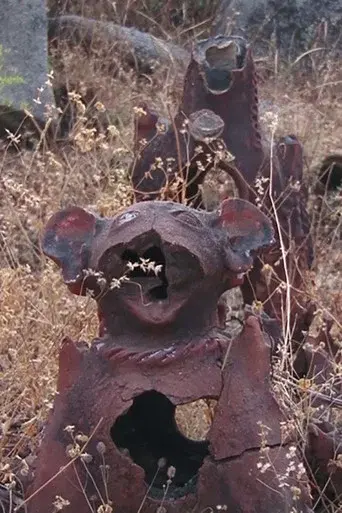
India has one of the largest populations of Indigenous people in the world, known locally as adivasis or tribals. As India's current Hindu nationalist government pushes to redefine India as a homogenous Hindu nation, adivasis’ ways of life are under greater threat. Set among the Rathava and Bhil adivasi communities of western India, broken gods document the social impact of Hindu religious evangelism among India’s Indigenous groups. As Indigenous people join Hindu religious sects, their old gods are literally becoming broken - devotional mural paintings are being whitewashed from homes, and the earthen figurines in honour of village gods and ancestors are being left to fall apart. While for those who convert joining a Hindu sect offers the allure of a better life, those who continue to follow their old ways have become ostracized by their communities. Their broken gods have lost the power to protect them from illness and scarcity.
Broken Gods

This film is a portrait of unique cultural space for Spirits, Gods and People. While permanent theatres are commonly built in most cosmopolitan modern cities, Hong Kong preserves a unique theatrical architecture, a Chinese tradition that has lasted more than a century - Bamboo Theatre.