Message by Music: Senegal in Transition
Original Title: “Messages Musicaux - Le Sénégal en transformation”
Overview
Senegal is a country in transition, with increasing education and economic growth and a burgeoning art scene. It is customary that its culture, stories, and history have been kept alive and transmitted by their traditional singers called griots. Message by Music introduces us to Awadi, a renowned rapper with Pan-Africanist sensibilities and juxtaposes his political message with the more old-school griots. Transitions in society are reflected in the arts but also the arts can be the catalysts to move society.
Key Film Crew
Production Stats
You May Also Like


In the fifties, when the future Democratic Republic of Congo was still a Belgian colony, an entire generation of musicians fused traditional African tunes with Afro-Cuban music to create the electrifying Congolese rumba, a style that conquered the entire continent thanks to an infectious rhythm, captivating guitar sounds and smooth vocals.
The Rumba Kings

FENEEN is a journey into Senegal's urban music scene. This project was born from the meeting of Italian producer Frank Sativa with Senegalese pop-star Leuz Diwane G and Italian-Senegalese rapper F.U.L.A. This gave rise to a song, a video clip and a documentary with the same name (Feneen). Feneen portrays the current urban and music subculture of Dakar suburbs. The documentary highlights the fundamental rule of the urban subculture in debunking the stereotypical image of the African continent.
Feneen
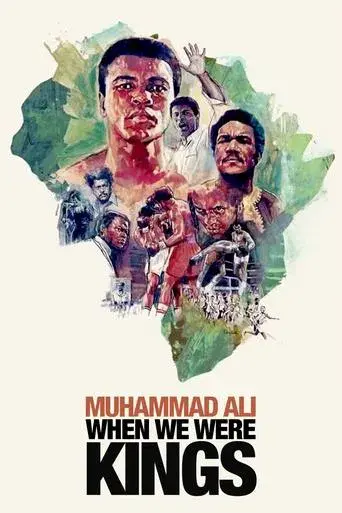
It's 1974. Muhammad Ali is 32 and thought by many to be past his prime. George Foreman is ten years younger and the heavyweight champion of the world. Promoter Don King wants to make a name for himself and offers both fighters five million dollars apiece to fight one another, and when they accept, King has only to come up with the money. He finds a willing backer in Mobutu Sese Suko, the dictator of Zaire, and the "Rumble in the Jungle" is set, including a musical festival featuring some of America's top black performers, like James Brown and B.B. King.
When We Were Kings

This is the story of Africa's first Boxing World Champion, Battling Siki. Who was this boxer born in Senegal, decorated for Bravery in World War I? Why do so few know that he fought and won the World Light Heavyweight Title aged 25, only to lose it controversially six months later? And why was his life cut short on a New York Street aged 28?
Return to Your Corner


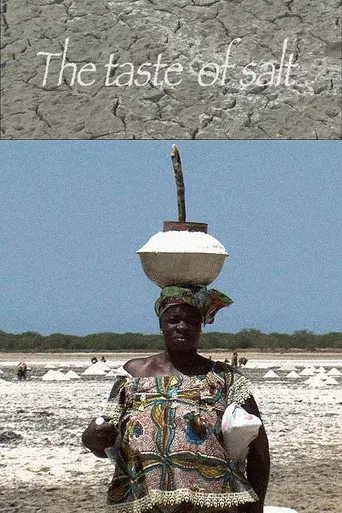
At Ngay Ngay, a village in northern Senegal, there are real natural evaporative basins in which depending on the year large or small quantities of sea salt dry out. Located 15 kilometres from Saint-Louis, the village is living around a complex community organisation: men divide the salt fields into plots, and women are those who harvest. In the end, the men receive a share of the crop, while women are those who took great pains over the harvesting.
The Taste of Salt

The film is primarily a portrait of Kam Kelly, who teaches West African drumming to students at various New York schools, including Intermediate School 292 in Brooklyn. One of his students, Jessica Jackson, is featured. The piece was commissioned for the “Crossing Brooklyn Ferry” festival at the Brooklyn Academy of Music in 2012.
Practice Makes Perfect




Following the steps of Oumar Seye, first black African professional surfer, Cherif, Paké, Assane and Mbabou, childhood friends from Ngor village in Dakar, make a living with their passion, surfing. They’ve been qualified to form the Senegalese national team for the first time at the ISA World Surfing Games in Biarritz, France. A crucial stake for these worthy ambassadors of the "Teranga" spirit.
Dakar Surf City

Keur Simbara is an intimate, lyrical short documentary that follows a group of women community organizers in a rural Senegalese village as they build and sustain systems of health, finance, agriculture, and domestic infrastructure. Amid water scarcity and environmental challenges, they articulate their hopes for the future and the legacy they wish to leave behind. Keur Simbara is a tribute to communal wisdom and the power of local organizing.
Keur Simbara
Mère-Bi is a 2008 documentary film about Annette Mbaye d'Erneville by her son, director Ousmane William Mbaye. The first Senegalese female journalist, she was deeply involved in the development of her country. Both an activist and a non-conformist, she fought for the emancipation of women from the beginning.
Mère-Bi
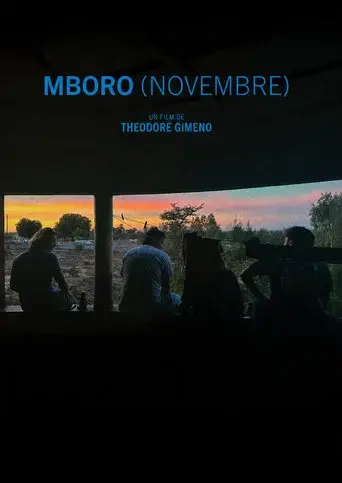
A French association joins a Senegalese association to participate in the renovation and rehabilitation of the open-air cinema in the town of Mboro. The duration of the works becomes an opportunity to explore the surroundings and meet the local inhabitants.