

Ousmane Sow, Le soleil en face
Overview
This is the story of time passing, at the slow pace of Ousmane Sow, and of time rushing by, from the birth of a work to its unveiling one spring day in Paris on the Pont des Arts. For a year, while preparing the exhibitions in Dakar and Paris, Béatrice Soulé witnessed the creation of Two Moon, Sitting Bull, Chief Gall, and Crazy Horse by Ousmane Sow—Sioux and Cheyenne chiefs who, gathered along the Little Bighorn River, won the most important Native American victory against the American army in 1868, a victory that led to the death of General Custer. In the intimacy of the sculptor's home in Dakar, a home itself a place of creation, she shares with us her emotion at seeing works emerge from the sand, works that seem to journey from death to life.
Top Cast

Ousmane Sow
Lui-même

Béatrice Soulé
Narratrice
Key Film Crew
Production Stats
You May Also Like


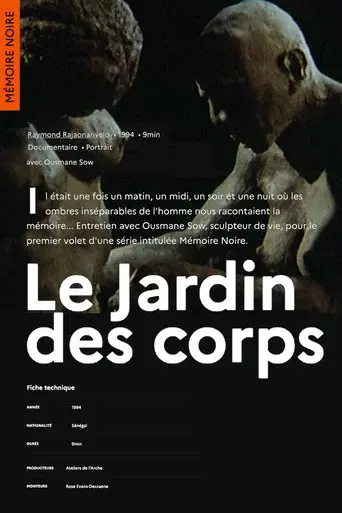
Once upon a time there was a morning, noon, evening and night when the inseparable shadows of man told us about memory... Interview with Ousmane Sow, life sculptor, for the first part of a series entitled Black Memory.
Le Jardin des Corps

This is the story of Africa's first Boxing World Champion, Battling Siki. Who was this boxer born in Senegal, decorated for Bravery in World War I? Why do so few know that he fought and won the World Light Heavyweight Title aged 25, only to lose it controversially six months later? And why was his life cut short on a New York Street aged 28?
Return to Your Corner
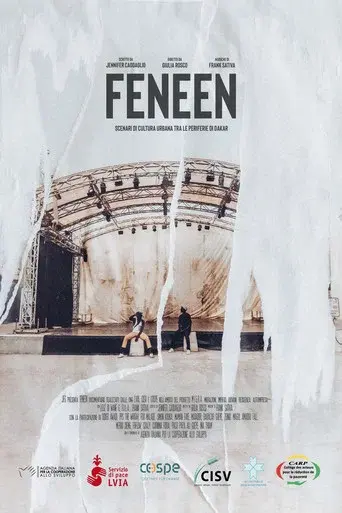
FENEEN is a journey into Senegal's urban music scene. This project was born from the meeting of Italian producer Frank Sativa with Senegalese pop-star Leuz Diwane G and Italian-Senegalese rapper F.U.L.A. This gave rise to a song, a video clip and a documentary with the same name (Feneen). Feneen portrays the current urban and music subculture of Dakar suburbs. The documentary highlights the fundamental rule of the urban subculture in debunking the stereotypical image of the African continent.
Feneen

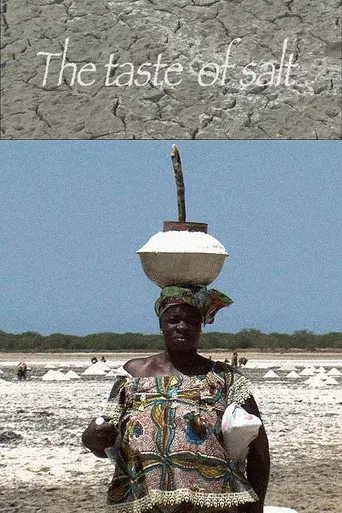
At Ngay Ngay, a village in northern Senegal, there are real natural evaporative basins in which depending on the year large or small quantities of sea salt dry out. Located 15 kilometres from Saint-Louis, the village is living around a complex community organisation: men divide the salt fields into plots, and women are those who harvest. In the end, the men receive a share of the crop, while women are those who took great pains over the harvesting.
The Taste of Salt

M'hamed Issiakhem (Kabyle: Mḥemmed Isyaxem; Arabic: محمد إسياخم)—born on June 17, 1928, in Taboudoucht (Aghribs), then part of the Tizi Ouzou Department in Algeria, and who died on December 1, 1985, in Algiers—was an Algerian painter and a leading figure of modern painting in Algeria. In 1943, he handled a grenade stolen from a US military camp, and it exploded; two of his sisters and a nephew were killed. Hospitalized for two years, he underwent the amputation of his left arm. From 1947 to 1951, he studied in Algiers, first at the Société des Beaux-Arts and later at the École des Beaux-Arts. "A country without artists is a dead country... I hope we are alive..." These words were spoken in a film by Fawzi Sahraoui—produced by the RTA in 1985 and shot just months before the painter M'hamed Issiakhem passed away. It is a fascinating docudrama in which Issiakhem opens up with subtlety, passion, and generosity.
M'hamed Issiakhem

Mère-Bi is a 2008 documentary film about Annette Mbaye d'Erneville by her son, director Ousmane William Mbaye. The first Senegalese female journalist, she was deeply involved in the development of her country. Both an activist and a non-conformist, she fought for the emancipation of women from the beginning.
Mère-Bi

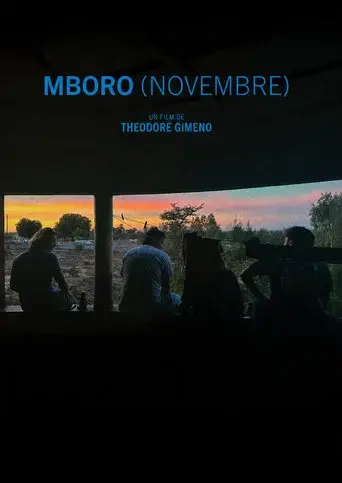
A French association joins a Senegalese association to participate in the renovation and rehabilitation of the open-air cinema in the town of Mboro. The duration of the works becomes an opportunity to explore the surroundings and meet the local inhabitants.
Mboro (November)

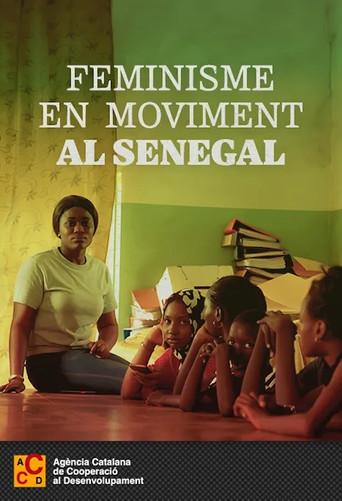
Keur Simbara is an intimate, lyrical short documentary that follows a group of women community organizers in a rural Senegalese village as they build and sustain systems of health, finance, agriculture, and domestic infrastructure. Amid water scarcity and environmental challenges, they articulate their hopes for the future and the legacy they wish to leave behind. Keur Simbara is a tribute to communal wisdom and the power of local organizing.
Keur Simbara
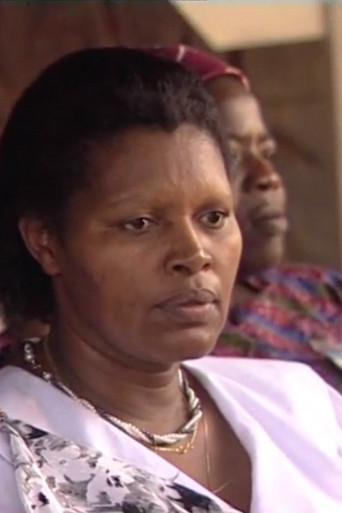

Each year, the pilgrimage of the Muslim brotherhood of the Mourides takes place in Touba. From all over Senegal (and even from all over the world) pilgrims flock to take part in this religious event which will last three days and two nights. Grand Magal in Touba evokes the black Islam, promotes peace and tolerance, born of syncretism between Islam and the blackness of the Sufi brotherhoods in Senegal.