

Under African Skies: Ethiopia
Overview
First aired on TV on the BBC Two on 29 September 1989, this second episode of the documentary series "Under African Skies", a grand project aimed at presenting the rich diversity of contemporary African music of those days and known for its unforgettable memento "A celebration of the new sounds of a continent. " traverses the nostalgic roots and the euphoric contours of Ethiopian music of the '80s.
Top Cast

Aster Aweke

Afewerk Tekle

Tsegaye Gabre-Medhin

Amha Eshete

Mulatu Astatke

Alemayehu Eshete

Giovanni Rico
Mahmoud Ahmed
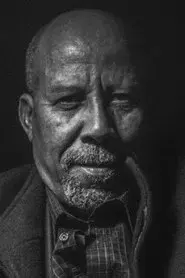
Hailu Mergia
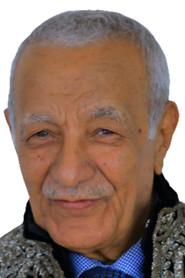
Ali (Tango) Abdella Kaifa
Abebech Derara
Abate Mekuria
Key Film Crew
Production Stats
You May Also Like

Haile Gerima and Ryszard Kapuscinski travel around Ethiopia talking to people about their current situations and what needs to be done for a prosperous country.
Imperfect Journey

Documentary on the Ethiopian orphanage ‘Toukoul’, filmed in Addis Ababa in December 2003
SOS Enfants d'Ethiopie
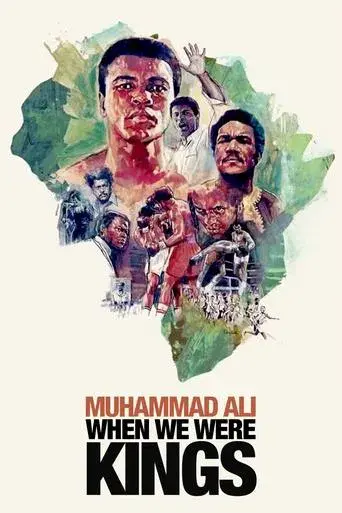
It's 1974. Muhammad Ali is 32 and thought by many to be past his prime. George Foreman is ten years younger and the heavyweight champion of the world. Promoter Don King wants to make a name for himself and offers both fighters five million dollars apiece to fight one another, and when they accept, King has only to come up with the money. He finds a willing backer in Mobutu Sese Suko, the dictator of Zaire, and the "Rumble in the Jungle" is set, including a musical festival featuring some of America's top black performers, like James Brown and B.B. King.
When We Were Kings

In the fifties, when the future Democratic Republic of Congo was still a Belgian colony, an entire generation of musicians fused traditional African tunes with Afro-Cuban music to create the electrifying Congolese rumba, a style that conquered the entire continent thanks to an infectious rhythm, captivating guitar sounds and smooth vocals.
The Rumba Kings


"A Walk to Beautiful" tells the story of five women in Ethiopia suffering from devastating childbirth injuries. Rejected by their husbands and ostracized by their communities, these women are left to spend the rest of their lives in loneliness and shame. The trials they endure and their attempts to rebuild their lives tell a universal story of hope, courage, and transformation.
A Walk to Beautiful
The history of art in Ethiopia. The film emphasizes the styles, materials, etc. ofpaintings on walls and roofs of ancient churche
Art in Ethiopia

Running Movie is a documentary film that focuses on Israeli long-distance runner Ayele Seteng (a.k.a. Haile Satayin), the oldest marathon runner to compete in the 2008 Summer Olympics in Beijing, and his efforts to participate in the 2012 Summer Olympics in London. Satayin has been a long-distance runner since he was a young boy in Ethiopia, but he only became a marathon runner after immigrating to Israel in the early 1990s. Now, at the age of 55, he keeps on running. We follow him as he practices in Ethiopia, far from his wife and eight children, and witness his moments of victory and defeat, as he competes in marathons around the world—from Berlin, Germany, to Tiberias, Israel.
Running Movie


When a massive Chinese factory complex attempts a high-stakes expansion in rural Ethiopia, three women in search of prosperity have their faith in industrialization tested to the limit. Filmed over four years with singular access, Made in Ethiopia lifts the curtain on China’s historic but misunderstood impact on Africa, and explores contemporary Ethiopia at a moment of profound crisis. The film was awarded the Jury Special Mention at Tribeca Festival.
Made in Ethiopia

The film is primarily a portrait of Kam Kelly, who teaches West African drumming to students at various New York schools, including Intermediate School 292 in Brooklyn. One of his students, Jessica Jackson, is featured. The piece was commissioned for the “Crossing Brooklyn Ferry” festival at the Brooklyn Academy of Music in 2012.
Practice Makes Perfect

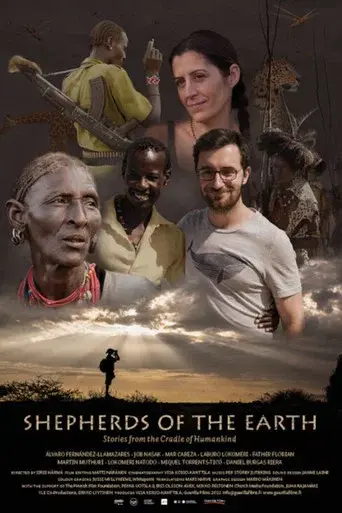
The region of Lake Turkana, located in Kenya and Ethiopia, is considered to be “the Cradle of Humankind”. Among other finds, primate fossils from millions of years ago have been discovered in the region. But what about the region’s modern inhabitants and their relationship to their environment? Iiris Härmä, whose previous work includes the award-winning Leaving Africa, had the chance of joining Helsinki University’s researchers, Álvaro Fernández-Llamazares and Mar Cabeza, on their pre-pandemic trip to study the Daasanach people’s relationship to their environment through traditional animal tales. The researchers hope that storytelling would help to bridge the gap between people’s everyday lives and conservation efforts.