Overview
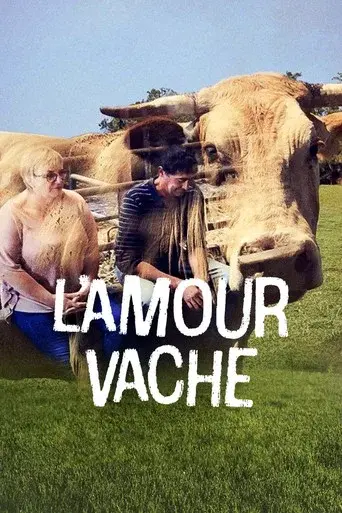
Titou will soon be forty. He lives high up in a sheep shed in the Corbières mountains. With Soledad, who lives in a nearby caravan, they make their own wine, compose their music, live their love in step with the seasons – much as you might cultivate resistance.
Top Cast

Titou Picard
Himself
Soledad Zarka
Herself
Key Film Crew
Production Stats
You May Also Like

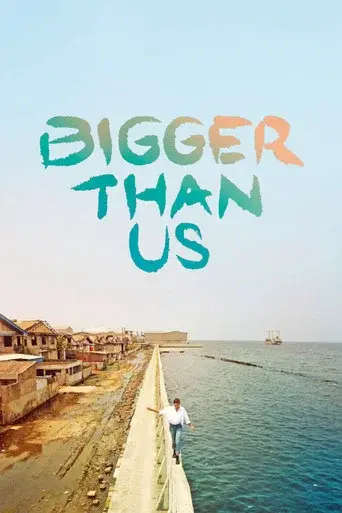
For six years, Melati, 18, has been fighting the plastic pollution that is ravaging her country, Indonesia. Like her, a generation is rising up to fix the world. Everywhere, teenagers and young adults are fighting for human rights, the climate, freedom of expression, social justice, access to education or food. Dignity. Alone against all odds, sometimes risking their lives and safety, they protect, denounce and care for others. The earth. And they change everything. Melati goes to meet them across the globe. At a time when everything seems to be or has been falling apart, these young people show us how to live. And what it means to be in the world today.
Bigger Than Us


On 1500 metres above sea level, on the slope of the mountain Hallingskarvet, stands "Tvergastein', the cabin of Norwegian philosopher Arne Naess. In his life he has spent nearly 12 years in this hut, where he wrote several books and essays on philosophy and ecology. In this film, Naess tells about the concept of 'deep ecology', which was first introduced by him in 1973. One of the basic tenets of deep ecology is that nature has a value in itself, apart from its possible use value to humans. Next to being a famous mountaineer, Naess has been a longtime activist in the environmental movement. He gives an inspiring account of his participation in blockades to prevent the Alta river in northern Norway (the area of the Sami, an indigenous people) from being dammed.
The Call of the Mountain

Province of Lugo, Galicia, Spain. A year in the life of A Fonsagrada, a rural region whose inhabitants live both near and far from urban civilization; a praise of the distance that crosses the four seasons of the year, whose inevitable passage transforms both the natural environment and the existence of people, a simple, dignified and peaceful existence.
Praise of the Distance

For ten years, Raymond Depardon has followed the lives of farmer living in the mountain ranges. He allows us to enter their farms with astounding naturalness. This moving film speaks, with great serenity, of our roots and of the future of the people who work on the land. This the last part of Depardon's triptych "Profils paysans" about what it is like to be a farmer today in an isolated highland area in France. "La vie moderne" examines what has become of the persons he has followed for ten years, while featuring younger people who try to farm or raise cattle or poultry, come hell or high water.
Modern Life

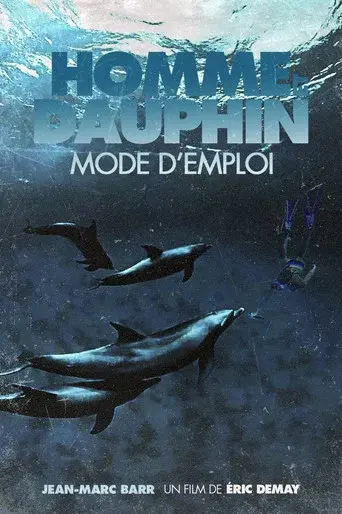

This documentary explores the ecosystems of the intertidal zone in British Columbia. An "intertidal zone" is an area that is covered by the highest tides and exposed during the lowest.
The Intertidal Zone


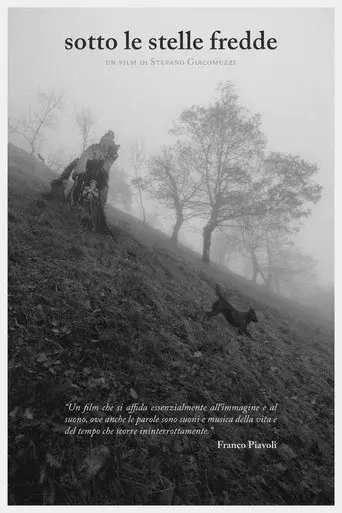
Set in the mountains of northeast Italy, this film may be considered an observational documentary about rural life. Although this is undeniably the case, at the same time Under the cold stars can hardly be considered a documentary: the microcosm on which it focuses appears to be a reflection of a broader reality and perhaps a way to deal with the themes of man’s existence and his relationship with animals, nature and, most importantly, with time. As written by Franco Piavoli "it is a film which essentially relies on images and sound, where words themselves are sound and the music of life, of the relentless flow of time."
Under the Cold Stars
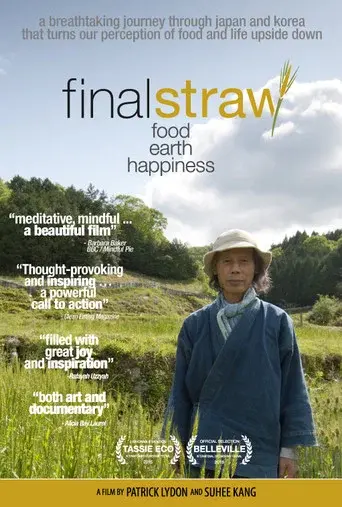
The Acadian Forest once spanned across the entirety of modern day New Brunswick and beyond and has been home to a variety of Indigenous peoples, animals, and tree species. This documentary listens to several experts in their fields, all relating to the land and peoples as they discuss the meaning to the forest to Indigenous people, themselves, and the land itself. See what experts say has happened to the former glory of the forest, its use throughout industrialization, modern times, and where things can go into the future.
A Beautiful Forest
A poetic journey through the paths and places of old Castile that were traveled and visited by the melancholic knight Don Quixote of La Mancha and his judicious squire Sancho Panza, the immortal characters of Miguel de Cervantes, which offers a candid depiction of rural life in Spain in the early 1930s and illustrates the first sentence of the first article of the Spanish Constitution of 1931, which proclaims that Spain is a democratic republic of workers of all kind.