Overview
In a race against developers in the Rocky Mountains, paleontologists uncover a unique fossil site packed with astonishingly well-preserved bones of mammoths, mastodons, and other giant extinct beasts. The discovery opens a highly focused window on the vanished world of the Ice Age in North America.
Top Cast

Lance Lewman
Narrator

Kirk Johnson
Himself - Denver Museum of Nature & Science

Daniel Fisher
Himself - University of Michigan
Ian Miller
Himself - Denver Museum of Nature & Science
Joseph Sertich
Himself - Vertebrate Paleontologist
Eugene Schweig
Himself - United States Geological Survey
Richard Stucky
Himself - Denver Museum of Nature & Science
Key Film Crew
Production Stats
You May Also Like


Sixty-six million years ago, an asteroid wiped out the dinosaurs in a fiery global catastrophe. But we know little about how their successors, the mammals, recovered and took over the world. Now, hidden inside ordinary-looking rocks, an astonishing trove of fossils reveals a dramatic new picture of how rat-sized creatures ballooned in size and began to evolve into the vast array of species—from cheetahs to bats to whales to humans—that rule our planet today.
Rise of the Mammals


In Egypt's Sahara Desert, massive skeletons with strange skulls and gigantic teeth jut out from the sandy ground. This fossil graveyard, millions of years old, is known as the "Valley of the Whales." Now, paleontologists have unearthed a whole new species of ancient whale dating to 43 million years ago, and this predator wasn't just able to swim – it also had four legs and could walk. Follow scientists as they search for new clues to the winding evolutionary path of mammals that moved from the land into the sea to become the largest animals on Earth.
When Whales Could Walk

See the earliest creatures of the Triassic Period to the monsters of the Cretaceous in a ‘life-sized’ IMAX ® presentation. Join renowned paleontologists as they discover new fossils and uncover evidence that dinosaur descendants are still among us. Realistic and scientifically-accurate computer generated animation brings dinosaurs back to life…in a big way!
Dinosaurs Alive

A stop-motion adaptation of the 1981 novel by geologist Dougal Dixon of the same name, which explores the speculative paths of evolution of modern animals into the far future.
After Man

In May 2002 a group of people went looking for dinosaur and here is what they found!
Raising The Allosaur

Thousands of footprints stretch for miles across New Mexico’s White Sands National Park, capturing moments when Ice Age humans encountered now-extinct beasts, including enormous ground sloths and mammoths. What can these footprints reveal about the peopling of the Americas and what life was like at the end of the last Ice Age?
Ice Age Footprints
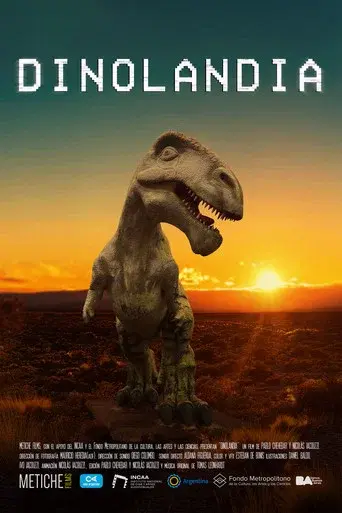
A mechanic discovers the fossil of a huge carnivorous dinosaur, unleashing a war between scientists, mayors and neighboring towns to keep “the biggest dinosaur in the world.” Among bone thefts, replicas and a mayor obsessed with creating Dinolandia, anything goes when it comes to surviving.
Dinolandia

Deep inside the arctic, scientists are experimenting with extreme palaeontology methods to unlock the secrets of polar dinosaurs, and perhaps the key to our own survival on Earth. On Alaska's north slope there are dinosaur bones, lots of them. But they're trapped in an icy tomb - an impenetrable wall of permafrost. Dinosaurs on Ice follows the journey of two scientists, Dr Tom Rich and Dr Tony Fiorillo, who undertake separate expeditions to the Colville River in Alaska's far north to uncover the dinosaurs' bones and break the ice on a prehistoric world that until now has been unreachable. But the task is not easy. The weather is extreme, the location remote.
Dinosaurs on Ice
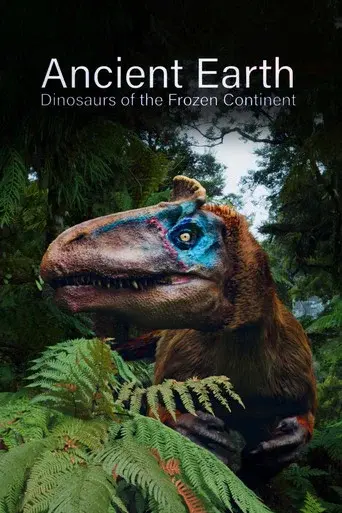

Richard Dawkins in a 1980's television special based on his book The Blind Watchmaker.
The Blind Watchmaker
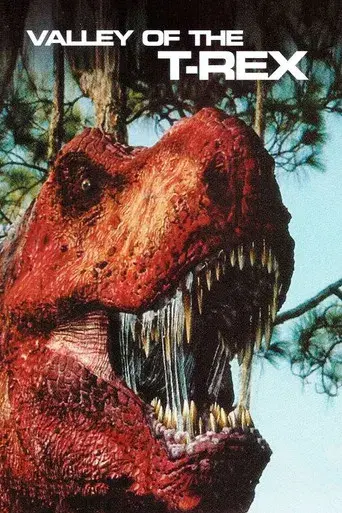
Valley of the T. rex is a Discovery Channel documentary, featuring paleontologist Jack Horner, that aired on September 10, 2001. The program shows Horner with his digging team as they travel to Hell Creek Formation in search for dinosaur fossils, while also following Horner as he presents his view of the theropod dinosaur Tyrannosaurus rex as a scavenger rather than a predator, as it is often portrayed in popular culture. Paleontologist Jack Horner finds the skeletons of five T-Rex dinosaurs in the badlands of Montana in a single summer, yielding fresh clues about T-Rex behavior.