The Complete History of the Earth: Everything Before the Dinosaurs SUPERCUT
Overview
Content creator Paleo Analysis explores the Precambrian and the Paleozoic era on his quest to evolve back into a human.
Top Cast
Paleo Analysis
Himself / Tim Tim
Key Film Crew
Production Stats
You May Also Like

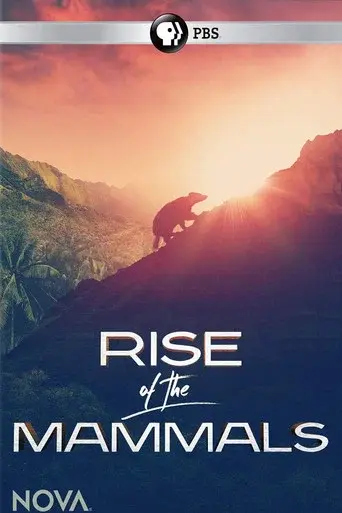
Sixty-six million years ago, an asteroid wiped out the dinosaurs in a fiery global catastrophe. But we know little about how their successors, the mammals, recovered and took over the world. Now, hidden inside ordinary-looking rocks, an astonishing trove of fossils reveals a dramatic new picture of how rat-sized creatures ballooned in size and began to evolve into the vast array of species—from cheetahs to bats to whales to humans—that rule our planet today.
Rise of the Mammals



A picture about the fine art of prehistoric times, the remains of which have been found in various places on the European continent.
Nejstarší umění


In Egypt's Sahara Desert, massive skeletons with strange skulls and gigantic teeth jut out from the sandy ground. This fossil graveyard, millions of years old, is known as the "Valley of the Whales." Now, paleontologists have unearthed a whole new species of ancient whale dating to 43 million years ago, and this predator wasn't just able to swim – it also had four legs and could walk. Follow scientists as they search for new clues to the winding evolutionary path of mammals that moved from the land into the sea to become the largest animals on Earth.
When Whales Could Walk

Cave paintings and lunar calendars exist in the caves and remains of prehistoric hunters studied recently. What if Prehistoric Man were clever enough to develop in depth scientific knowledge? As unlikely as it may seem, new data tend to prove that Prehistoric Man actually invented Astronomy!
Prehistoric Astronomers
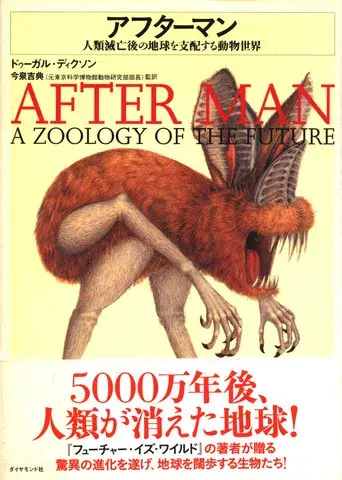
A stop-motion adaptation of the 1981 novel by geologist Dougal Dixon of the same name, which explores the speculative paths of evolution of modern animals into the far future.
After Man
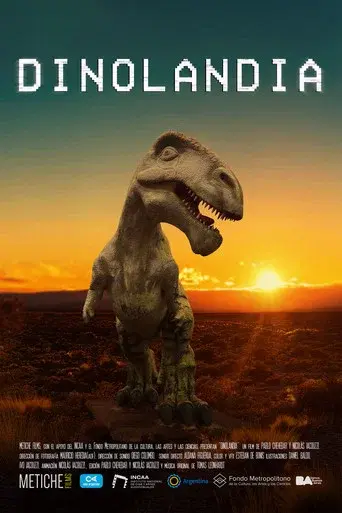
A mechanic discovers the fossil of a huge carnivorous dinosaur, unleashing a war between scientists, mayors and neighboring towns to keep “the biggest dinosaur in the world.” Among bone thefts, replicas and a mayor obsessed with creating Dinolandia, anything goes when it comes to surviving.
Dinolandia

Deep inside the arctic, scientists are experimenting with extreme palaeontology methods to unlock the secrets of polar dinosaurs, and perhaps the key to our own survival on Earth. On Alaska's north slope there are dinosaur bones, lots of them. But they're trapped in an icy tomb - an impenetrable wall of permafrost. Dinosaurs on Ice follows the journey of two scientists, Dr Tom Rich and Dr Tony Fiorillo, who undertake separate expeditions to the Colville River in Alaska's far north to uncover the dinosaurs' bones and break the ice on a prehistoric world that until now has been unreachable. But the task is not easy. The weather is extreme, the location remote.
Dinosaurs on Ice
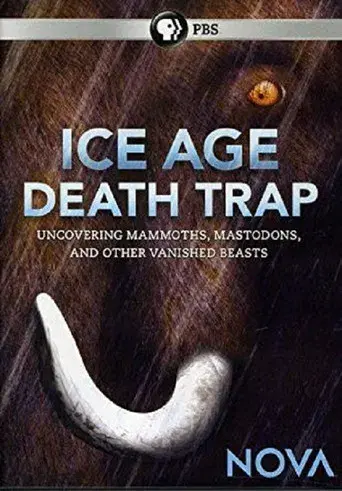
In a race against developers in the Rocky Mountains, paleontologists uncover a unique fossil site packed with astonishingly well-preserved bones of mammoths, mastodons, and other giant extinct beasts. The discovery opens a highly focused window on the vanished world of the Ice Age in North America.
Ice Age Death Trap


Richard Dawkins in a 1980's television special based on his book The Blind Watchmaker.
The Blind Watchmaker
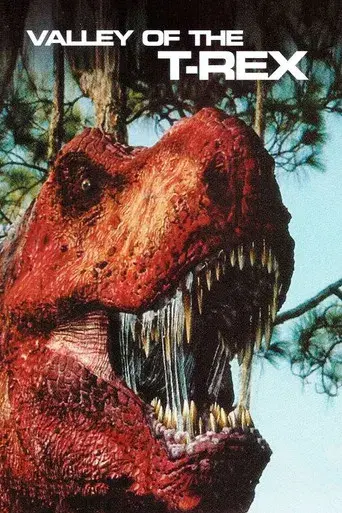
Valley of the T. rex is a Discovery Channel documentary, featuring paleontologist Jack Horner, that aired on September 10, 2001. The program shows Horner with his digging team as they travel to Hell Creek Formation in search for dinosaur fossils, while also following Horner as he presents his view of the theropod dinosaur Tyrannosaurus rex as a scavenger rather than a predator, as it is often portrayed in popular culture. Paleontologist Jack Horner finds the skeletons of five T-Rex dinosaurs in the badlands of Montana in a single summer, yielding fresh clues about T-Rex behavior.