

Overview
In Third Reich, the abuse of drugs made commanders and soldiers feel invincible. The Führer himself took them on daily basis. This is the unbelievable story of the D-IX project and of methamphetamines, which, abundantly furnished to soldiers, changed the course of history.
Top Cast

Patrick Kuban
Vypravěč

Astrid Ley
Sebe
Jean Lopez
Sebe
Lise-Lotte Lattmann
Sebe
Philippe Batel
Sebe
Volker Hartmann
Self
Wolf Kemper
Sebe
Key Film Crew
Production Stats
You May Also Like
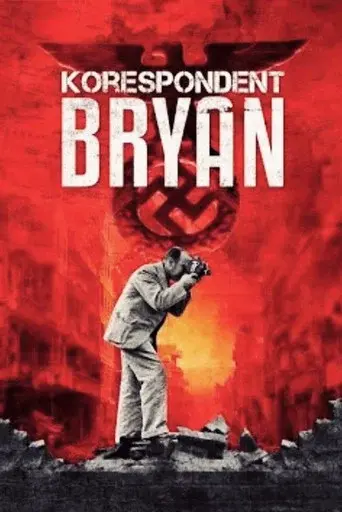
The film is based solely on footage shot in Warsaw in 1939 by Julien Hequembourg Bryan. This American filmmaker and photographer documented life in Poland, the Soviet Union and Nazi Germany between 1935 and 1939. Following the outbreak of the Second World War, he arrived in Warsaw, where he shot a number of films documenting the city under siege, and is said to be the only foreign correspondent in the Polish capital at the time. Bryan also took the first colour photographs of wartime Warsaw.
Korespondent Bryan

The true, harrowing story of a young Jewish girl who, with her family and their friends, is forced into hiding in an attic in Nazi-occupied Amsterdam.
The Diary of Anne Frank

In 1944 Poland, a Jewish shop keeper named Jakob is summoned to ghetto headquarters after being caught out after curfew. While waiting for the German Kommondant, Jakob overhears a German radio broadcast about Russian troop movements. Returned to the ghetto, the shopkeeper shares his information with a friend and then rumors fly that there is a secret radio within the ghetto.
Jakob the Liar

Shortly before the end of the war in 1945, the Allies can already be heard in Nesselbühl in Swabia when three freight cars are uncoupled at the station. The screams of the starving concentration camp prisoners inside can be heard throughout the village, but nobody dares to help them. Only the innkeeper's daughter Anna takes heart...
Drei Tage im April

In 1943, while the Allies are bombing Berlin and the Gestapo is purging the capital of Jews, a dangerous love affair blossoms between two women – one a Jewish member of the underground, the other an exemplar of Nazi motherhood.
Aimée & Jaguar

On March 24, 1944, in the heart of Nazi Germany, 76 British, Canadian, Norwegian and French pilots who were held in Stalag Luft III, a prison camp of the Luftwaffe, escaped. Unique testimony from the last survivors, recreations and today’s digital images sheds new light on the audacious escape.
The Great Escape

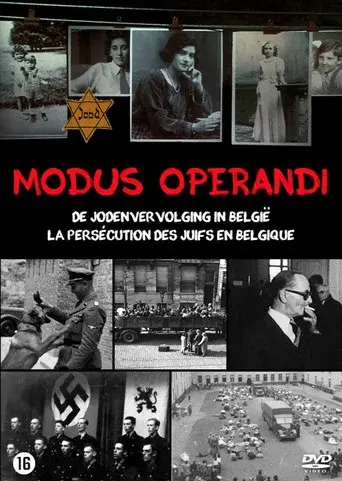
Between 1942 and 1944 some 24,916 Jews were deported from Belgium to Auschwitz. The roundups and deportations were organized and carried out by the Nazis with the - not always conscious - cooperation of Belgian authorities. The attitude of the authorities here varied from outright resistance to voluntary or unwitting collaboration.
Modus Operandi

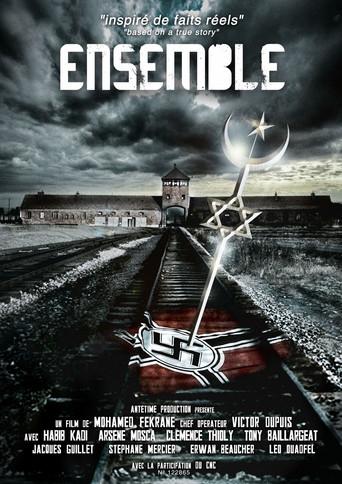
In Paris in full German occupation in 1942, a Jewish child Isaac escapes a raid organized by the SS. He then took refuge in the Great Mosque of Paris. The imam decides to protect him by passing him off as a Muslim, as well as the other Jewish children that he manages to free with the help of the resistance networks. The French militia and the Gestapo have suspicions... This fiction film is based on the true story of the rector of the Paris mosque, Si Kaddour Benghabrit, who saved several Jews from deportation during the Second World War.
Ensemble


On June 10, 1944, the SS murdered nearly the entire population of the French village of Oradour. The ruins still stand, the population is buried in the cemetery. Only one person has ever been convicted of this crime: the former SS-Obersturmführer Heinz Barth.
Die Bewältigung: Oradour

When World War II broke out, John Ford, in his forties, commissioned in the Naval Reserve, was put in charge of the Field Photographic Unit by Bill Donavan, director of the soon-to-be-OSS. During the war, Field Photo made at least 87 documentaries, many with Ford's signature attention to heroism and loss, and many from the point of view of the fighting soldier and sailor. Talking heads discuss Ford's life and personality, the ways that the war gave him fulfillment, and the ways that his war films embodied the same values and conflicts that his Hollywood films did. Among the films profiled are "Battle of Midway," "Torpedo Squadron," "Sexual Hygiene," and "December 7."
John Ford Goes to War

The Polish city of Łódź was under Nazi occupation for nearly the entirety of WWII. The segregation of the Jewish population into the ghetto, and the subsequent horrors are vividly chronicled via newsreels and photographs. The narration is taken almost entirely from journals and diaries of those who lived–and died–through the course of the occupation, with the number of different narrators diminishing as the film progresses, symbolic of the death of each narrator.