

Burma's Saffron Revolution
Overview
Ashin Yevata, a humble monk from Burma (Myanmar), helped lead the massive protests that spread throughout the country calling for change. Burma is one of the poorest countries in the world, strangled by its own despotic government. Forced labor, torture and systematic genocide are practiced by the ruthless Junta. Ashin was able to escape to the Burma-Thai border, where thousands of Burmese refugees live in fear of deportation and at the will of a corrupt police. He gathered footage from what he and his friends had as well as what he could find on the news.
Top Cast

Ashin Yevata
Himself
Key Film Crew
Production Stats
You May Also Like
Street art, creativity and revolution collide in this beautifully shot film about art’s ability to create change. The story opens on the politically charged Thailand/Burma border at the first school teaching street art as a form of non-violent struggle. The film follows two young girls (Romi & Yi-Yi) who have escaped 50 years of civil war in Burma to pursue an arts education in Thailand. Under the threat of imprisonment and torture, the girls use spray paint and stencils to create images in public spaces to let people know the truth behind Burma's transition toward "artificial democracy." Eighty-two hundred miles away, artist Shepard Fairey is painting a 30’ mural of a Burmese monk for the same reasons and in support of the students' struggle in Burma. As these stories are inter-cut, the film connects these seemingly unrelated characters around the concept of using art as a weapon for change.
Art as a Weapon
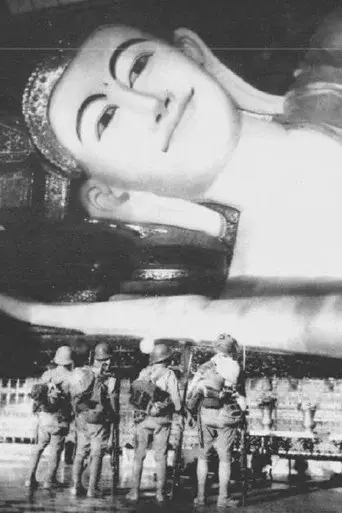
This film records the Japanese military's efforts to capture the Burma Road,one of the major supply lines to China, from the British beginning in December 1941. The film ends with the fall of Mandalay in May 1942.
Burma War Record
Choi Jinbae from Korea and Nyein Thazin from Myanmar are an international couple. They married seven years ago in Mandalay and, after a ceremony in Korea, planned to return. But COVID-19 left them stranded in Seoul. One day, a photo arrives from Myanmar showing a village destroyed by the coup. Urged by fellow Myanmar people to share their country's reality with the world, Choi picks up a camera. An ordinary family's life is suddenly thrust into questions of pain, solidarity, and the ethics of bearing witness.
Beyond Now, Nyein

This Kind of Love follows Burmese human rights and LGBT activist, Aung Myo Min, as he returns home after 24 years in exile. Set against Myanmar's historical transition from half a century of brutal military rule, Myo shares his vision for equality for all - from children to transgender people to ethnic nationalities with his countrymen, to be part of his homeland's emergence from the darkness of dictatorship. Myo's story celebrates his belief that community and inclusion are fundamental to creating meaningful political and social change in Burma/Myanmar.
This Kind of Love

A fascinating documentary, shot in the mountainous north of Burma. No filmmaker is welcome there, because, against the background of a civil war, the jade miners enter the deserted mines illegally. With the aid of filming locals, however, Midi Z was able to compile this portrait. Getting rich quick turns out to be hard and risky work Jade has always been a valuable commodity in Asia. In the mountains in the north of Burma there are valuable deposits of jade. The area forms part of Kachin State, inhabited by many ethnic groups which found themselves embroiled in the Civil War in 2010 with the Burmese government. Jade mining was halted because of the conflict. Thousands of workers, however, went to the war zone in order to dig for illegal jade. It turned the region into a no-go area and the filmmaker Midi Z, who had so far made feature films in Burma, saw no opportunity to go and film there. It was far too dangerous. © iffr.com
Jade Miners
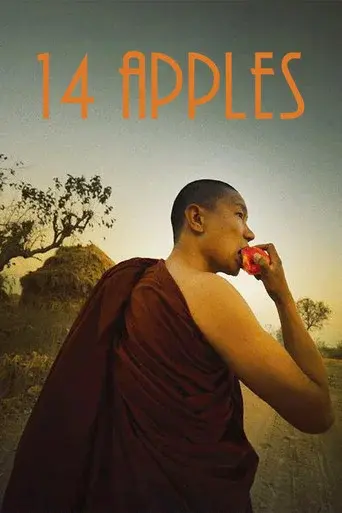
Wang Shin-hong is suffering from insomnia. A fortune teller advises the Mandalay businessman, whose car and bulging wallet suggest that business is going pretty well, to spend 14 days in a monastery, living life as a monk and eating an apple a day. Such a thing is possible in Burma today. Wang Shin-hong arrives at the rural monastery, has his head shaved and dons a red robe, in which he instantly becomes an authority. During the welcome procession, the village women, their poverty clear from their clothing and the huts in the background, put more than they have in his alms bowl. During his fleeting role as their advisor, Wang Shin-hong soon learns of the villagers’ attempts to survive and make a living as legal or illegal migrants in China, Thailand or Malaysia. He also finds out how the other monks try to generate profit and additional income.
14 Apples


Mother, Daughter, Sister (Amae, Thamee, Ama) exposes the Burmese military’s practice of using rape as a weapon of war and gives voice to Kachin and Rohingya women activists calling for justice for these crimes. Mother, Daughter, Sister revolves around the stories of four women: Shamima, a volunteer counselor working with survivors of military rape in the Rohingya refugee camp in Bangladesh, Dil Kayas, a teenage survivor, and San Lung and Lu Ra, sister and mother of two Kachin school teachers brutally raped and killed in 2015, allegedly by the Burmese military. Powerful testimonies from survivors, witnesses, and activists explore the far-reaching impact of sexual violence and trauma upon these communities, and together, the women call for justice and an end to the army's impunity.
Mother, Daughter, Sister

Chris Marker’s A Grin Without a Cat is an epic political essay tracing the rise and decline of the global left from the 1960s to the 1970s. Through archival footage and commentary, the film examines revolutionary movements in France, Latin America, and beyond, reflecting on the ideals, failures, and fading hopes of a generation.
A Grin Without a Cat
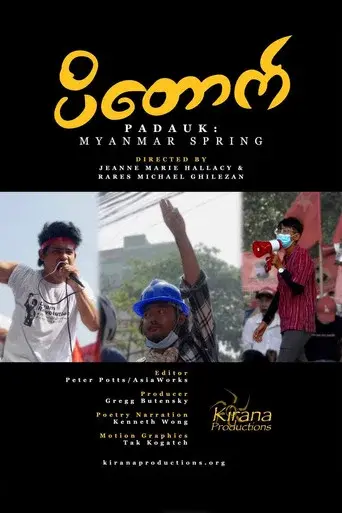
Padauk: Myanmar Spring takes the viewer to the streets of Myanmar during the heady days following the February 2021 military coup. Through Nant, a young, first-time protester, we meet three human rights activists whose lives have been turned upside down by the coup. As the protests continue, Nant comes to understand the truth of a brutal regime that has continued to wage war against its own people for decades. Against a foreboding backdrop, Nant’s political awakening regarding the plight of others in her ethnically diverse country gives hope for the future. Beautifully augmented by poetry and art, Padauk: Myanmar Spring shows the resilience and determination of the people of Myanmar, and the sacrifices they've made.
Padauk: Myanmar Spring


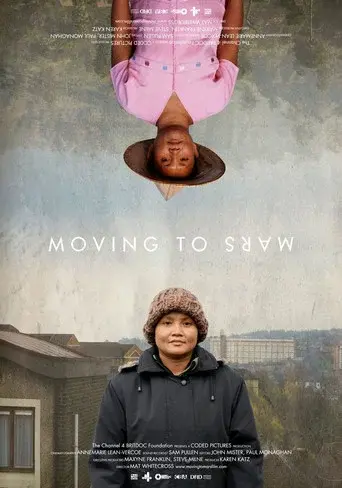
Moving to Mars charts the epic journey made by two Burmese families from a vast refugee camp on the Thai/Burma border to their new homes in the UK. At times hilarious, at times emotional, their travels provide a fascinating and unique insight not only into the effects of migration, but also into one of the most important current political crises - Burma.
Moving to Mars

The story of the American Founding, the greatest political achievement in history. The American colonists had developed a unique way of life as they practiced self-government for 150 years. In the struggles between the colonies and the mother country that followed the French and Indian War, Britain declared that Americans had no right to rule themselves. This went against everything the Americans knew. In response, our ancestors risked their “lives, fortunes, and sacred honor” to fight the War for Independence. Against all odds, they won, and in victory formed a stable, lasting republic.
Revolutionary America


They’ve become the human face of inhuman barbarity. Leaders like Hitler, Idi Amin Dada, Stalin, Kim Jong Il, Saddam Hussein, Nicolae Ceausescu, Bokassa, Muammar Kadhafi, Khomeini, Mussolini and Franco governed their countries completely cut off from reality. These paranoid leaders were driven to abuse their power by the pathology of power itself. Dictators are driven by a relentless, thought-out determination to impose themselves as infallible, all-knowing and all-powerful beings. But they are also men ruled by their caprices, uncontrollable impulses, and reckless fits of frenzy, which paradoxically render them as human as anyone else. The abuses they committed were clearly atrocious, yet some of them were as outlandish as the characters portrayed in the film The Dictator. They sunk to depths worthy of Kafka: so incredibly absurd, they are outrageously funny.
Dictator: One Crazy Job


A one-hour documentary about our first real moment of declaring independence 250 years ago, when New Yorkers toppled the statue of King George III at Bowling Green after a first public reading of the freshly inked document on July 9, 1776. In this film, we consider the rise and fall of empires, the toppling of statues, and the removal of monuments to Confederates and slave holders in the afterlife of George Floyd. We follow historian Abby Suckle on her trail to finally find the missing head of King George III, telling the story of how it all happened, along with reflections from Ivan Schwartz whose Studio EIS in Brooklyn has spent a half century sculpting statues of legends from American history in all its complexity: from Presidential libraries, to a re-creation of King George's statue.