
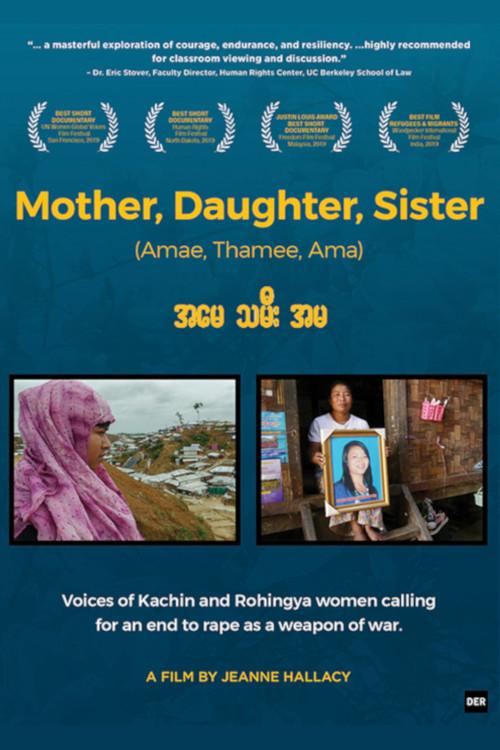
Mother, Daughter, Sister
Overview
Mother, Daughter, Sister (Amae, Thamee, Ama) exposes the Burmese military’s practice of using rape as a weapon of war and gives voice to Kachin and Rohingya women activists calling for justice for these crimes. Mother, Daughter, Sister revolves around the stories of four women: Shamima, a volunteer counselor working with survivors of military rape in the Rohingya refugee camp in Bangladesh, Dil Kayas, a teenage survivor, and San Lung and Lu Ra, sister and mother of two Kachin school teachers brutally raped and killed in 2015, allegedly by the Burmese military. Powerful testimonies from survivors, witnesses, and activists explore the far-reaching impact of sexual violence and trauma upon these communities, and together, the women call for justice and an end to the army's impunity.
Top Cast

Shamima
Self
Dil Kayas
Self
San Lung
Self
Lu Ra
Self
Key Film Crew
Production Stats
You May Also Like
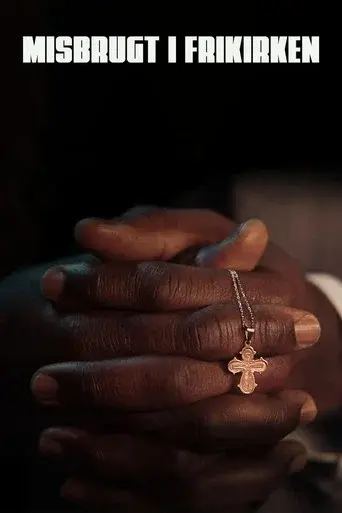
A free church pastor in Aarhus is reported to the police for having violated seven women in the congregation, with two of the women accusing him of rape. The pastor admits to inappropriate relationships, but claims it was consensual. The police drop the case due to lack of evidence, as it is currently not illegal for a pastor to have sex with adult members of the congregation, as long as they are over 18. But should the law be changed? The prosecution has charged the pastor with showing inappropriate nude images, with a reservation to seek deportation and compensation.
Misbrugt i frikirken


Street art, creativity and revolution collide in this beautifully shot film about art’s ability to create change. The story opens on the politically charged Thailand/Burma border at the first school teaching street art as a form of non-violent struggle. The film follows two young girls (Romi & Yi-Yi) who have escaped 50 years of civil war in Burma to pursue an arts education in Thailand. Under the threat of imprisonment and torture, the girls use spray paint and stencils to create images in public spaces to let people know the truth behind Burma's transition toward "artificial democracy." Eighty-two hundred miles away, artist Shepard Fairey is painting a 30’ mural of a Burmese monk for the same reasons and in support of the students' struggle in Burma. As these stories are inter-cut, the film connects these seemingly unrelated characters around the concept of using art as a weapon for change.
Art as a Weapon

A presentation of the historical process of rape, followed by a more recent approach of current studies that reinforce ÒRape Reliefs own statistics.
Rape Is A Social Disease
Ten years have passed since the First Congo War, six since the beginning of the UN mission there. Rape is still being employed as a weapon. In White Substance everyone involved is given an opportunity to speak: the victims and the perpetrators, and also the individuals in-between.
White Substance
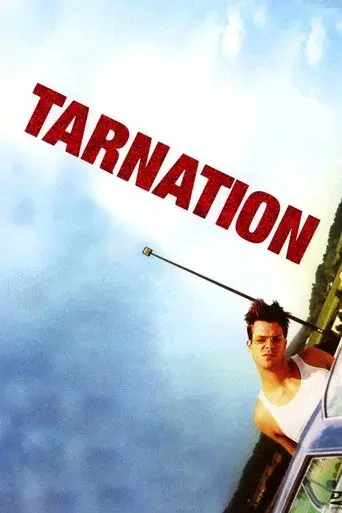
Filmmaker Jonathan Caouette's documentary on growing up with his schizophrenic mother -- a mixture of snapshots, Super-8, answering machine messages, video diaries, early short films, and more -- culled from 19 years of his life.
Tarnation

Two formidable Native American women, both chief judges in their tribe's courts, strive to reduce incarceration rates and heal their people by restoring rather than punishing offenders, modeling restorative justice in action.
Tribal Justice
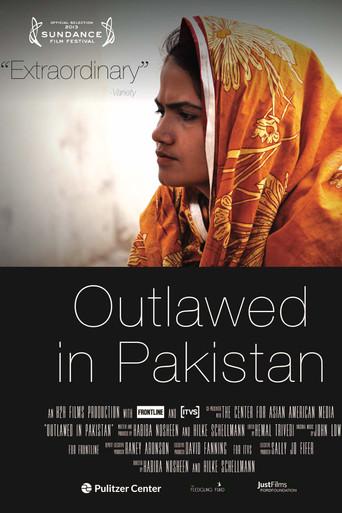
Outlawed in Pakistan tells the story of Kainat Soomro as she takes her rape case to Pakistan's deeply flawed court system in hopes of getting justice. The 13-year-old Kainat accuses four men of gang rape and shortly after is ordered to be killed by her village elders. Spanning over five years, the story is told through the perspective of Kainat and the four men accused of her rape.
Outlawed in Pakistan


The biggest trial of Nazi war crimes ever: 360 witnesses in 183 days of trial - a stunning and gripping portrayal of the most terrible massacre in history.
The Auschwitz Trial

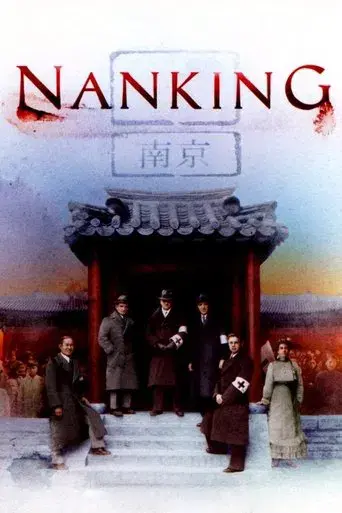
The story of the rape of Nanking, one of the most tragic events in history. In 1937, the invading Japanese army murdered over 200,000 and raped tens of thousands of Chinese. In the midst of this horror, a small group of Western expatriates banded together to save 250,000. Nanking shows the tremendous impact individuals can make on the course of history.