
Overview
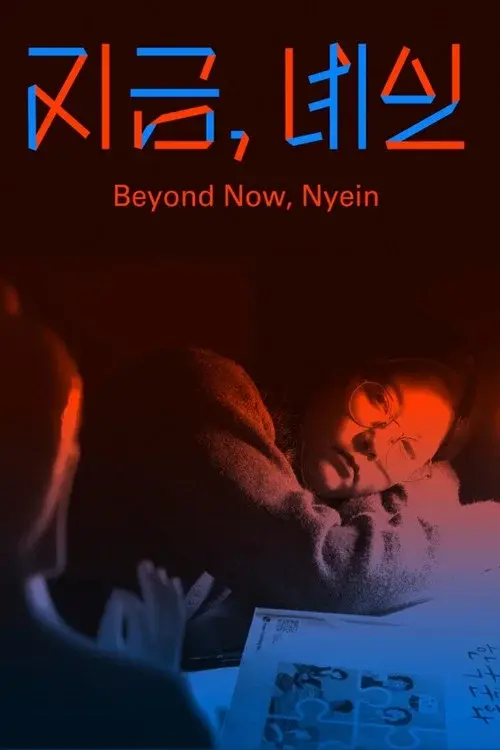
Choi Jinbae from Korea and Nyein Thazin from Myanmar are an international couple. They married seven years ago in Mandalay and, after a ceremony in Korea, planned to return. But COVID-19 left them stranded in Seoul. One day, a photo arrives from Myanmar showing a village destroyed by the coup. Urged by fellow Myanmar people to share their country's reality with the world, Choi picks up a camera. An ordinary family's life is suddenly thrust into questions of pain, solidarity, and the ethics of bearing witness.
Top Cast

Nyein Thazin
Self
Choi Jin-bae
Self
Key Film Crew
Production Stats
You May Also Like
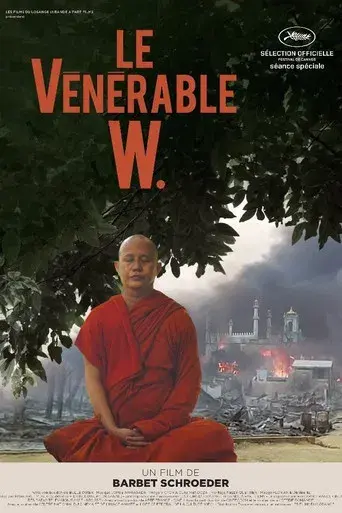
A view of the religious tensions between Muslims and Buddhist through the portrait of the Buddhist monk Ashin Wirathu, leader of anti-Muslim movement in Myanmar.
The Venerable W.

Street art, creativity and revolution collide in this beautifully shot film about art’s ability to create change. The story opens on the politically charged Thailand/Burma border at the first school teaching street art as a form of non-violent struggle. The film follows two young girls (Romi & Yi-Yi) who have escaped 50 years of civil war in Burma to pursue an arts education in Thailand. Under the threat of imprisonment and torture, the girls use spray paint and stencils to create images in public spaces to let people know the truth behind Burma's transition toward "artificial democracy." Eighty-two hundred miles away, artist Shepard Fairey is painting a 30’ mural of a Burmese monk for the same reasons and in support of the students' struggle in Burma. As these stories are inter-cut, the film connects these seemingly unrelated characters around the concept of using art as a weapon for change.
Art as a Weapon
Names of Revolution recalls the memories of those who participated in the struggle to rewrite the history of the “Busan-Masan Democratic Protests,” which has been under-represented in modern Korean history. As the then college students, seamstresses, mold technicians, combat police, workers, bus drivers, advertising planners, and photojournalists pour out their memories from over 40 years ago before the camera, vivid words come to life.
Names of Revolution


This documentary celebrates the life of former President Kim Dae-joong, who fought for democracy in South Korea and peace in the Korean Peninsula. It marks the 10th anniversary of his passing and covers his challenging journey, from his childhood on an island to his imprisonment, exile, near-death experiences, and ultimately becoming the president.
President

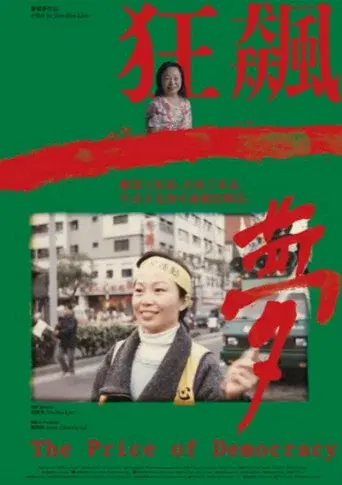
The expressions of democratization are usually interpreted by elites from two different parties but neglect the real faces/ life of every individual among the resistance rally. The director (a confused twenty-something) looks back upon the 40-year-history of democratization of Taiwan through the life experiences of two old-timers (who are grass-root rebels). He attempts to discover what causes their actions and decisions to be lefties, and what are their limitations.
The Price of Democracy
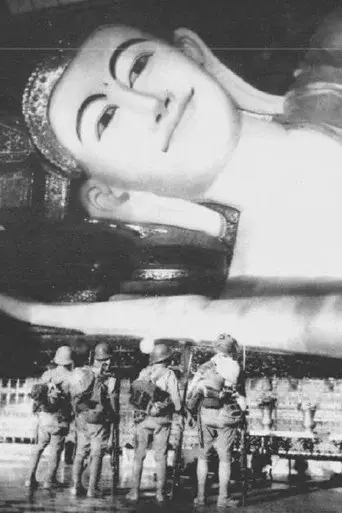
This film records the Japanese military's efforts to capture the Burma Road,one of the major supply lines to China, from the British beginning in December 1941. The film ends with the fall of Mandalay in May 1942.
Burma War Record

This Kind of Love follows Burmese human rights and LGBT activist, Aung Myo Min, as he returns home after 24 years in exile. Set against Myanmar's historical transition from half a century of brutal military rule, Myo shares his vision for equality for all - from children to transgender people to ethnic nationalities with his countrymen, to be part of his homeland's emergence from the darkness of dictatorship. Myo's story celebrates his belief that community and inclusion are fundamental to creating meaningful political and social change in Burma/Myanmar.
This Kind of Love
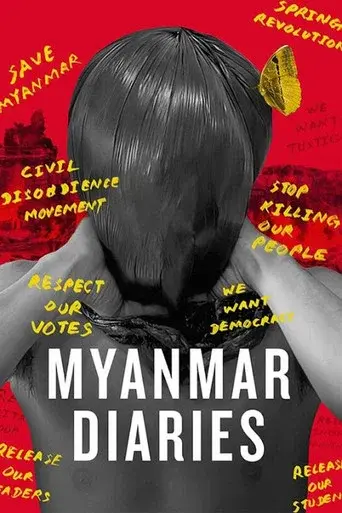
How does it feel to be forgotten by the world? A powerful collective cry denouncing the crimes of the military dictatorship installed in Myanmar after the coup perpetrated on February 1, 2021: cinema and imagination against horror and in defense of freedom.
Myanmar Diaries

A fascinating documentary, shot in the mountainous north of Burma. No filmmaker is welcome there, because, against the background of a civil war, the jade miners enter the deserted mines illegally. With the aid of filming locals, however, Midi Z was able to compile this portrait. Getting rich quick turns out to be hard and risky work Jade has always been a valuable commodity in Asia. In the mountains in the north of Burma there are valuable deposits of jade. The area forms part of Kachin State, inhabited by many ethnic groups which found themselves embroiled in the Civil War in 2010 with the Burmese government. Jade mining was halted because of the conflict. Thousands of workers, however, went to the war zone in order to dig for illegal jade. It turned the region into a no-go area and the filmmaker Midi Z, who had so far made feature films in Burma, saw no opportunity to go and film there. It was far too dangerous. © iffr.com
Jade Miners
When US-raised Jaden returns to his birthplace Myanmar, to search for his roots, he discovers a shocking truth, a new love and ultimately a possible future in his homeland.
Mudras Calling
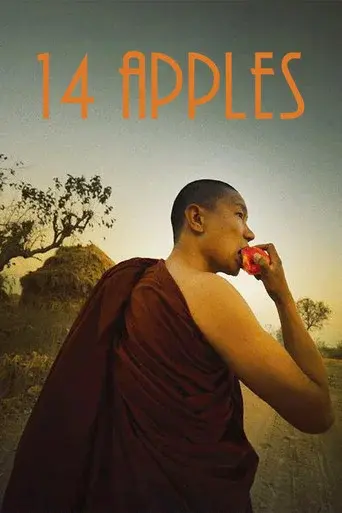
Wang Shin-hong is suffering from insomnia. A fortune teller advises the Mandalay businessman, whose car and bulging wallet suggest that business is going pretty well, to spend 14 days in a monastery, living life as a monk and eating an apple a day. Such a thing is possible in Burma today. Wang Shin-hong arrives at the rural monastery, has his head shaved and dons a red robe, in which he instantly becomes an authority. During the welcome procession, the village women, their poverty clear from their clothing and the huts in the background, put more than they have in his alms bowl. During his fleeting role as their advisor, Wang Shin-hong soon learns of the villagers’ attempts to survive and make a living as legal or illegal migrants in China, Thailand or Malaysia. He also finds out how the other monks try to generate profit and additional income.
14 Apples


Mother, Daughter, Sister (Amae, Thamee, Ama) exposes the Burmese military’s practice of using rape as a weapon of war and gives voice to Kachin and Rohingya women activists calling for justice for these crimes. Mother, Daughter, Sister revolves around the stories of four women: Shamima, a volunteer counselor working with survivors of military rape in the Rohingya refugee camp in Bangladesh, Dil Kayas, a teenage survivor, and San Lung and Lu Ra, sister and mother of two Kachin school teachers brutally raped and killed in 2015, allegedly by the Burmese military. Powerful testimonies from survivors, witnesses, and activists explore the far-reaching impact of sexual violence and trauma upon these communities, and together, the women call for justice and an end to the army's impunity.
Mother, Daughter, Sister
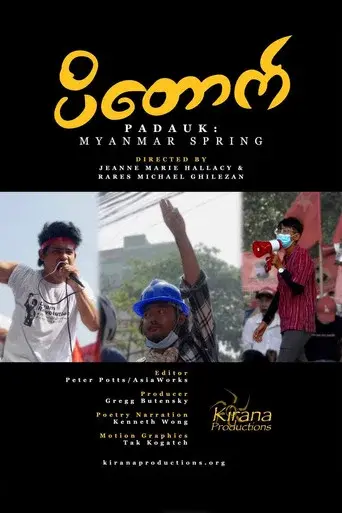
Padauk: Myanmar Spring takes the viewer to the streets of Myanmar during the heady days following the February 2021 military coup. Through Nant, a young, first-time protester, we meet three human rights activists whose lives have been turned upside down by the coup. As the protests continue, Nant comes to understand the truth of a brutal regime that has continued to wage war against its own people for decades. Against a foreboding backdrop, Nant’s political awakening regarding the plight of others in her ethnically diverse country gives hope for the future. Beautifully augmented by poetry and art, Padauk: Myanmar Spring shows the resilience and determination of the people of Myanmar, and the sacrifices they've made.

