Monikondee
Overview
Along the Maroni River between Suriname and French Guiana, Boogie, a boatman, transports fuel and supplies to remote Maroon and Indigenous communities by motorized canoe. As gold mining, floods, and corporate exploitation reshape life along the river, each stop becomes a place of exchange — of goods, stories, and songs. Moving against the current, he must navigate obligations to his clan, the river, and an unforgiving economy.
Top Cast

Boogie Adijontoe
as himself
Marius Sekende
as himself
Balijan Hugo Adeli
as himself
Hilda Glunder
as herself
Lena van Dijk
as herself
Mien Landveld Seüllen
as herself
Key Film Crew
Production Stats
You May Also Like

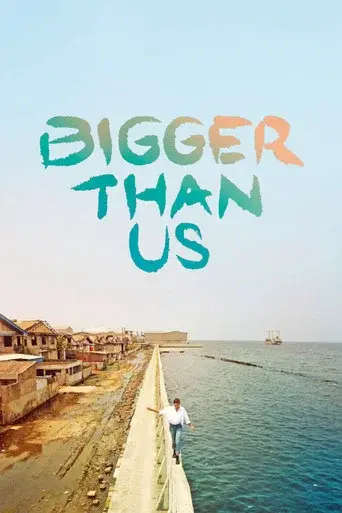
For six years, Melati, 18, has been fighting the plastic pollution that is ravaging her country, Indonesia. Like her, a generation is rising up to fix the world. Everywhere, teenagers and young adults are fighting for human rights, the climate, freedom of expression, social justice, access to education or food. Dignity. Alone against all odds, sometimes risking their lives and safety, they protect, denounce and care for others. The earth. And they change everything. Melati goes to meet them across the globe. At a time when everything seems to be or has been falling apart, these young people show us how to live. And what it means to be in the world today.
Bigger Than Us

On 1500 metres above sea level, on the slope of the mountain Hallingskarvet, stands "Tvergastein', the cabin of Norwegian philosopher Arne Naess. In his life he has spent nearly 12 years in this hut, where he wrote several books and essays on philosophy and ecology. In this film, Naess tells about the concept of 'deep ecology', which was first introduced by him in 1973. One of the basic tenets of deep ecology is that nature has a value in itself, apart from its possible use value to humans. Next to being a famous mountaineer, Naess has been a longtime activist in the environmental movement. He gives an inspiring account of his participation in blockades to prevent the Alta river in northern Norway (the area of the Sami, an indigenous people) from being dammed.
The Call of the Mountain


This documentary explores the ecosystems of the intertidal zone in British Columbia. An "intertidal zone" is an area that is covered by the highest tides and exposed during the lowest.
The Intertidal Zone


The Acadian Forest once spanned across the entirety of modern day New Brunswick and beyond and has been home to a variety of Indigenous peoples, animals, and tree species. This documentary listens to several experts in their fields, all relating to the land and peoples as they discuss the meaning to the forest to Indigenous people, themselves, and the land itself. See what experts say has happened to the former glory of the forest, its use throughout industrialization, modern times, and where things can go into the future.
A Beautiful Forest
Capturing CO2 to recycle it, brightening clouds to better intercept sunlight, massive reforestation: here's an overview of scientific solutions to combat global warming that offer a glimmer of hope.
Can We Cool the Planet?
A document on the importance of forests to the national economy. It represents forests not only as a rich storehouse of wood, but also as an important factor for continuous water supply, as they regulate the water cycle and prevent both droughts and floods.
Zelené priehrady
The Shrimp is a lush visualist's documentary that follows the life cycle of a shrimp along the marshes of Savannah, Georgia. Beautifully etched images and a canny audio soundtrack create a rich observational work about Southern culture, human folly and the interplay of natural and built environments.