
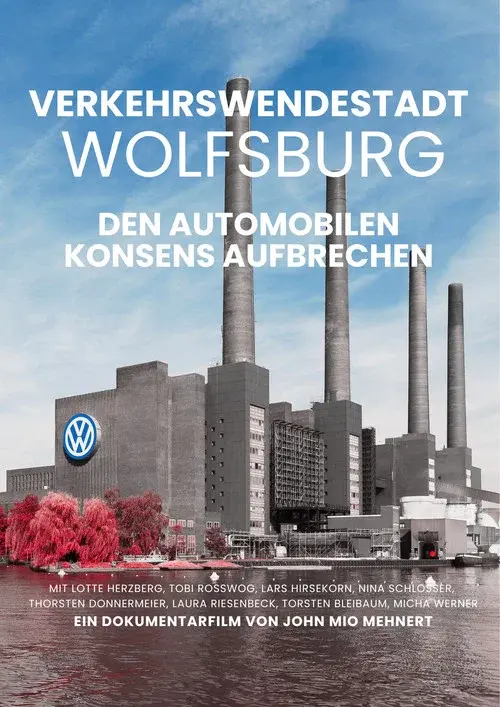
Wolfsburg - mobility transition town
Original Title: “VerkehrsWende-Stadt Wolfsburg”
“Struggling workers & creative activists break up the automotive consensus”
Overview
In August 2022, a handful of creative activists went to the “lion's den” in Wolfsburg, the heart of the automotive industry, for two years. Their goal: to break up the automotive consensus - to open a window of opportunity through creative campaigns and colorful actions together with militant workers. Their goal was to reach the conversion of production to things we really need - and socialization - the factory for those who work in it. The film, with some action scenes and many interview passages, shows the effectiveness of direct action on social awareness. “It doesn't take many to make a difference,” the activists and workers are convinced. It's about thinking about the social and ecological issues together and acting accordingly.
Top Cast

Tobi Rosswog
himself
Lotte Herzberg
herself
Lars Hirsekorn
himself
Nina Schlosser
herself
Toto Bleibaum
himself
Laura Riesenbeck
herself
Key Film Crew
Production Stats
You May Also Like

Around the fire, travellers and pirates recount their memories, their dreams, their battles. From one language to another, from story to story, we hear the roar of the storm and the rustle of the leaves, the menacing sirens and the wild dances, the clash of the swords and the song of the birds. Until dawn, a thousand and one paths take shape on this imaginary yet real island.
An Island and One Night
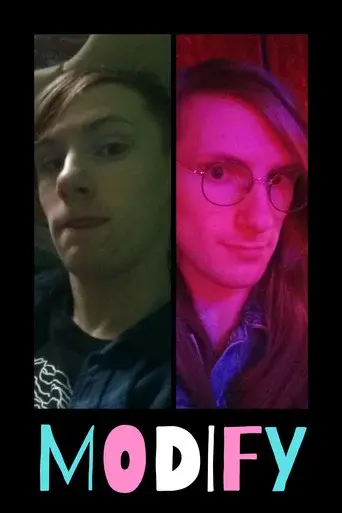
A timeline of transformation, compiled from 8 years' worth of photos by and of transgender actress and filmmaker Robyn Adams.
Modify
A group of artists settle in a swamp on the banks of the Indre River. Meanwhile, a voice describes a utopian world.
I'll See You Again


For Los Angeles natives living in the early 1900s, bicycles and streetcars shared the road as our primary modes of transportation. But the arrival of the freeway effectively wiped them out. Today, a collective of cycling communities fight for protected bike lanes and road safety, determined to bring a new era of mobility justice to the city.
Spokespeople
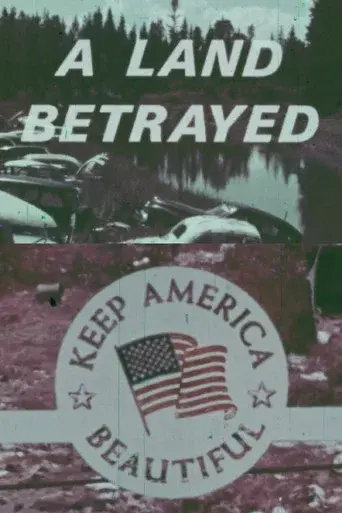
Produced by Alfred Higgins Productions with assistance from the University of Missouri-Columbia’s Academic Support Center Film Library, Keep America Beautiful, Inc., and Keep Los Angeles Beautiful, Inc., the 1963 short film A Land Betrayed examines the various ways people have spread the “cancer of ugliness” across America and offers call-to-action solutions to combat the nation-wide problem.
A Land Betrayed

How does mobility reflect social status and racism? A story of two African American women working to provide and improve mobility in their community, as they tell the history of the Safe Bus - formerly the biggest black-owned transportation system in the world.
The Lack of It
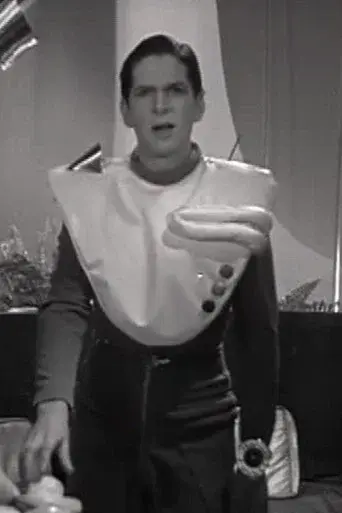
A utopia about Finland in the year 2000, when man is finally the master of himself and his world. In the imaginary year 2000, a historical documentary series is created to provide a look at the irrational history of man in the 20th century, with all the wars and all that. The setting is an ascetic futuristic home, outside of which people move around in personal helicopters. The optimism about the future culminates in a school presentation shown simultaneously on giant screens in living rooms across the country, in which rational thinking is shown to have finally reached its fulfillment. On the other hand, faith in the development of humanity and a peaceful future is reflected in this post-war, escapist and dogmatic vision of the future.
In the Year 2000
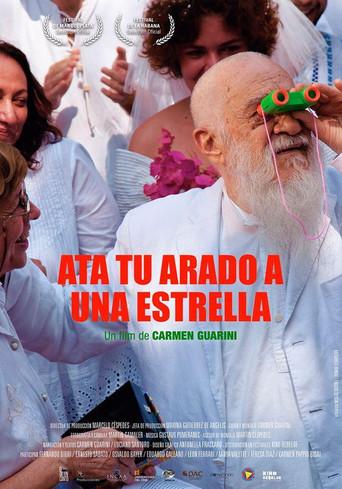
In 1997 the Argentine filmmaker Fernando Birri returned to his home country to film a documentary on the 30th anniversary of the death of Che Guevara and the relevance of utopias at that time. Carmen Guarini decided to record those moments. A rough edit of this film was hidden away on a fragile VHS tape for twenty years. Today, these images come to life and shed some light on the life of this Latin American poet and master filmmaker, who, at the age of 92, still refused to give up on his own utopias.
Tie Your Plow to a Star
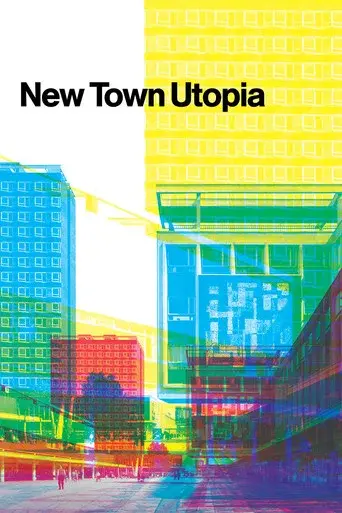
What happened when we built Utopia? New Town Utopia is feature documentary about the power of art, architecture, the state of the nation – and some rather angry puppets.
New Town Utopia
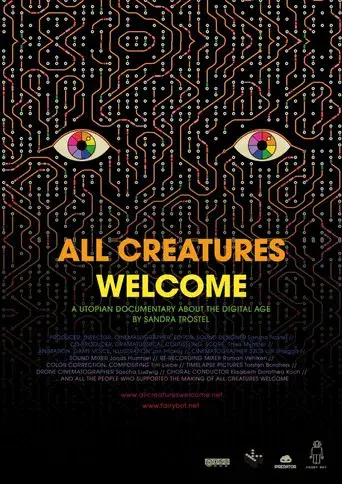
All Creatures Welcome explores the world of hackers and nerds at the events of the Chaos Computer Club, Europe's largest hacker association. The film dispels common clichés and draws a utopian picture of a possible society in the digital age.
All Creatures Welcome

The first episode in a series of “adaptations” of poet Bernadette Mayer’s book Utopia that artist Beatrice Gibson envisions to undertake over the next decade, producing a series of small, quotidian films that together, and over time, will constitute an epic. This first film is drawn from Chapter 4, entitled “The Arrangement: of Houses & Buildings, Birth, Death, Money, Schools, Dentists, Birth Control, Work, Air, Remedies, and So on” and was shot at home during the pandemic.
Leisure, Utopic

Sanctuary explores queer spirituality and utopian sexualities through the figure of Purusha Androgyne Larkin (1934–1988), a monk, pioneering gay filmmaker, and self-proclaimed cosmic-erotic mystic. Larkin’s 1981 book, 'The Divine Androgyne According to Purusha', challenged repression with a spiritual vision rooted in eroticism and presented a radical path to cosmic-erotic consciousness through ‘extreme’ forms of sexual pleasure. Sanctuary explores Larkin's attempt to form a utopian, pleasure-based spiritual community, and considers the complex legacies of his ideas in queer culture. Shot on 16mm, the film weaves together the voices of Larkin’s friends and followers, creating a portrait in absentia of a figure ahead of his time.
Sanctuary

Ilya Kabakov is considered one of the most important contemporary artists worldwide. Born and raised in the Ukraine in the period between Stalin and Gorbatschow he left the country in the 80s. In his Installations and his numerous paintings Kabakov creates a world of its own, which leaves the heaviness of socialist and post-socialist life far behind. The film links Ilya Kabakovs artistic spaces with insights into Russian everyday life, which itself sometimes appears like an installation by the artist.