
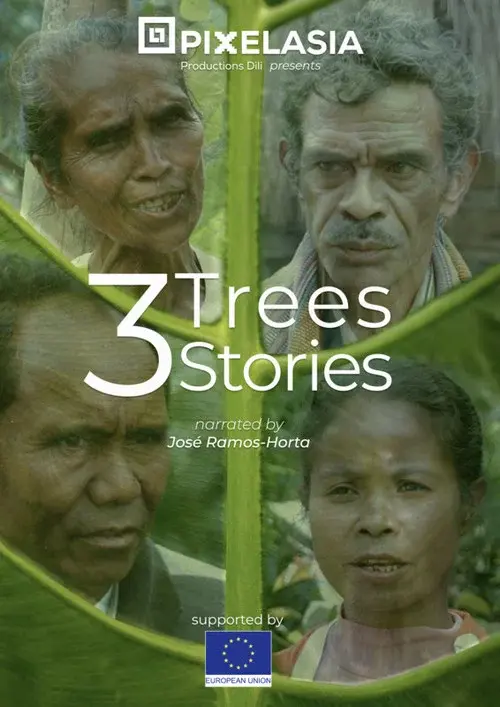
3 Trees, 3 Stories
Overview
Narrated by former President and Nobel Peace Prize Laureate José Ramos-Horta, this short documentary leads us to three rural farming communities in Timor-Leste, a small island state in South East Asia. How can we protect our land, culture and our ancestors’ traditions while at the same time creating better lives for future generations? Three Stories. One country. Beautiful Timor-Leste. (Official Overview)
Top Cast

José Ramos-Horta
Narrator
Key Film Crew
Production Stats
You May Also Like
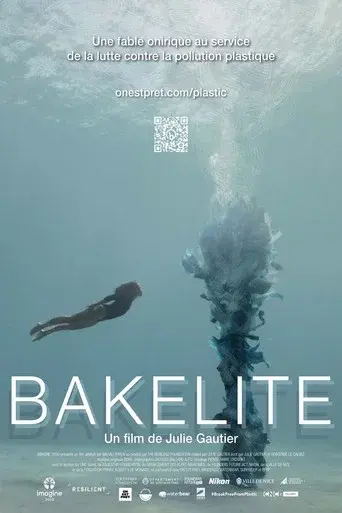
This underwater ballet is an ecological story depicting our paradoxical relationship with plastic. Bakelite launched the #SickOfPlastic campaign from On Est Prêt, along with the Surfrider Foundation, Break Free from Plastic and the Resilient Foundation. Photography was directed by Jacques Ballard, a specialist in underwater cinematography.
Bakelite

Titou will soon be forty. He lives high up in a sheep shed in the Corbières mountains. With Soledad, who lives in a nearby caravan, they make their own wine, compose their music, live their love in step with the seasons – much as you might cultivate resistance.
The Golden Age

Filmed at Masonboro Island, an undeveloped barrier island in southeastern North Carolina, “Tides” contemplates the liminal space between the modern technological world and that more ecological dimension we label as “nature” or “the environment.”
Tides
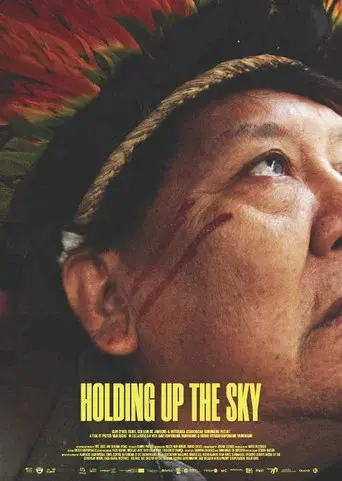
"When the shamans stop dancing and life in the rainforest loses its balance, the sky will collapse and come to crush everything." This wisdom is passed down from generation to generation by the Yanomami of Brazil. But gold miners are polluting the rivers, shamans are dying, the rainforest is disappearing and the earth is getting hotter. Davi Kopenawa, a tribal leader and spokesman for the Yanomami, has been fighting relentlessly against the colonization of his land for 40 years. He warns Westerners that when the sky collapses, they too will be crushed. Why don't they listen? Translated with www.DeepL.com/Translator (free version)
Holding Up the Sky


Zéïr, a historian of the future, travels up the Huveaune in search of impressions. Driven by a desire to better understand the river, she meets people who ease her concerns. Since the narrative of the Huveaune has long been dominated by male voices, Zéïr hopes to construct a different, more fluid one.
Ubelka


For 100 years, we have waged war on wildfire in the United States, and ironically, have created a more volatile landscape than ever.
Living with Wildfire

Along the Maroni River between Suriname and French Guiana, Boogie, a boatman, transports fuel and supplies to remote Maroon and Indigenous communities by motorized canoe. As gold mining, floods, and corporate exploitation reshape life along the river, each stop becomes a place of exchange — of goods, stories, and songs. Moving against the current, he must navigate obligations to his clan, the river, and an unforgiving economy.
Monikondee

The 20 km zone surrounding the Fukushima Nuclear Power Plant was designated an evacuation zone due to the radiation caused by the accident in March 2011. However, the thousands of people of Itate, situated just outside the zone, and those who had fled the area and taken shelter there were left to their own devices for over a month. Later on Itate became a restricted area and the residents were allowed only visits having to leave the area for good. The place became a ghost town, as it was too close to the Zone and many pets and farm animals are stranded there. There are said to be 150~200 dogs, 400~800 cats, 50 chickens and a pig although the exact numbers are unknown. The public interest in the accident has all but gone but there is one man who still cares what happens to those animals.
Hidden Contamination

Milah van Zuilen, visual artist and forest ecologist in training, uses the square to deal with the habit of people to construct nature. Square Fieldwork is filmed in the Bohemian forest in the Czech Republic and the concrete structure of Barendrecht, The Netherlands.
Square Fieldwork
In the jungles of the Solomon Islands, a remote archipelago in the South Pacific, a biologist is attempting to do something Charles Darwin and Ernst Mayr never accomplished: catch evolution in the act of creating new species. Albert Uy is on the verge of an amazing discovery in the Solomon Islands, but there's a threat looming on the horizon. The islands' resources are being exploited, putting all local wildlife at risk. It's a race against time to gather the evidence necessary to prove the existence of a new species before it's lost forever.
Islands of Creation
Spoonie, the spoon-billed sandpiper, would have long since gone extinct without Dr. Christoph Zöckler and a tight-knit group of international ornithologists. As if that weren’t bad enough, the migration route of this sparrow-sized wading bird—with its peculiar spoon-shaped bill—runs from Russia through North Korea and China all the way to Myanmar, passing through several of the world’s crisis regions of the past decade. The work of the task force is therefore also a political challenge. It requires diplomatic sensitivity in coordinating with the countries along the flyway. In the tragicomic story of Spoonie’s fate, the struggle for threatened biodiversity in an increasingly fragile world is reflected.
Saving Spoonie
How would natural habitats develop without human interference? In this documentary we follow an international team of scientists and explorers on an extraordinary mission in Mozambique to reach a forest that no human has set foot in. The team aims to collect data from the forest to help our understanding of how climate change is affecting our planet. But the forest sits atop a mountain, and to reach it, the team must first climb a sheer 100m wall of rock.