

Raï Story: From Cheikha Rimitti to Cheba Djenet
Original Title: “حكايات الراي”
“From Cheikha Rimitti to Cheba Djenet”
Overview
Raï Story is a musical journey in search of the Raï legend, Cheikha Remitti, in Oran, Algeria, where the Raï musical tradition began. In 1923, the first Raï singers performed behind screens during ceremonies to protect their identity. It was only when the music of singer Cheikha Remitti began to gain popularity among the general public that Raï music was made public, in the 1940s. Cheikha Remitti, who lives between Paris and Oran, is nowhere to be found, the filmmakers then decide to meet producers, musicians, singers like Cheba Dalila or Cheba Djenet, for whom Remitti created a wake. The opportunity, through these unique stories, illustrated with archive images, to retrace the important place of women in this musical tradition and the transformation of Raï music from the 1960s to 2000.
Top Cast

Cheikha Remitti
Self

Cheba Djenet
Self

Cheba Dalila
Self

Chaba Fadela
Self (archive footage)

Chaba Zahouania
Self (archive footage)

Cheb Hasni
Self (archive footage)

Cheb Khaled
Self (archive footage)
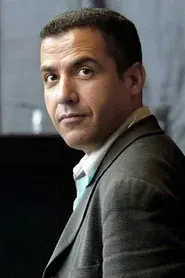
Cheb Mami
Self (archive footage)

Raïna Raï
Self (archive footage)

Messaoud Bellemou
Self (archive footage)

Mohamed Lamine
Self (archive footage)

Belkacem Bouteldja
Self
Key Film Crew
Production Stats
You May Also Like


A trio of female soul singers cross over to the pop charts in the early 1960s, facing their own personal struggles along the way.
Dreamgirls
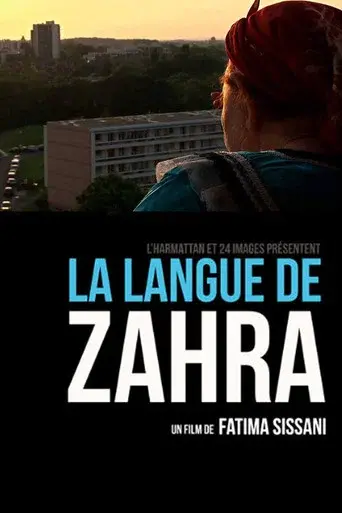
The Kabyle people define themselves first and foremost through the spoken word. Every gesture, every moment of their daily lives can give rise to a language of verse, metaphors, and proverbs. After all, isn't it said that in the mountain foothills they call home, verbal dueling was a common pastime? It is a reality difficult to visualize when one looks at the immigrant society where these men and women—often illiterate—are relegated solely to the roles of manual laborers and housewives; one can hardly imagine the eloquent orators they become when they return to their native tongue.
Zahra's Tongue

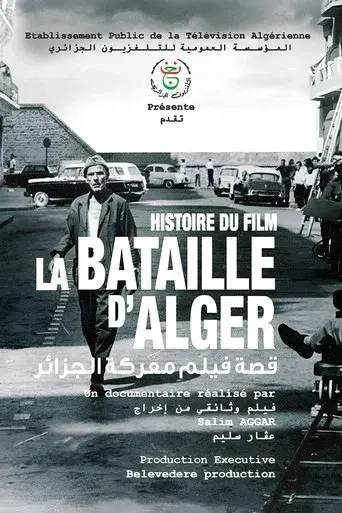


In 1967, Visconti came to Algiers for the filming of The Stranger with Mastroianni and Anna Karina. Camus, during his lifetime, had always refused to allow one of his novels to be brought to the screen. His family made another decision. The filming of the film was experienced in Algiers, like a posthumous return of the writer to Algiers. During filming, a young filmmaker specializing in documentaries Gérard Patris attempts a report on the impact of the filming of The Stranger on the Algerians. Interspersed with sequences from the shooting of Visconti's film, he films Poncet, Maisonseul, Bénisti and Sénac, friends of Camus, in full discussions to situate Camus and his work in a sociological and historical context. “The idea is for us to show people, others, ourselves as if they could all be Meursault, or at least the witnesses concerned to his drama.”
A Propos D'Un Crime


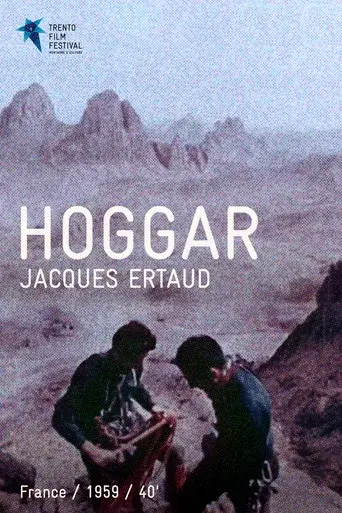
A 1959 documentary about climbing in the Hoggar Mountains of Algeria. For the first time, a mountain expedition was organized for 60 young aspiring climbers, accompanied by renowned mountaineers such as Lionel Terray, Lucien Bérardini, Maurice Herzog, and Jean-Paul Gardinier. In two weeks, dozens of new routes, often extremely difficult, were established. Jacques Ertaud's camera followed the climbers through all the challenging sections of the first ascent of the south spur of Assekrem.
Hoggar

This is the journal of an expedition that, starting from the oasis town of Djanet, embarked on a 12-day journey guided by a member of the Algerian Tourism Club to discover the rock paintings of Tassili n'Ajjer in southeastern Algeria. These paintings date back to prehistoric times (10,000 to 5,000 years ago) and are located on an uninhabited rocky plateau whose highest point reaches 2,158 meters. Considered one of the largest and oldest "open-air rock art museums" in the world, the Tassili n'Ajjer boasts a particularly rugged landscape: the vast rocky plains, which sometimes give way to "forests" of monoliths, are riddled with akbas (holes in the escarpments accessible only on foot or by camel) and numerous faults and canyons. The Tassili n’Ajjer National Park was inscribed on the UNESCO World Heritage List in 1982 and classified as a biosphere reserve in 1986.
Terra Senzo Tempo

Shot under extreme conditions and inspired by Mayan creation theory, the film contemplates the illusion of reality and the possibility of capturing for the camera something which is not there. It is about the mirages of nature—and the nature of mirage.
Fata Morgana

The climbing couple Heinz Mariacher and Luisa Iovane abandon their usual winter training spot to go in search of places more conducive to free climbing in Algeria in the Sahara desert, more precisely in the Hoggar massif, which saw pass the cream of world climbing Lionel Terray, Roger Frison-Roche, Lucien Bérardini, Michel Vaucher, Pierre Mazeaud, Guido Monzino, Patrick Edlinger, Patrick Berhault and many others. Their objective, to climb the east face of Garet El Djenoun, 500 m high, failed because the wall was too smooth and the cracks unstable. The journey continues in the Hoggar massif towards other peaks, where they find the climbing conditions they were hoping for. An overhang in the face of Tizouyag Nord will prove to be a major challenge for Heinz Mariacher.
Sahara Vertical

Immigrated to the Paris region since 1964, Kader decides to spend the summer holidays with his family in his native village, not far from Algiers. These few weeks, so eagerly awaited by both sides, constitute a special moment full of strong emotions. The camera follows the family in their meetings, their reunions, their difficulties, their visions of the country and its region, the celebrations, the weddings, their return to France… This film raises many questions. Within this family itself, between those who stayed in the country and those who emigrated to France, how do we perceive the situation in Algeria? What hopes do each of them have for their country? What about the Franco-Algerian relationship? Contemporary immigration? The desire for exile of Algerians today? Different discourses on both sides of the Mediterranean? The desires of each of them…