

Overview
We get to meet Aslanbek—a teenage shepherd in the mountains of Kyrgyzstan. “Aslanbek” is a story exploring the dynamics of relationship between humans and animals, what we can learn from the mountains, and about dreams. In short, it's a story about our forgotten values.
Top Cast

Aslanbek Zhabakeev
self
Key Film Crew
Production Stats
You May Also Like

As a boy, Dawa was an illiterate Tibetan nomad whose life revolved around herding yaks. At 13, his life changed: through a series of visions, Dawa acquired the gift of telling the epic story of Tibet’s King Gesar. Now, at 35, Dawa receives a salary from the government as a guardian of national cultural heritage and is regarded as a holy man by his community. When an earthquake reduces his hometown to rubble, redevelopment of the region takes a giant leap forward. In the midst of such seismic shifts, Dawa seeks healing from King Gesar and other divine protectors of the land.
A Gesar Bard's Tale

One of the highest achievements of the new wave of Kirghiz cinema, which emerged in the mid-1960s. This story of a boy building sandcastles on the shores of the Issyk-Kul Lake becomes a documentary parable on the tensions between an artist and society.
Castles in the Sand

A documentary on the experiences of the Nubetya Yaptiks nomadic family in the Yamal Peninsula, Eastern Siberia, from 1992 to 2001.
Mothers of Life

On the trail of nomadic peoples and the ancient Silk Roads, Thomas Delfino, accompanied by Léa Klaue and Aurélien Lardy, embark on an expedition to reach one of the most remote places on the continent. The Kokshaal-Too range is located in the Tian Shan mountain range, on the border of Kyrgyzstan and China, and harbors unexplored mountains and faces. This skilled team, accompanied by renowned guides Hélias Millerioux and Jean-Yves Fredriksen, finds themselves propelled into a space where time seems to have suddenly come to a halt.
Chronoception

In recent years, the number of people living in a bus or camper has increased significantly. But for this growing group, there are fewer and fewer places where you can legally park. The Kardinge car park in Groningen, a popular refuge for people staying in their campers, is also under pressure. Does the Netherlands actually have room for nomads and what drives people to want to live off the beaten track? Filmmaker Tom Tieman temporarily goes into hiding at the Kardinge car park and meets the current residents. Read more
Nomadenland

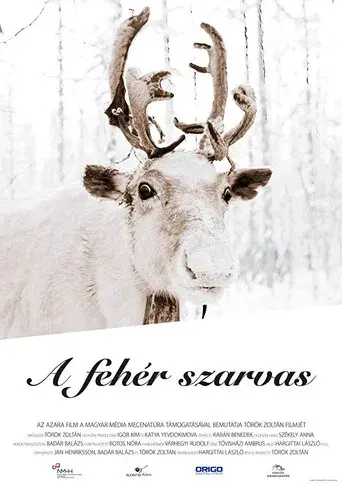
Imagine one of the most remote wildernesses in the world. Granddaughter Masha and Vladimir, the protagonists of this story from Central Siberia try the impossible to keep their nomadic traditions alive.
The White Reindeer
AMIN portrays Qashqai musician Amin Aghaie, a young modern nomad and his family who despite facing steep financial, cultural and political obstacles are dedicated to their art and culture. Amin travels to remote towns and villages to record the music of the surviving masters whose numbers decline each year. His nomadic family are selling their meager belongings to help support their son's education in performance and ethnomusicology at Tchaikovsky's Conservatory in Kyiv, Ukraine, but it is not enough. Amin, desperate to finish his academic education, sells his violins one at a time just to pay for his tuition.
Amin


Four men from a nomadic Tibetan tribe undertake their annual, ritualistic pilgrimage to a sacred salt lake. Salt gathered in this traditional fashion will be sold to provide the economic livelihood of the tribe for the coming year. The journey, necessary for the group's survival, also incorporates a number of rituals necessary for their culture to survive in the modern world.
The Saltmen of Tibet

Filmed in six countries during fifteen years , "The Last Transhumance" takes us into the world of shepherds who walk with their animals very long distances in search for food: an ancient way of life not compatible with the modern world.
The Last Transhumance
A documentary film about the representation of the Kyrgyz culture in the USSR, as well as the reality of Kyrgyz dancers in Russia.
I remember

A couple of artists travels through the Mexico desert to present their puppet show.
The Desert Wagon


The last two surviving members of the Piripkura people, a nomadic tribe in the Mato Grosso region of Brazil, struggle to maintain their indigenous way of life amidst the region's massive deforestation. Living deep in the rainforest, Pakyî and Tamandua live off the land relying on a machete, an ax, and a torch lit in 1998.


