

Overview
Hailstorm is based in the Narmada valley in central India, an area with extremely low levels of groundwater. Farmers here battle for survival, pitched against the vagaries of climate change. Following the events of a freak hailstorm over four seasons, the film unfolds the vulnerability and precarity of those that are at the sharpest end of global capitalism’s rapacious greed and the furthest from its benefits.
Key Film Crew
Production Stats
You May Also Like

A prismatic meditation on pollution in the capital of the World’s biggest free-market democracy and the most polluted and populated city, Delhi – a film about the pollution inside of the human mind.
Invisible Demons
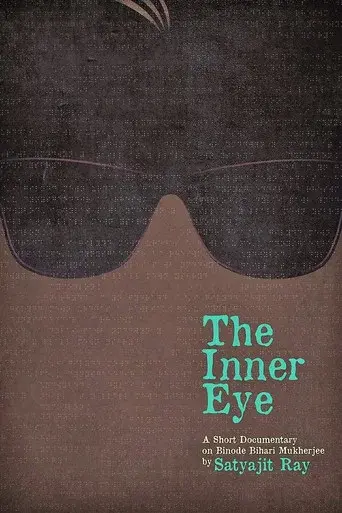
At the age of 54, Binode Bihari Mukherjee, an accomplished painter, lost his sight following an unsuccessful cataract operation. He continued to create art despite his loss of sight. The documentary explores Binode Bihari’s inner eye that guides his fingers to create art.
The Inner Eye

Indian freedom fighter Gandhiji was killed by Nathuram Godse. But what made Nathuram Godse to take this extreme step?
Why I Killed Gandhi
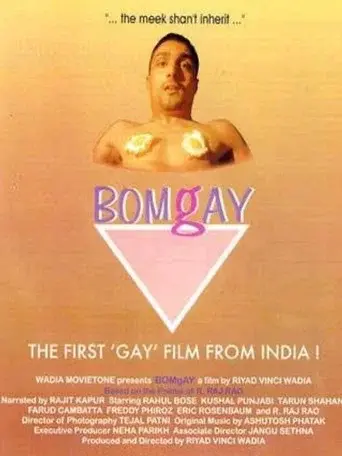
Based on the poetry of R. Raj Rao, Bomgay is a collection of six vignettes that depict the underground and complex nature of the gay identity in urban India. Part Genet, part Bollywood, this film combines acidic verse and insightful imagery to reveal the emerging gay community in the post-liberalized India of the 1990s.
BOMgAY

This documentary uncovers the dark events of 2024, when, for the first time in India’s history, a sitting Chief Minister and an entire political leadership were jailed without evidence.
Unbreakable
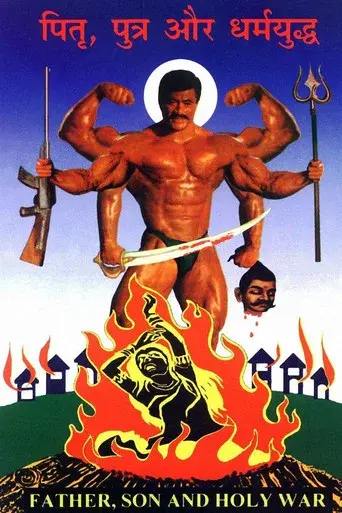
Filmmaker Anand Patwardhan looks to history and psychology as he delves into the possible reasons behind the demolition of the Babri Mosque.
Father, Son and Holy War

Dancing is a passion of the rich, believes Manish Chauhan , the 21-year-old son of a taxi driver in suburban Mumbai. Yet he, like his friend, 15-year-old Amiruddin Shah daydream of becoming principal ballet dancers in big American companies.
Yeh Ballet

Though times have changed, Ram still uses old ways of farming due to a drought in the village. His brother, Bala, goes to Bombay to earn his living. Mahadev, a Zamindar in the village, eyes Usha, the lover of Bala. Due to the drought, the crops fail in the village, and Shikh Sahib, a social worker, comes to help the farmers, and shows them new ways of farming. Ramu goes to Bombay to take a loan for cooperative farming and asks Bala to turn back to the village, but he refuses. [The film is a socio-economic study of post-independence India, blending documentary elements with narrative storytelling. The film is often described as a "simple story woven into the documentary design" and features actors like Prithviraj Kapoor and Dev Anand.]
India Is Ours
From the vast coastlines of Tamil Nadu, to the arid lands of Rajasthan and the lush greenery of Sikkim, the camera joins local children on the journeys of their daily lives: to and from school, in their classes and after-school play, and doing chores. The children are shy but face the camera directly to talk about their families, their teachers, and their own feelings. Their gazes imply straightforward doubts about the adult world, which the director captures, in taking a sincere look at the meaning of education.
I Wonder...


A very spellbinding story about the reel and real life of great old thespian Kanhaiyalal and his bygone era when Indian Cinema was at a nascent stage. The story tells about his inspiring journey from a confused, gullible youth to a mesmerizingly spontaneous actor. It also unfurls the turbulent phases of Kanhaiyalal's life where there is excessive alcoholism and the mysterious death of his son.
Naam Tha Kanhaiyalal

Somi is pregnant with her second child. A girl, she hopes. Together with her husband she prepares for this new phase of their parenthood. It means that their son has to go to school, but as an ex-Naxalite that is tough to achieve in contemporary India, where people like them are third-rate citizens. They lack the certificates and an opaque bureaucratic process doesn't help. Directors Isabella Rinaldi, Cristina Hanes and Arya Rothe of the NoCut Film Collective concentrate on Somi's close family ties, painting a portrait of ex-Naxalites in India. Once, Somi and her husband were communist rebels fighting for the rights of Indian tribes. However, to safeguard their family's welfare, they surrendered to the government in exchange for marginal compensation and simple accommodation.
A Rifle and a Bag

Film made during the repressive days of the Emergency in India documents the 1974-75 uprising of the people of Bihar in Eastern India.
Waves of Revolution
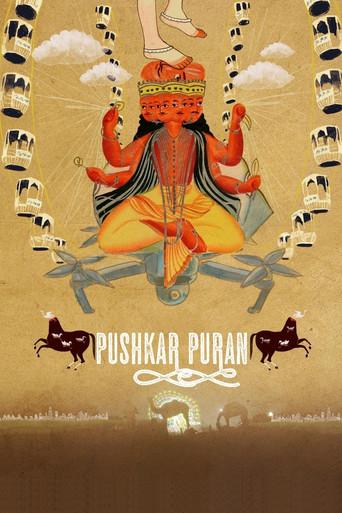
An attempt to engage with the historical, mythical and the contemporary worlds of the city of Pushkar
Pushkar Puran

'Mod' is an attempt by the filmmaker at communicating with the young men who hang out at the ‘notorious’ water tank in her neighbourhood in Pratap Vihar, Ghaziabad. The water tank is a space that is frequented by the so-called ‘no-gooders’ of the locality, a place where they play cricket, play cards, drink and smoke up. When she enters the space with her camera, the boys are curious and at the same time wary of it and her. They sometimes resist, sometimes protest, and at times, open up. As the film unfolds we get a hint of the lives the boys lead and the fragile world they create for themselves at the water tank.
