Being Japanese
“Japan: One nation, one civilization, one language, one culture, and one race, the like of which there is no other on this earth?”
Overview
A documentary exploring what it means to be Japanese.
Key Film Crew
Production Stats
You May Also Like

Bianca Charamsa made her way to Japan during this year's cherry blossom season to get to grips with the country's character through conversations with some of its artists. Although two violent atomic catastrophes - the bombing of Hiroshima and the Fukushima nuclear disaster - have shaken and shaped modern-day Japan, the artist Takahiro Iwasaki believes that memory of 6th and 9th August 1945 is slowly fading, despite all the folded cranes left by visitors to the memorial sites. Natural catastrophes like sea- and earthquakes also rock Japan time and time again; perhaps this explains why the Japanese aesthetic Wabi Sabi incorporates both beauty and decay...much like the beauty of the cherry blossom as it withers during the annual festival of Hanami
Empire of Mirrors

Documentary about atheist Madalyn Murray O'Hair who, for 30 notorious years, successfully challenged God in America, and was brutally murdered in the summer of 1995. O'Hair had come to occupy a special place in the American psyche since her 1963 campaign which ended compulsory prayer in US schools after a Supreme Court action on behalf of her son William. She journeyed from Cold War paranoia, through to the rise of the neocons and born again Christianity in Reagan's America and beyond. (Storyville)
Godless in America
“Balance of Life” is a film about life’s and human kinds’ fight to find the balance between our own evolving life style and the nature of the planet we inhabit. The human race is drifting further and further away from its real roots and from what being a human is really about. The speed of development has increased to a state where humans have a hard time keeping up. We find ourselves in a situation where both our own and the planets’ wellbeing is severely threatened. As a last resort human is relying on faith to find the balance. Is faith the last defense of man or is this world guided by forces greater than us? Is this force God, evolution or just the mere sum of coincidences that formed the universe, the natural order and laws of physics?’ Watch it here (https://vimeo.com/51203265)
Balance of Life
In this tape, Ko Nakajima and Video Earth Tokyo interview a homeless man. The subject is initially angry and frustrated, but gradually opens up and shares stories about his life. Under A Bridge was later broadcast on cable television.
Under a Bridge
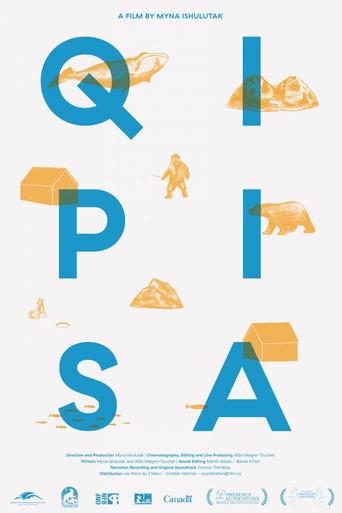
The director goes back to her roots in Pangnirtung, amongst her family and community. It leads her to another journey: to Qipisa, the outpost camp from where they were uprooted.
Qipisa

In Japan, more than four million young people survive by taking on precarious jobs. They are called “freeters”. The film gives voice to these “discard-after-use” workers, who regard their situation with both lucidity and desperation, as well as to ex-freeters who have become activists in the fight against exclusions.
Tokyo Freeters

Rap de Saia is a documentary that reports, through the voices and rhymes of the protagonists themselves, part of the historical trajectory of Female Rap in the State of Rio de Janeiro. In addition to its historical trajectory, Rap de Saia brings a collection of themes that leads us to reflect on women in today's society.
Rap de Saia
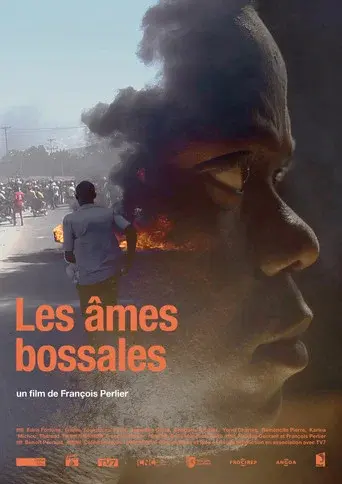
The Soul of Bossales is an immersion in the heart of popular Haitian culture whose spirituality and creativity have been forged by a surge of freedom and identity affirmation. Foukifoura, Édris, Charlotte or Ramoncite, “Bossales” characters with committed artistic and political acts, give us the gripping story of a very harsh reality: material and health precariousness, political violence, neo-colonialism.
The Soul of Bossales

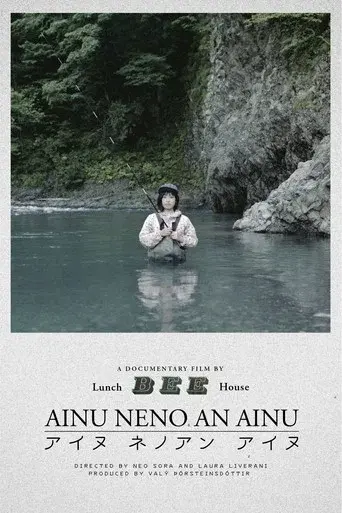
This documentary started as part of a photography project about the indigenous Ainu population in northern Japan, portraying people from tightly knit communities. They feel deeply connected by their culture and tradition. With gorgeous pictures, the directors explore how different generations of Ainu reflect on their identity after centuries of oppression.
Ainu Neno An Ainu
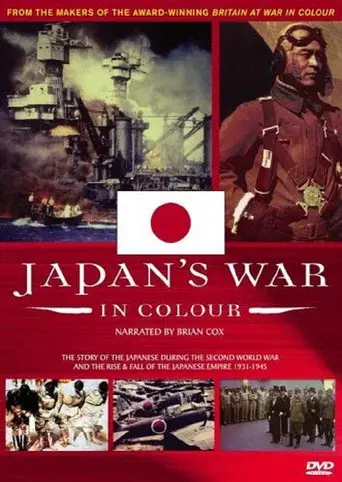
Using never-before-seen footage, Japan's War In Colour tells a previously untold story. It recounts the history of the Second World War from a Japanese perspective, combining original colour film with letters and diaries written by Japanese people. It tells the story of a nation at war from the diverse perspectives of those who lived through it: the leaders and the ordinary people, the oppressors and the victims, the guilty and the innocent. Until recently, it was believed that no colour film of Japan existed prior to 1945. But specialist research has now unearthed a remarkable colour record from as early as the 1930s. For eight years the Japanese fought what they believed was a Holy War that became a fight to the death. Japan's War In Colour shows how militarism took hold of the Japanese people; describes why Japan felt compelled to attack the West; explains what drove the Japanese to resist the Allies for so long; and, finally, reveals how they dealt with the shame of defeat.
Japan's War in Colour

Bacata is the first name of Bogotá: the lady of the Andes, the mountain that lights up. It's also the name of a tower, the tallest in Colombia, never completed. From the 28th floor, Laura observes the city, its secrets and its struggles. From the 28th floor of Colombia’s tallest building—a long-awaited, still-unfinished tower block in the centre of Bogota—Laura observes the city below, its secrets and its struggles, as a colourful cast of gardeners, activists, and human statues go about their daily lives in the shadow of the country’s history.