Key Film Crew
Production Stats
You May Also Like
This instructional film reveals the decisive role that water has played and is still playing in the emergence and survival of life on earth.
Water: Fluid For Life

'Therapy Below Zero', is a riveting new documentary filmed in Newfoundland and Labrador. Audiences are plunged into the icy depths of a revolutionary treatment that's transforming lives - cold water therapy.
Therapy Below Zero
The story of a normal water bottle living the average day to day life when suddenly tragedy strikes and he isn’t anymore, but what is it that remains of him? Has anything even changed in his absence? Does anyone notice the water bottle is gone?
Drifting.



The decision to move to Holland doesn't sound like a wise idea. Why move to a country that could be flooded at any moment? For the last 25 years, the political climate has shifted. The public debate on migration has become harsher, more heated, and polarized. What would have been considered right-wing xenophobia back then, is now considered mainstream. Populists simplify complex realities into good and evil, victims and perpetrators: ‘us’ versus ‘them’. Their rhetoric often consists of dehumanizing words and metaphors. One of these is ‘water’. In reality, water is not an immediate threat to the average Dutch person; but it is a huge threat to the thousands trying to reach the Netherlands. People trying to survive the Mediterranean Sea in rubber boats. Trying to survive winter on the Aegean coast in primitive tents. To them, water really is deadly.
The Flood
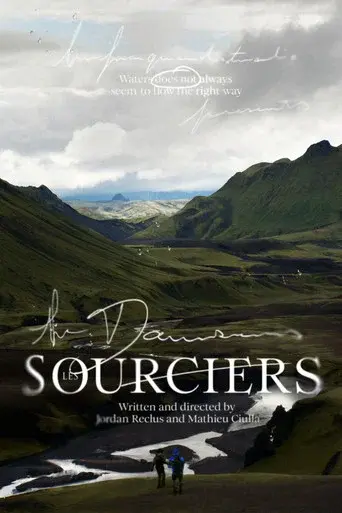
Filmmakers Jordan Reclus and Mathieu Ciulla travel through the South of France, investigating an elusive water vein with the help of water engineers and well-known local dowsers. A documentary offering a glimpse into the unsuspected routine of water through the little-known prism of dowsing. Water does not always seem to flow the right way…
The Dowsers
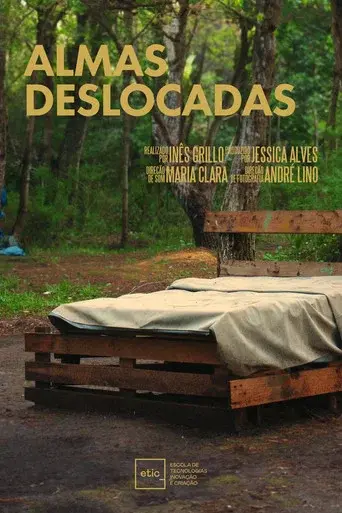
Located in Carcavelos, Quinta Nova de Santo António, or Quinta dos Ingleses, as it is recognized by the population, shelters a small community of people affected by the housing crisis. Natives and immigrants, deprived of a roof over their heads, carry on with their lives in search of better opportunities and a breeze of change. Guided by residents' voices, this documentary is based on the adaptability of human beings in the face of life's adversities and their constant pursue of happiness.
Displaced Souls

Tourists eating and taking photos. Tourists strolling and taking photos. Tourists bathing on the beach and taking more photos. Barcelona has become an overexploited photocall to the point of paroxysm, and this is what this film shows by turning the camera and pointing towards the visitors. A small gesture that, added to a powerful sound contrast and a caustic sense of humour, exposes without subterfuge a grotesque normality.
1,2,3... Barcelona!

More than two decades after the Clean Water Act was supposed to make America’s waters clean enough for swimming and fishing again, two iconic waterways — the great coastal estuaries of Puget Sound and the Chesapeake Bay — are in perilous condition. With polluted runoff still flowing in from industry, agriculture and massive suburban development, scientists fear contamination to the food chain and drinking water for millions of people. A growing list of endangered species is also threatened in both estuaries. As a new president, Congress and the states set new agendas and spending priorities, FRONTLINE correspondent Hedrick Smith examines the rising hazards to human health and the ecosystem, and why its so hard to keep our waters clean.
Poisoned Waters

The Green Desert presents a dazzling kaleidoscope of vineyards, date ranches, and bell pepper farms in the Coachella Valley near the Salton Sea. The much larger Imperial Valley harvests leafy greens by the truckload, delivering over 1 billion servings a year. The alfalfa it grows is the bedrock of the food supply chain, making dairy and meat production possible. A total of 90% of the winter vegetables consumed in the US are produced in these two regions. Without them, the nation’s food security would vanish. Both of these regions rely on imported Colorado River water, a resource dwindling by the year. The need for conservation has never been greater, but will desperate measures be enough? The era of limits has been reached. We are at a crossroads. The future of the American West will be shaped by the choices we make.
The Green Desert

A film essay that approaches cinema as a water current, revisiting a body of previous essay films through the recurring image of water—rivers, seas, tides, and flows—to explore cinema as a fluid space of memory, movement, and transformation.
On the Sea

At the heart of the Moroccan High Atlas mountains, water is a resource in short supply. The village of Tizi N'Oucheg has undergone a transformation thanks to Rachid Mandili, who is well-aware that the development of his village depends on access to clean water and on his strong leadership of this project. Mandili rallies all the villagers together and calls upon the knowledge of French and Moroccan scientists to tap water sources, to purify, and reuse waste water for irrigation. The documentary highlights the Berbers' community ties and ingenuity in their dream of independently managing their village water resources. It equally paints a portrait of a man whose initiative and resourcefulness has opened Tizi N'Oucheg up to modernity while still conserving its cultural heritage. Tizi's example presents some of the problems of water access in semi-arid regions and puts forward concrete solutions to these problems.
Berbères des cimes
For generations, the Samburu people and their livestock have had a deep connection with water, depending on the rains for their survival. The Land Smiles Back is the story of the Samburu community in Westgate Conservancy, who made the land “smile” again by returning to ancient hydrotechnology.
