

Speed
Overview
SPEED is the result of an artificial intelligence transforming bin footage into something beautiful in order to free the planet from pixel pollution. By video recycling trash shots into video art using the latest algorithm technology, visual art may help to understand our limited resources on earth and how to use them in a respectful manner. Every day we produce millions of clips sharing them on social media without even noticing anymore how much pixel garbage we create. At the same time, we produce every day millions of tons of plastic waste, polluting our environment without even noticing it anymore. SPEED wants to be a symbol of change as we are running out of time.
Key Film Crew
Production Stats
You May Also Like

A mathematical play on one repeated movement. It imparts a sense of possibilities: that something simple can produce complex and unexpected patterns. As with an atom, the variety of possibilities from a base movement is potentially infinite.
Dimensions
This is a didactic film in disguise. A progression of brilliant geometric shapes bombard the screen to the insistent beat of drums. The filmmaker programmed a computer to coordinate a highly complex operation involving an electronic beam of light, colour filters and a camera. This animation film, without words, is designed to expose the power of the cinematic medium, and to illustrate the abstract nature of time.
Rectangle & Rectangles
"Plasforms" is above all a visual composition, the relevance of the camera's absence, continuing in its time the plastic tradition of seeing. It is the exposure of the digital medium itself, a choreography of ghost images mechanically imitating the artificiality of a process.
Plasforms
Enigma is something of a more glamorous version of White Hole, with a wide variety of elaborate textures (often composed of iconographic and religious symbols) converging towards the centre of the screen.
Enigma: Nazo

American cartoons are the starting point for Martin Arnold's new work. Sequences of short films form the basis of a process of fragmentation, deconstruction, dismantling and repetition. Arnold uses fun, family entertainment to create films with open-ended possibilities for association. His pieces, such as Hydra (2013), Charon (2013), Nix (2013) and Self Control (2011), feature characters whose anatomy is no longer recognizable as such, but rather resemble puppets, remotely controlled from the outside. Trembling hands, dancing tongues, blinking eyes and snoring mouths move like ghosts against an abyss-like deep black background, in which bodily elements constantly disappear, only to reappear once more.
Nix
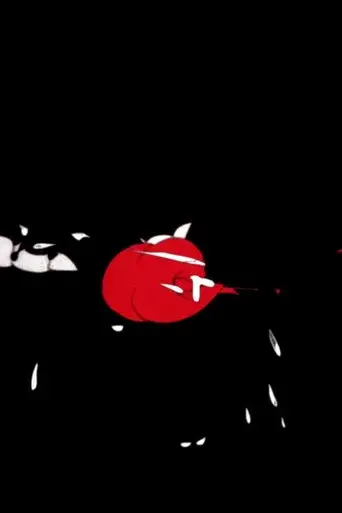
American cartoons are the starting point for Martin Arnold's new work. Sequences of short films form the basis of a process of fragmentation, deconstruction, dismantling and repetition. Arnold uses fun, family entertainment to create films with open-ended possibilities for association. His pieces, such as Hydra (2013), Charon (2013), Nix (2013) and Self Control (2011), feature characters whose anatomy is no longer recognizable as such, but rather resemble puppets, remotely controlled from the outside. Trembling hands, dancing tongues, blinking eyes and snoring mouths move like ghosts against an abyss-like deep black background, in which bodily elements constantly disappear, only to reappear once more.
Hydra

American cartoons are the starting point for Martin Arnold's new work. Sequences of short films form the basis of a process of fragmentation, deconstruction, dismantling and repetition. Arnold uses fun, family entertainment to create films with open-ended possibilities for association. His pieces, such as Hydra (2013), Charon (2013), Nix (2013) and Self Control (2011), feature characters whose anatomy is no longer recognizable as such, but rather resemble puppets, remotely controlled from the outside. Trembling hands, dancing tongues, blinking eyes and snoring mouths move like ghosts against an abyss-like deep black background, in which bodily elements constantly disappear, only to reappear once more.
Charon

What it’s made of was produced for the Dutch customs laboratory (douane lab) in Sloterdijk over a period of 4 months. In this dual-channel film installation the viewer can watch the Dutch Customs Laboratory take shape in front of their eyes. Observing this process of the laboratory and its machines slowly being formed, attention is drawn to the shapes and forms that make up the laboratory and its machines.
What it’s made of
Abstract video art created in 1979. Video and audio by Dean Winkler, Glenn Van Alstyne, Tom Lucke, Elaine Lewis, and Brian Aitchison. Chirp-1 / Quantel was created in two separate effects passes: At the RPI Video Synthesizer Lab an old porno tape (on stock that was donated to us) was processed using an analog Serge modular music synthesizer to sequence the sounds and control the colorization of an analog Hern video synthesizer. The sounds are also inserted into the video, which are the stripes you see, changing with frequency. The tape from the first pass was taken to EUE Video and used to seed an analog feedback loop around a Quantel 5000 digital effects device.
Chirp-1 Quantel

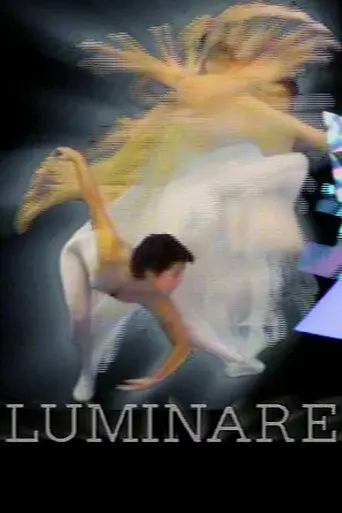

Part one of the two part abstract video art-piece, with music composed by Philip Glass and performed by the Kronos String Quartet.
Continuum: 1. Initiation
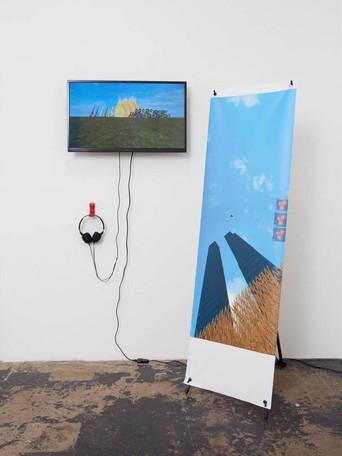


Trinity Ens is a video art piece representing a personal view of the body soul and spirit trough experimental visuals.
Trinity Ens

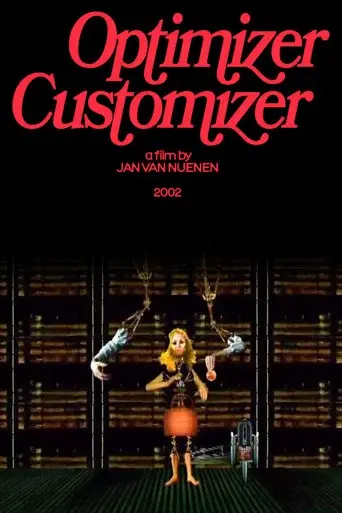
A feminine machine, stuffed with modern nano-technology and useless operations is depicted in this mixed-media 2D animation short, highlighting the consequences of consumerism and the downfall of civilized society. The machine reminiscent of a two-dimensional video game, leads to a destructive chain reaction after a strange malfunction, with people turning into clones and robots.