

Overview
Kibera is the largest slum area in Nairobi, and the largest urban slum in Africa. This documentary depicts three important problems; violence, drugs (miraa) and albinos killing.The 2009 Kenya Population and Housing Census reports Kibera's population as 170,070, contrary to previous estimates of one or two million people .Most of Kibera slum residents live in extreme poverty, earning less than $1.00 per day. Unemployment rates are high. Persons living with HIV in the slum are many, as are AIDS cases. Cases of assault and rape are common. There are few schools, and most people cannot afford education for their children. Clean water is scarce. Diseases caused by poor hygiene are prevalent.
Top Cast

Hassan Ahmed
Pamoja FM
Justus Nyan'aya
Amnesty International

David Ogot
Anti-drug Activist
Nicholas Ochiend
General Parctioneer

Gideon Mwakina
Pamoja FM
P. Choksey
Dr Albinism Foundation
Key Film Crew
Production Stats
You May Also Like
A Luta Continua explains the military struggle of the Liberation Front of Mozambique (FRELIMO) against the Portuguese. Produced and narrated by American activists Robert Van Lierop, it details the relationship of the liberation to the wider regional and continental demands for self-determination against minority rule. It notes the complicit roles of foreign governments and companies in supporting Portugal against the African nationalists. Footage from the front lines of the struggle helps contextualize FRELIMO's African socialist ideology, specifically the role of the military in building the new nation, a commitment to education, demands for sexual equality, the introduction of medical aid into the countryside, and the role of culture in creating a single national identity.
The Struggle Continues


In 2011, Maine State Prison launched a pioneering reform program to scale back its use of solitary confinement. Bafta and Emmy-winning film-maker Dan Edge and his co-director Lauren Mucciolo were given unprecedented access to the solitary unit - and filmed there for more than three years. The result is an extraordinary and harrowing portrait of life in solitary - and a unique document of a radical and risky experiment to reform a prison. The US is the world leader in solitary confinement. More than 80,000 American prisoners live in isolation, some have been there for years, even decades. Solitary is proven to cause mental illness, it is expensive, and it is condemned by many as torture. And yet for decades, it has been one of the central planks of the American criminal justice system.
Last Days of Solitary



It's 1974. Muhammad Ali is 32 and thought by many to be past his prime. George Foreman is ten years younger and the heavyweight champion of the world. Promoter Don King wants to make a name for himself and offers both fighters five million dollars apiece to fight one another, and when they accept, King has only to come up with the money. He finds a willing backer in Mobutu Sese Suko, the dictator of Zaire, and the "Rumble in the Jungle" is set, including a musical festival featuring some of America's top black performers, like James Brown and B.B. King.
When We Were Kings

A fast-paced suspense thriller and feature documentary about the sudden rise of ecstasy in Europe to epidemic levels after the disintegration of the Soviet Union.
The Hydra
America has long been called a Christian nation. In fact, over 70% of adults in America identify themselves as Christian. Yet when filmmaker Brandon McGuire heads to the streets to ask a few clarifying questions about how Christianity is defined within our culture, he is shocked by the answers he finds. This provocative documentary takes us deep within the American mind and brings to the surface the big ideas that have influenced the way we think about ourselves and about God.
Mining for God

Journalist Shiori Ito embarks on a courageous investigation of her own sexual assault in an improbable attempt to prosecute her high-profile offender. Her quest becomes a landmark case in Japan, exposing the country's outdated judicial and societal systems.
Black Box Diaries

Maya is Ayaibex's daughter, an addict in recovery that feels a blame for damages that caused her daughter, Maya decides to remember her mother's childhood experiences in her world of addiction to seek the redemption of the weight that her mother has loaded for 20 years and get both to forgiveness.
I forgive you, Mama

A humorous documentary about a historic hunt in 1929 through the African savannah and Indian jungle with lots of animal footage.
Gefährliche Jagd

Between 1933 and 1935, the painter Wilhelm Eggert and his wife Dora Kuster traveled the African continent. Their expedition took them from Mediterranean Algiers through the Sahara and parts of the African west coast to the Congo and Kenya. Not only did the couple explore vast stretches of land that were almost completely unknown, at least to private travelers at the time, they also captured this journey on film. A screenable documentary film was compiled from the original 12,000m of film material. In cinemas and film clubs, European audiences were presented with a film that was evidently able to satisfy an interest in foreign, 'wild' cultures and exotic landscapes, albeit one that was always Eurocentric. The spectacular shots of African lifestyles and nature, which in many respects were new to European viewers who were almost completely unfamiliar with Africa, were praised and appreciated precisely because of their supposed authenticity.
Safari


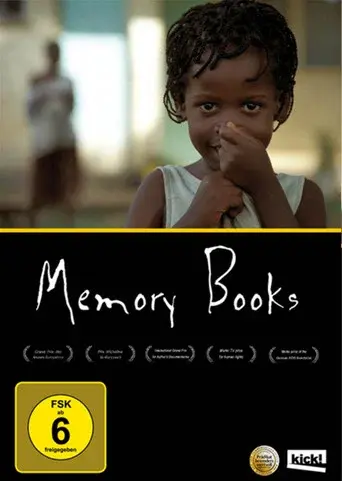
In Uganda, AIDS-infected mothers have begun writing what they call Memory Books for their children. Aware of the illness, it is a way for the family to come to terms with the inevitable death that it faces. Hopelessness and desperation are confronted through the collaborative effort of remembering and recording, a process that inspires unexpected strength and even solace in the face of death.
Memory Books

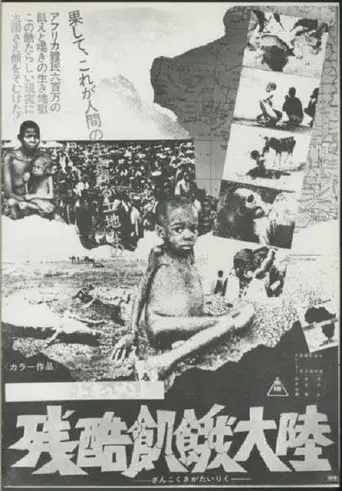
Cruel Famine Continent documents the Great Sahelian drought in West Africa and its effect on the people. The production was an attempt to pivot Toei's output from yakuza films and Toei Porn towards "global issues" and "whatever makes money", as stated by then-Toei president Shigeru Okada. Theatrical proceeds were to be shared as relief funds through the Japanese Red Cross, though the box office returns are unknown. Footage shot for the documentary by Yoshimitsu Banno would later be reused in the 1974 Toho production Prophecies of Nostradamus.