
Le dernier tamaraw
Overview
No overview summary available for this movie.
Key Film Crew
Production Stats
You May Also Like

Produced by the Army Pictorial Service, Signal Corps, with the cooperation of the Army Air Forces and the United States Navy, and released by Warner Bros. for the War Activities Committee shortly after the surrender of Japan. Follow General Douglas MacArthur and his men from their exile from the Philippines in early 1942, through the signing of the instrument of surrender on the USS Missouri on September 1, 1945. Preserved by the Academy Film Archive in 2013.
Appointment in Tokyo

The Jeepney is a common affordable transportation in the Philippines. Made from abandoned American Jeeps during World War II, the Jeepney remains a symbolic figure of the Philippine identity.
Baon Sa Biyahe
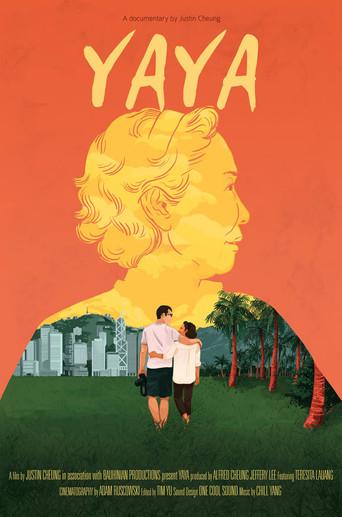
YAYA is a story about a filmmaker who explores the complex relationship between his family and the domestic worker who spent decades away from her family in the Philippines to raise his. This documentary is a tribute to all the domestic workers in Hong Kong, who has served as the backbone of Hong Kong's economy by unleashing a substantial female workforce into the economy and taken care of so many lives with love and care. You are all heroes in the hearts of the Hong Kong people. - Justin Cheung, the director
YAYA

A music documentary on MNL48, a franchise of the highly successful Japanese idol group, AKB48. The film looks into the girls as they perform within a music subculture that tries to get a foothold in a market of an overtly critical audience.
ICYMI: I See Me

"Bagong Buhay" is a short experimental film that dispels the common belief that packing up and moving to a new place will magically improve one's quality of life. The film challenges this presumption by portraying two contrasting ways of life through objects and locations, encouraging viewers to think critically about the complexities of what makes a better life. In the Philippines, it's believed that relocating to a new area will bring about positive changes in one's existence. True satisfaction is a complex and multifaceted notion, and "Bagong Buhay" encourages us to ponder that relocating to a new place is not a surefire way to attain it.
New Life
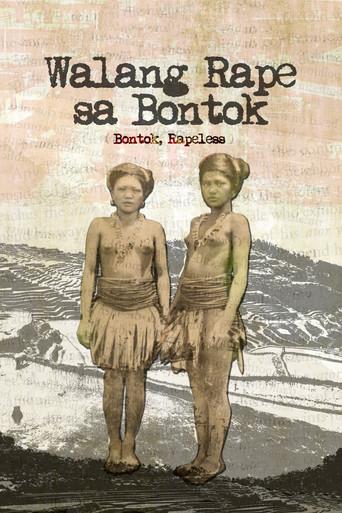
Two Filipina victims of sexual abuse search the truth behind the finding of a renowned anthropologist: that merely a few generations ago, the Bontok Igorot lived in what seems an unthinkable utopia—a rape-less society.
Bontok, Rapeless

Before 2NE1 achieved global success, Sandara was already a superstar in the Philippines.
My Name is Sandara Park

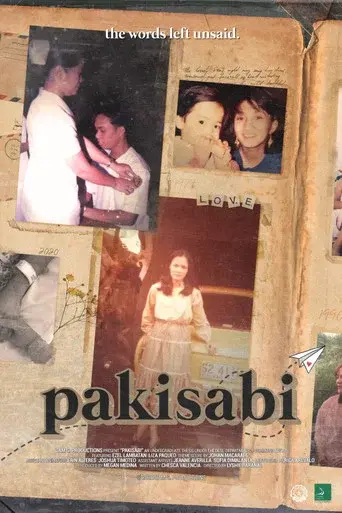
At the height of the COVID-19 pandemic in the Philippines, amidst the rising number of cases, two families remember their loved ones as more than a statistic.
Pakisabi


A musical docudrama about the brave and outstanding Women of Malolos to whom Jose Rizal addressed his famous letter in Feb 22, 1898.
The Women of Malolos

JEEPNEY visualizes the richly diverse cultural and social climate of the Philippines through its most popular form of mass transportation: vividly decorated ex-WWII military jeeps. The film follows jeepney artists, drivers, and passengers, whose stories take place amidst nationwide protest against oil price hikes that pressure drivers to work overseas to earn a living, far from their homes for years at a time. Lavishly shot and cut to the rhythm of the streets, JEEPNEY provides an enticing vehicle through which the rippling effects of globalization can be felt.
Jeepney
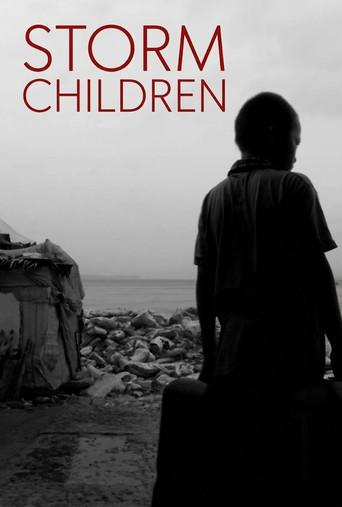
The Philippines is visited by an average of 20~28 strong typhoons and storms every year. It is the most storm-battered country in the world. Last year, Typhoon Haiyan, considered the strongest storm in history, struck the Philipines, leaving in its path apocalyptic devastation.
Storm Children

"Iiyak ang Langit" is an excruciating documentary that exposes the untold pain of the families struggling to survive after the extrajudicial killings in the Philippines. Melinda is at the heart of this story—she lost her son to state violence and now makes a living by producing candles. Her story, together with the candlemakers—unified not only by wax and wick but by grief and survival—turned out to be a reflection of how labor-fueled both mourning and resistance. As they maneuver their hands to turn darkness into light, even the sky seemed to weep with them.