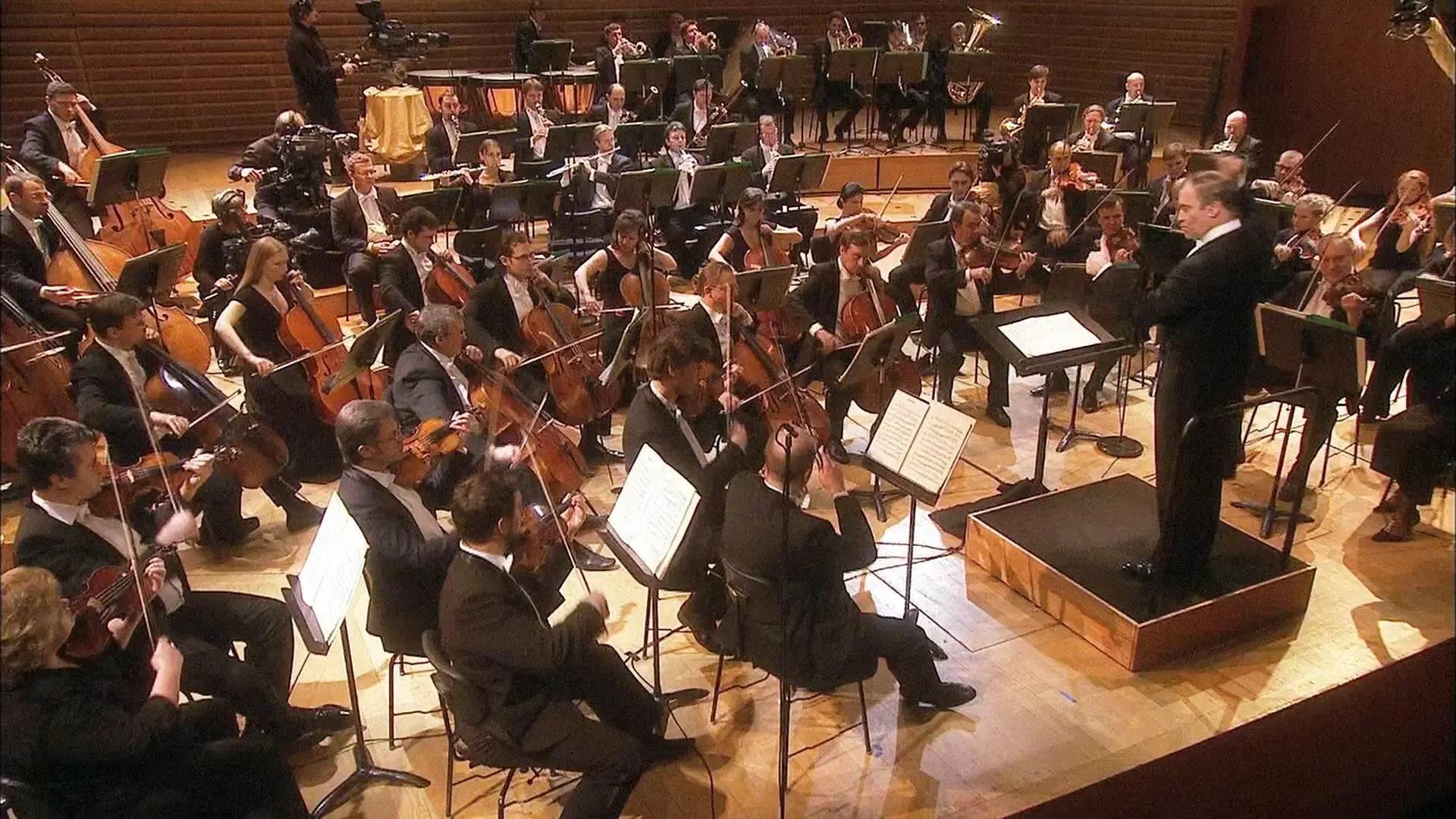

Tchaikovsky: Symphonies Nos. 4, 5 & 6 - Gergiev
Overview
Valery Gergiev is widely recognised as the greatest modern interpreter of Tchaikovsky’s music and the Mariinsky holds a peerless reputation in the repertoire. Together they deliver definitive interpretations of Tchaikovsky’s most popular symphonies. These acclaimed performances were filmed at Salle Pleyel in Paris during January 2010, directed by Andy Sommer. The themes of fate and death pervade Tchaikovsky’s final symphonies. The composition of the Fourth Symphony coincided with the breakdown of Tchaikovsky’s marriage and a failed suicide attempt, yet he considered it to be his greatest. In contrast he believed his Fifth to be flawed and uninviting, yet today this heartfelt work is widely regarded as one of his finest. The subject of fate is further instilled in the Sixth Symphony, premiered shortly before Tchaikovsky’s death. It was posthumously entitled ‘Pathétique’ by his brother and is a deeply melancholic work, full of dynamic extremes and an inherent sense of finality.
Top Cast

Valery Gergiev
Conductor

Mariinsky Orchestra
Key Film Crew
Production Stats
You May Also Like

In the magical world of dancing fireflies, we follow the story of the main character - naughty Svätojanek, which takes place against the backdrop of the changing seasons. Little episodes from the life of the industrious little bugs, set in the endless cycle of nature, are arranged in dancing images that carry a strong ethical message.
Narodil sa chrobáčik

The Nutcracker is Mikhail Baryshnikov's breathtaking and critically acclaimed Emmy-nominated production. This spectacular performance is danced by the magnificent team of Baryshnikov, one of the greatest classical dancers of the century, and Gelsey Kirkland, both showcased at the peak of their careers, with members of the American Ballet Theatre.
The Nutcracker
Around 1536, at Windsor Castle, King Henry VIII of England fell in love with the young queen's lady-in-waiting, Jane Seymour. In order to free himself from his marriage to Anne Boleyn, the monarch decided to recall Anne's former lover, Lord Percy, from exile, as he still loved the queen. Both were unjustly sentenced to be beheaded for alleged adultery. The outcast Anne Boleyn spends her last moments in the Tower of London, from where she is led directly to the execution site...
Anna Bolena

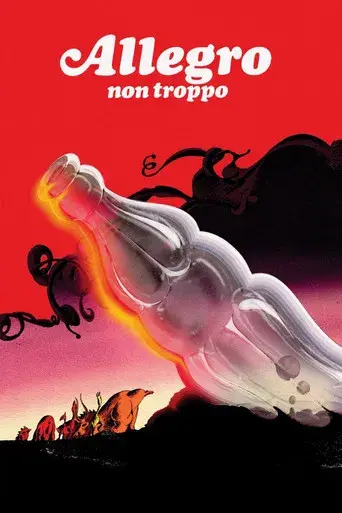
An enterprising producer believes he has hit upon a winning concept: a program of original animated shorts set to classical music. Undeterred by warnings that this has already been done by an American named 'Prisney,' he rallies an orchestra of geriatric women, a bullish conductor, and an animator that he keeps locked in the dungeon. What could go wrong?
Allegro non troppo

Winter Allegro portrays the fierce competition between two violin prodigies to win the solo part of an abusive conductor's new rendition of Vivaldi's Four Seasons. Camille, first chair violinist, faces Anya, a younger American virtuoso.
Winter Allegro

Based on the famous Gustav Holst musical suite, Ken Russell's musical delight takes viewers on a magnificent journey of the planets of the Solar System.
The Planets
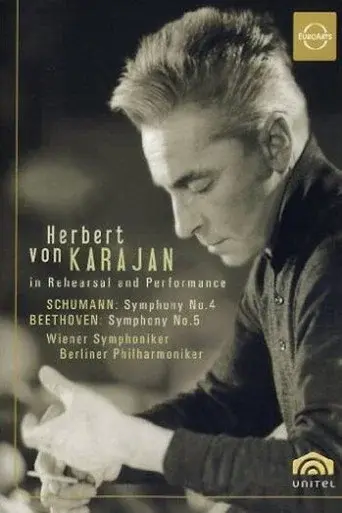
Karajan conducts rehearsal and performance of Schubert's Symphony No. 4 with the Vienna Symphony in Vienna, Nov. 1965, and Beethoven's Symphony No. 5 with the Berlin Philharmonic, January 1966. Henri-Georges Clouzot directs.
Karajan in Rehearsal


The pianist Kyra Steckeweh and the filmmaker Tim van Beveren search for traces where Countess Dora Pejačević (1885-1923) lived and worked. Their documentary is a journey through time to a half brilliant, half broken Europe.
DORA - Escape into Music

In Anton Bruckner’s 7th Symphony, the listener encounters a music characterized by great spaciousness and profound solemnity, a music which speaks of grief and lamentation, but also of their transcendence. With its monumental architecture and intensity of sound, the symphony has moved listeners ever since its triumphal premiere in 1884. The Guardian calls Daniel Barenboim’s London interpretation “Tremendous … Barenboim and the Staatskapelle seem to have this work in their systems, and the overall impression was of music unfolding organically at its own pace rather than of a work being self-consciously interpreted or led.” Anton Bruckner Symphony No. 7 in E major (original version) Daniel Barenboim, conductor Staatskapelle Berlin Recorded live at the Philharmonie Berlin, 25 June 2010
Bruckner: Symphony No. 7

Anton Bruckner’s 6th Symphony was written between 1879 and 1881: a very happy time in his life. Unlike most of Bruckner’s symphonies, the 6th was not revised. Of all his works, this one seems to come from a single source of inspiration. Bruckner himself called it his “boldest” symphony – probably due to its extreme degree of motivic, rhythmic and harmonic originality. This live recording of the seldom-performed 6th Symphony is the next instalment of the acclaimed Bruckner cycle by the Staatskapelle Berlin and Daniel Barenboim. Anton Bruckner Symphony No. 6 in A major (original version) Daniel Barenboim, Conductor Staatskapelle Berlin Recorded live at the Philharmonie Berlin, 22 June 2010
Bruckner: Symphony No. 6
“Clarity was one thing that made this performance a marvel. Another was the flexibility of Barenboim’s speeds…. The flexibility of Barenboim’s tempi meant that Bruckner’s charm – an often overlooked aspect of his genius – shone through, especially in the genial Trio.” (The Telegraph) Bruckner’s 8th is the last symphony completed by the Austrian composer. Many of his contemporaries regarded the symphony as “the pinnacle of 19th century music”. Even today, this monumental work fascinates listeners with its virtuoso orchestral technique, its immensity of sound, and its inexhaustible richness of detail. Symphony No. 8 in C minor (second version 1887-90, Robert Haas Edition) Daniel Barenboim, Conductor Staatskapelle Berlin Recorded live at the Philharmonie Berlin, 26 June 2010
Bruckner: Symphony No. 8
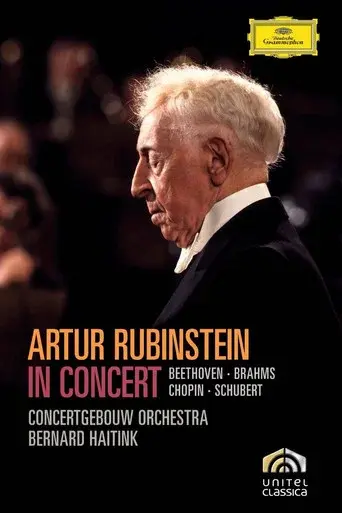
Live 1973 concert performances by celebrated Polish-American virtuoso concert pianist Arthur Rubinstein, with the Concertgebouw Orchestra under conductor Bernard Haitink. Filmed in August 1973 at the Concertgebouw in Amsterdam, the performances include Beethoven's Third Piano Concerto, in C minor, op. 37; and Brahms's First Piano Concerto, in D minor, op. 15. These are followed by four short pieces for solo piano, by Schubert, Brahms, and Chopin. The 2008 DVD release by Deutsche Grammophon also includes a short documentary, "Rubinstein at 90", an interview with Robert MacNeil, filmed at Rubinstein's home in Paris in 1977.