
Benjamin Britten: Válečné rekviem
Overview
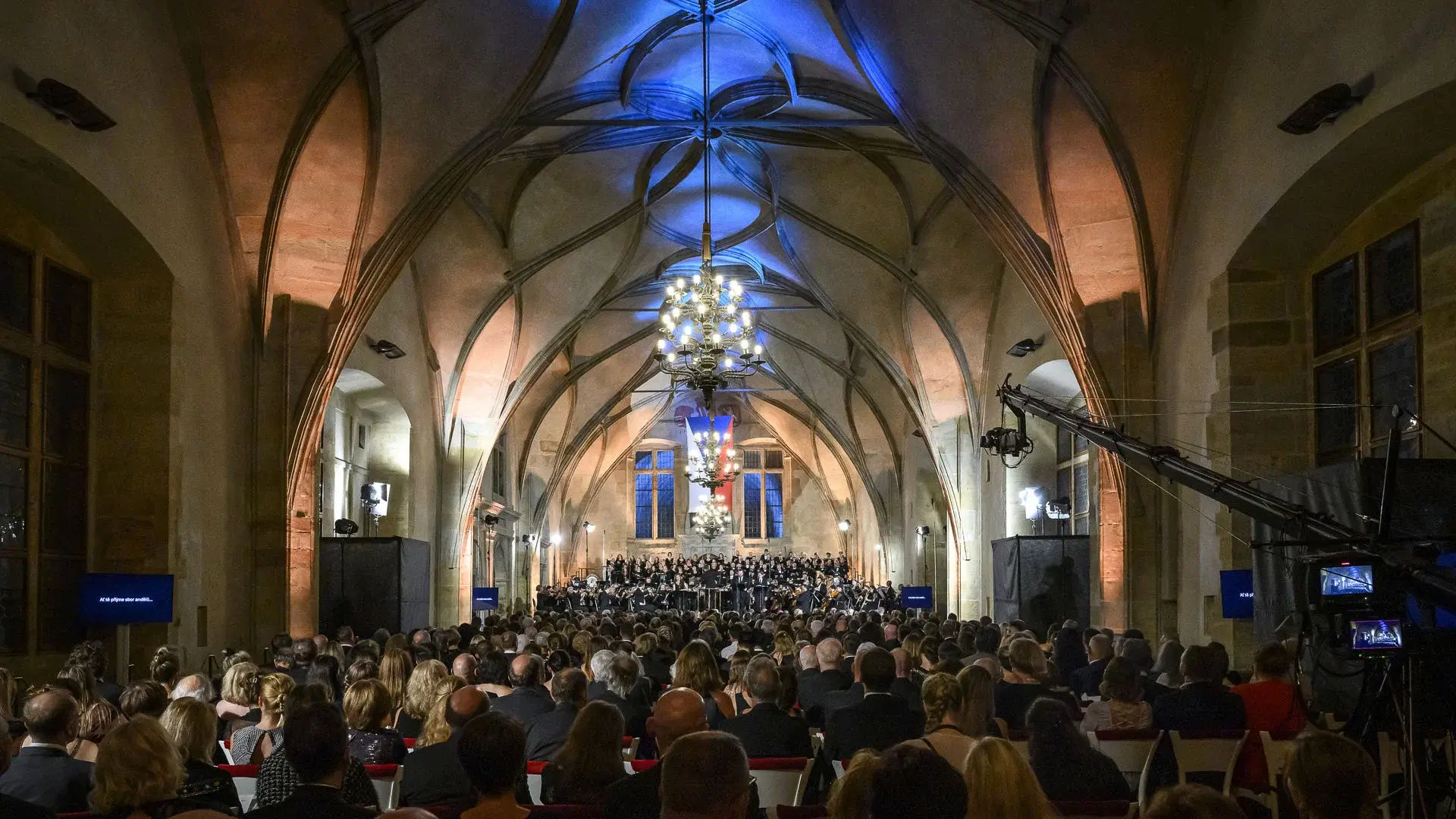
Benjamin Britten's monumental anti-war oratorio from the Vladislav Hall of Prague Castle in memory of war veterans and victims. British composer Benjamin Britten wrote War Requiem in 1962 on the occasion of the restoration of the war-damaged cathedral in Coventry. He used the traditional, codified Latin text of the requiem – a mass for the dead – interspersed with verses by Wilfred Owen, a British officer who wrote his poems directly in the trenches of World War I. More than two hundred artists then joined their voices in the Vladislav Hall of Prague Castle as part of the Prague Sounds festival for a symbolic performance of the work, which is rarely performed due to its demanding nature and large cast.
Top Cast

Lukáš Vasilek
Self – Conductor
Jan Pirner
Self – Choirmaster
Susanne Bernhard
Self – Soprano
Kyle van Schoonhoven
Self – Tenor
Arvid Fagerfjäll
Self – Baritone
Linda Sítková
Self – Organ
Key Film Crew
Production Stats
You May Also Like
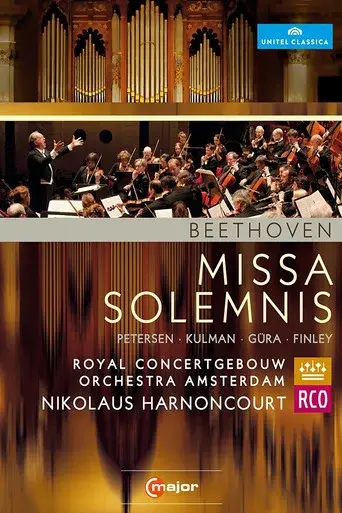
With this performance of the Missa solemnis Nikolaus Harnoncourt, Honorary Guest Conductor of the Royal Concertgebouw Orchestra, once more attained the status of a living legend, due mostly to his wide-ranging expertise of music from the Baroque and Classical era. The highly acclaimed soloists are Marlis Petersen (Soprano), twice the singer of the year by the renowned Opernwelt magazine, Elisabeth Kulman (Alto), Werner Güra (Tenor), winner of the BBC Music Magazine Award for the best vocal performance, and Gerald Finley (Bass), Grammy-Awardwinner for the best opera recording. They are accompanied by the famous Netherlands Radio Choir.
Beethoven Missa Solemnis

As celebrated conductor Lydia Tár starts rehearsals for a career-defining symphony, the consequences of her past choices begin to echo in the present.
TÁR
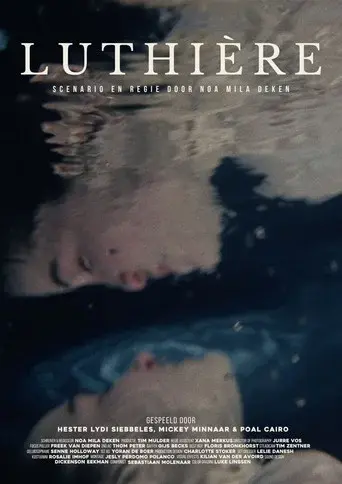
Elara, a young violinist, is madly in love with Lucio, a Sicilian student. Their love blossoms, but suddenly Lucio must return to Italy to care for his sick niece. Elara struggles with loneliness and sadness, until she finds new inspiration in a dream.
Luthière

The film covers a hundred years in the lives of the Ricordi family, the Milan publishing house of the title, and the various composers and other historic personalities, whose careers intersected with the growth of the Ricordi house. It beautifully draws the parallel between the great music of the composers, the historic and social upheavals of their times, as well as the "smaller stories" of the successive generations of Ricordi.
House of Ricordi


Jenny is young. Her life is over. She killed someone. And she would do it again. When an 80-year-old piano teacher discovers the girl’s secret, her brutality and her dreams, she decides to transform her pupil into the musical wunderkind she once was.
Four Minutes


The grand scale and magnificent acoustics of the Roman arena in Verona are ideally suited to the pageantry of Verdi's Egyptian opera, presented here in a staging that is true to the original 1913 production, framed by obelisks and sphinxes and filled with chorus and dancers. Chinese soprano Hui He has won international acclaim for her portrayal of the eponymous slave girl whose forbidden love for the war hero Radamés (Marco Berti, the experienced Verdi tenor) brings death to them both.
Aida - Arena di Verona

We meet the young violinist Erik Smith in the lap of his family with his wife Lise and his little daughter Lone. Erik is a young, aspiring musician who dreams of one day making a career as an interpreter of the great masters of music. At a concert where a well-known solo violinist has to interrupt, Erik Smith suddenly jumps in and gets his big breakthrough.
Mit Liv er Musik

The Nutcracker is Mikhail Baryshnikov's breathtaking and critically acclaimed Emmy-nominated production. This spectacular performance is danced by the magnificent team of Baryshnikov, one of the greatest classical dancers of the century, and Gelsey Kirkland, both showcased at the peak of their careers, with members of the American Ballet Theatre.
The Nutcracker
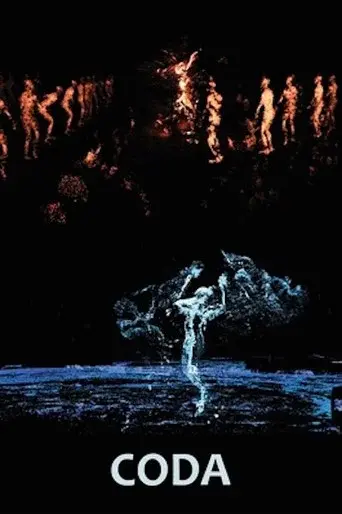
This short animation draws on advanced digital technologies to offer a new vision of dance in cinema. With motion capture (MoCap) and particle processing, designers Denis Poulin and Martine Époque create virtual dancers free of their morphological appearance. In this balletic and hypnotic film, dynamic traces carry the motion of the real dancers behind the on-screen movements. Addressing environmental themes by way of metaphor, CODA is a fused universe where space and time collide, deploy, and dissolve. In this technically and formally innovative film, luminous bodies in the infinite space of the cosmos transform and evolve to the rhythms of Stravinsky’s Rite of Spring.