

Overview
"If a person doesn't go to church anymore, then the church should go to them," says Rinalds, a calm, smiling, young man with a good sense of humor. He is a priest from a small village in Latgale, Latvia's easternmost and poorest region, and the documentary Prīsters (The Priest) follows the routines of his daily life, his thoughts of life and religion and why he chose this path for himself.
Key Film Crew
Production Stats
You May Also Like

Vārdotājas (Wordsmiths) traces the recent rise of women's stand-up comedy in Latvia, but it is by no means just for laughs. Feelings of discomfort, shame, shock, are just some of the subjects tackled.
Wordsmiths
In 2012, Stephen Vaughan and Kay Ferreter are invited to address the congregation at St. Joseph's Redemptorists Church in Dundalk, Ireland for the Solemn Novena Festival. In a powerful speech, the pair describe their experiences being gay and lesbian in Ireland, feeling excluded by Catholic doctrine, and the importance of a more inclusive church.
Novena

In this film a young man and his curmudgeonly grandfather are going 1,800 km to northern Russia in an old Zhiguli car, hoping to find the grave of their great-grandfather, who was deported. The grandfather Andris is sceptic over the lofty quest, initiated by his grand-son, as it’s not known what awaits them at their destination. Andris thinks they won’t find anything and will come back to Latvia without ever learning what happened to his father. However ever-optimistic Kārlis wants to use the journey not only to find answers about the past but also become closer to his grandfather who raised him. They both lost their parents as children.
Grandfather's Father

Raymond Roy is a 64-year-old idealist, an energetic social activist ready to give everything he has to those living on the edge: the alienated, impoverished and exploited members of society. Raymond is also a priest, doing what he has wanted to do ever since he was a teenager. Filmmaker Serge Giguère paints an intimate portrait of a man who has spent 30 years fighting for an alternative vision of life in his community. The film is a blend of cinema vérité and social history that provides a view of the man and his work from without and within, from the poetry of his personal diary laced with doubts and self-criticism, to the many achievements of the community groups he helped. Filming over several years, Giguère gives us a sense of the changes in values and attitudes of those who run our society, along with the role of the community groups who provide solutions, inspiration and a sense of renewal.
9 St-Augustin



Stanley Kubrick’s short documentary about Father Fred Stadtmueller, a Catholic priest serving a vast 4,000-square-mile parish in rural New Mexico. To reach his scattered congregation, he pilots his own Piper Cub aircraft, the Spirit of St. Joseph. Over two days, Kubrick follows the “flying padre” as he conducts Mass, mediates between quarreling children, attends a funeral, and airlifts a sick child to medical care—capturing both the challenges and quiet heroism of his daily mission.
Flying Padre

After thirty years of serving as a Greek Orthodox priest in the US, Tom Avramis decides to leave the priesthood, shocking his tight knit family and admiring parishioners. When his daughter discovers an old video he made about his life detailing the burdens and secrets he carried, she turns the camera on him, revealing further secrets about her father’s past.
Sundays

Toni, an attractive Catholic priest, impregnates several women in the Swiss countryside of the 1950s until the bishop revokes his priesthood. The six children only meet after Toni's funeral. They talk about their fatherless youth, their brave mothers and the fatal silence they now want to break.
Our Father

Deniss is a Russian-speaking young man working at a fast food chain and spending his days in a small, gloomy apartment where all the things still remind him of his dead grandmother. Once a week he takes the stage, becoming a stand-up comedian. His jokes come from his life, which might be called dull as well as bleak, and, as he puts it, his ‘uninteresting biography’.
If Trees Could Talk
A church congregation in Hamburg-Harburg: Klaus Wildenhahn observes the work of a pastor. What is his job? What is expected of him? What does he himself want?
Harburg bis Ostern
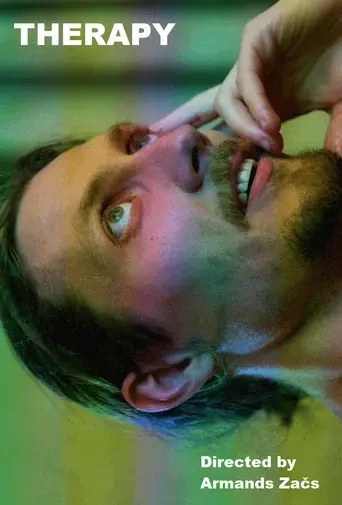
The film follows a thirty-year-old man’s efforts to introduce radical changes in his own life: to start visiting a therapist and preparing for the demolition of his bragging childhood home. Story chronicles the troubled relationship between Mārtiņš and his mother, just as he is about to tear down his childhood home.
Therapy

“Hike '44" is a personal story by director Lauris Abele and cinematographer Marcis Abele about how to maintain humanity when the world falls apart. The protagonist of the film, Melita Abele (89), retraces her refugee path from 1944, when, at the age of 14, she had to leave her home at the beginning of winter. Asking strangers for shelter, spend nights in the woods until she found refuge and warm hearts. Through the use of animation, the viewer will be guided through Melita's memories on a journey through recent and present-day Latvia until a series of events brings Melita to what she has been trying to accomplish for 75 years.