

Nisei Soldier: Standard Bearer for an Exiled People
Overview
Nisei Soldier focuses on the heroism of American men of Japanese ancestry who fought bravely during World War II, despite the intense moral dilemmas they faced. Leaving their families imprisoned in "relocation centers", many young Nisei (second generation American-born Japanese) proved their loyalty in WWII by enlisting in the all-Japanese American 442nd Infantry Regiment which fought in Europe. Because of the Regiment's incredible bravery in battle, liberation of French towns, and high casualty rate, it became the most decorated unit in U.S. military history. The film asks: What sustained these young men forced to battle on two fronts at once -- against fascism abroad and intense prejudice at home? More than a war story, Nisei Soldier is a tale about personal honor, family loyalty and love of country -- and what it means to be an American.
Key Film Crew
Production Stats
You May Also Like

I'm afraid of planes and even living next to an airport, I couldn't film almost any flying around here. I have to fly in a few months and the film is a kind of tool to pretend that I have control over whatever happens. I'm already talking about myself, I'm sorry.
I'm Afraid of Planes
This film brings to life, thanks to unknown footage from the great American director William Wyler, an important period in the history of Corsica during World War II. In 1944, the Alto base near Folelli was home to both a group of fighter-bombers from the U.S. Army Air Force (the 57th Fighter Group) and the famous French Lafayette fighter group. Day after day, the young pilots of these two units took off from the Alto runway in their P-47 Thunderbolts to attack, strafe, and bomb the German troops who, in Italy, had halted the Allied advance at Monte Cassino and participated in the Provence landings in August 1944. Isabelle Clarke and Daniel Costelle tracked down the pilots, and sixty years later, these pilots are reunited...
Sur la piste d'Alto

Mysterious and only superficially explored by generations of the native Aborigines, Australia's Great Barrier Reef is one of the world's most extraordinary natural life systems. Twelve hundred miles long and made up of coral, it is the Earth's largest structure built by living things, in some places extending 120 miles into the sea. So many varieties of life call the reef home that more than a dozen species can be found within any square meter of its surface. This IMAX film brilliantly captures the visual splendor of this environment with splendid underwater photography typical of the format. Sharks, sea turtles, anemones, and the coral itself are the living subjects of the camera's probing eye. Overall, this documentary is a comprehensive look at this long-studied web of life that leaves a lasting impression of its depth and beauty.
Great Barrier Reef

In Iasi, Romania, from June 28 to July 6, 1941, nearly 15 000 Jews were murdered in the course of a horrifying pogrom. At the time, the programmed extermination of European Jews had not yet began. After the war, the successive communist governments did all they could to ensure the Iasi pogrom would be forgotten. It was not until November of 2004 that Romania recognized for the first time its direct responsibility in the pogrom. All that remains of this massacre are about a hundred photographs taken as souvenirs by german and romanian soldiers, and a few remaining survivors.
The Death Train

Old resistance fighters Truus and Freddie look back on their life during wartime.
Twee zussen in verzet
On June 6th, 1944 the largest military invasion and defence the world has ever seen occurred. D-Day tells the epic story of the preparation and execution of the Allied invasion of Normandy. It tells the story of the defence of the Western Front by the forces of the German Empire, and of the complex and deadly secret war fought by the men and women of France and mainland Europe. D-Day brings to life the dramatic and astounding tales of courage and sacrifice, joy and despair, love and betrayal. The planning for the Allied invasion on June 6th 1944 took two years and cost thousands of lives. It involved a deception of breathtaking audacity. Both the preparation leading up to and the actions and events on the day itself relied on the absolute discretion of many and the genius and nerve of a few. D-Day examines the intricate jigsaw from both sides - presenting events through the eyes of the men and women who were there, telling their extraordinary stories.
D-Day 6.6.1944





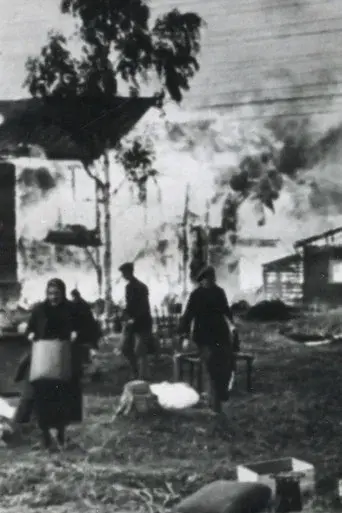
People from tripoint of Italy, Slovenia and Croatia tell their stories of the World War II events that happened there.
Burnt in Memories
The Front Show is a series of World War II era German military training films shown to German soldiers before being shipped off to the Eastern Front. They were directed by the veteran propagandist Fritz Hippler, best known for Der Ewige Jude.
The Frontshow


June 1941, during World War II. Reichsführer-SS Heinrich Himmler orders the mass abduction of particularly well-bred young children from Poland and the occupied territories of the Soviet Union in order to be educated in German culture, by both state schools and German families…
Stolen Children
They grew up under the Nazi regime. They pledged to give their lives for Hitler. They were fanatics who would not be stopped. They were the 20,000 teenagers who made up the 12th SS Panzer Division. Unleashed in France to halt the Allied invasion, they would sow terror and destruction in their wake. Historical colorized archives and a handful of survivors tell us this story.


