

Overview
In Nepal, a venerable monk, Geshe Lama Konchog, dies and one of his disciples, a youthful monk named Tenzin Zopa, searches for his master's reincarnation. The film follows his search to the Tsum Valley where he finds a young boy of the right age who uncannily responds to Konchog's possessions. Is this the reincarnation of the master? After the boy passes several tests, Tenzin takes him to meet the Dali Lama. Will the parents agree to let the boy go to the monastery, and, if so, how will the child respond? Central to the film is the relationship the child develops with Tenzin.
Top Cast

Tenzin Zopa
Tenzin Zopa
Key Film Crew
Production Stats
You May Also Like
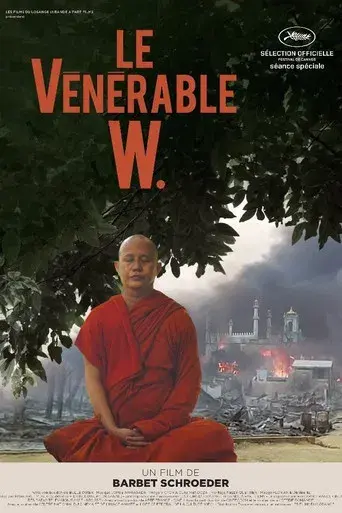
A view of the religious tensions between Muslims and Buddhist through the portrait of the Buddhist monk Ashin Wirathu, leader of anti-Muslim movement in Myanmar.
The Venerable W.
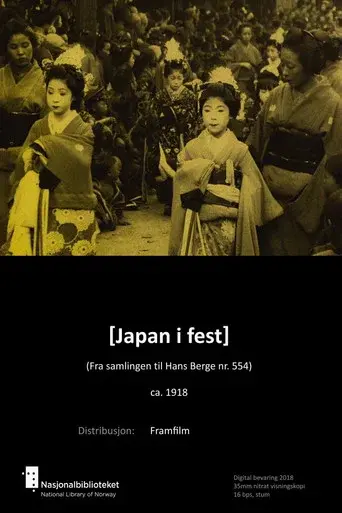
An actuality film showing a Buddhist festival in Kyoto. The procession includes Buddhist monks, geishas, and others dressed coordinately to the Japanese tradition.
Japan in Feast
Filmmaker Alain Resnais documents the atrocities behind the walls of Hitler's concentration camps.
Night and Fog

ḤARAM is an essay film portraying the urgent contemporary situation at the Haram Al Sharif/ Noble Sanctuary in the Old City of Jerusalem reflecting on the growing Temple Mount Faithful movement whose goal is to build the Jewish Third Temple on this holy landscape and in turn to assert Jewish sovereignty over this holy Muslim site.
ḤARĀM
VIVA ÁGUA is a meditation on the philosophical work entitled ÁGUA VIVA written by Clarice Lispector in 1973. The film reflects on Lispector’s interior experimental monologue on the “instant-now” of time, the discomforts of language which are “beyond thought” and the harmonious dissonant reminders and remainders of that “sometime what is seen is ineffable.”
VIVA ÁGUA
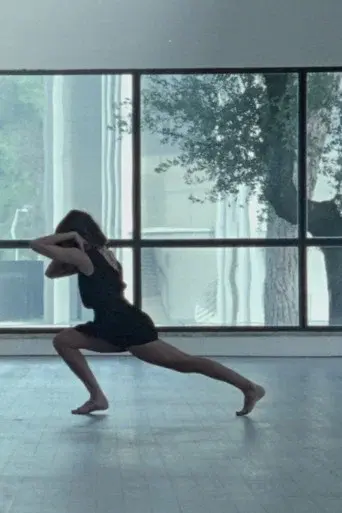
Anna, Pina, Teresa reinterprets the pivotal scene in Rossellini’s “Roma Città Aperta” where Anna Magnani, who plays the character Pina, (based on the story of Teresa Gullace,) is murdered on the streets of Rome by the Fascist police. This scene is characterized by three movements performed by Magnani — resistance, running and falling. Filmed in the Sala Scherma at Foro Italico in Rome (Mussolini’s fencing studio designed by Moretti) Anna, Pina, Teresa examines the contemporary and historical dynamics between an urban Fascist space and movements of resistance.
Anna Pina Teresa
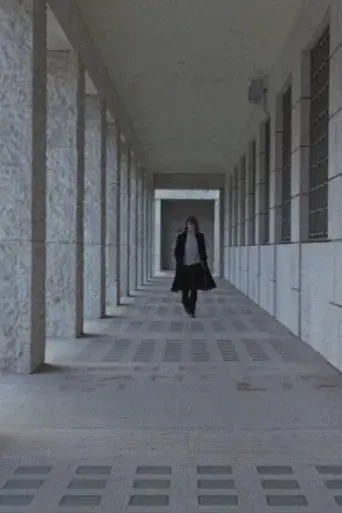
E42 is a cinematic exploration of the area in Rome knows as the EUR, a modernist landscape that was originally designated by Mussolini as the the site of the World Fair of 1942 and as a celebration of the 20 year anniversary of Fascism. Originally designed as a monumental space for public performance and collective acts of solidarity to the Fascist regime, this landscape was in fact never inaugurated. After the war, the 420 acre area was recuperated and today projects a timeless aura of an unfinished and temporary, empty and silent, monumental and imposing as well as an ephemeral landscape.
E42

Belonging Syndrome is a short documentary that follows Duang, a second-generation Italian-Thai girl. Duang, during a period of stay in a monastery. Through her inner diary, the film explores a suspended phase of life: the one in which identity it is not yet defined and belonging becomes an open question. The monastery becomes the physical and symbolic place where Duang observes herself. Immersed in a daily life marked by rituals, silences and repeated gestures, the protagonist goes through an experience of deep listening, in which time slows down and perception is refined. Belonging Syndrome talks about hybrid identities, cultural legacies that coexist without completely merging, the difficulty and possibility of inhabiting multiple worlds without having to choose just one. It is an intimate and contemplative story about the search for balance in a fragile and open phase of existence.
Belonging Syndrome
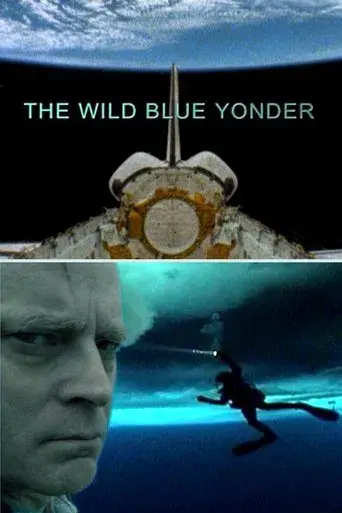
An alien narrates the story of his dying planet, his and his people's visitations to Earth and Earth's self-made demise, while human astronauts in space are attempting to find an alternate planet for surviving humans to live on.
The Wild Blue Yonder

Chronological look at the fiasco in Iraq, especially decisions made in the spring of 2003 - and the backgrounds of those making decisions - immediately following the overthrow of Saddam: no occupation plan, an inadequate team to run the country, insufficient troops to keep order, and three edicts from the White House announced by Bremmer when he took over.
No End in Sight

Director Peter Judson's semifictitious tale opens a revealing window into the indie filmmaking process, capturing the trivialities, aggravations and enthusiasm that go into completing a picture. Using footage from an indie movie set, e-mails constructing a plotline about distributor difficulties and interviews with indie mainstays such as Steve Buscemi and Sam Rockwell, the film provides a riveting look at one producer's rejections and rewards.
Nobody Wants Your Film
A Zen priest in San Francisco and cookbook author use Zen Buddhism and cooking to relate to everyday life.
How to Cook Your Life

A film that describes the love-hate relationship between Werner Herzog and Klaus Kinski, the deep trust between the director and the actor, and their independently and simultaneously hatched plans to murder one another.
My Best Fiend
In his lifetime, Thomas Merton was hailed as a prophet and censured for his outspoken social criticism. For nearly 27 years he was a monk of the austere Trappist order, where he became an eloquent spiritual writer and mystic as well as an anti-war advocate and witness to peace. Merton: A Film Biography provides the first comprehensive look at this remarkable 20th century religious philosopher who wrote, in addition to his immensely popular autobiography The Seven Storey Mountain, over 60 books on some of the most pressing social issues of our time, some of which are excerpted here. Merton offers an engaging profile of a man whose presence in the world touched millions of people and whose words and thoughts continue to have a profound impact and relevance today.
Merton: A Film Biography
The story of the relatives of the 649 Argentine fallen in the Malvinas War, who as soon as the military conflict ended, found themselves alone with their pain and prevented from approaching the grave of their loved ones, either because their bodies were left in the Cemetery of Darwin, in the Malvinas, or because they disappeared without being identified.
Locos de la bandera

At the edge of the Yangtze River, not far from the Three Gorges Dam, young men and women take up employment on a cruise ship, where they confront rising waters and a radically changing China.
Up the Yangtze

Street art, creativity and revolution collide in this beautifully shot film about art’s ability to create change. The story opens on the politically charged Thailand/Burma border at the first school teaching street art as a form of non-violent struggle. The film follows two young girls (Romi & Yi-Yi) who have escaped 50 years of civil war in Burma to pursue an arts education in Thailand. Under the threat of imprisonment and torture, the girls use spray paint and stencils to create images in public spaces to let people know the truth behind Burma's transition toward "artificial democracy." Eighty-two hundred miles away, artist Shepard Fairey is painting a 30’ mural of a Burmese monk for the same reasons and in support of the students' struggle in Burma. As these stories are inter-cut, the film connects these seemingly unrelated characters around the concept of using art as a weapon for change.
Art as a Weapon
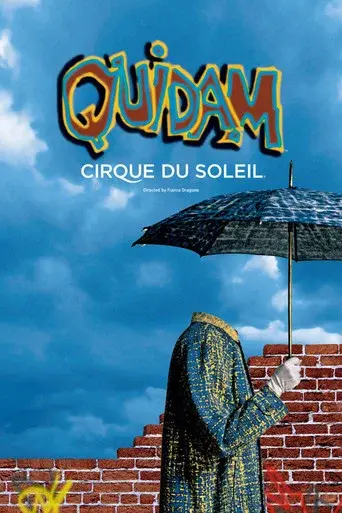
A young girl has already seen everything there is to see and her world has lost all meaning. Her anger shatters her world and she finds herself in the universe of QUIDAM, where she is joined by a playful companion, as well as another mysterious character who attempts to seduce her with the marvelous, the unsettling and the terrifying.