Overview
Even today it is considered one of the greatest military feats ever. In 218 BC, a Carthaginian army of ninety thousand men and three dozen elephants set out to cross the Alps to challenge the might of Rome. The exact route chosen by Hannibal, its charismatic commander, has been a matter of dispute ever since. Now, researchers believe they might be able to track his route. It is one of the mysteries of history, which way the Carthaginian commander Hannibal took in 218 BC to cross the Alps.
Top Cast
Josef Tratnik
Narrator
Key Film Crew
Production Stats
You May Also Like


Terry Jones' Barbarians is a 4-part TV documentary series first broadcast on BBC 2 in 2006. It was written and presented by Terry Jones, and it challenges the received Roman and Roman Catholic notion of the barbarian. Professor Barry Cunliffe of the University of Oxford acted as consultant for the series.
Terry Jones' Barbarians


For almost two thousand years, the story of Jesus’ final days has been celebrated by Christians the world over. From Jesus’ triumphant entry into Jerusalem, through to his eventual crucifixion six days later, the key moments have been immortalized in countless films, pieces of music, and works of art. But in recent years, some historians have begun to question inconsistencies in the Gospels’ version of events. They believe that the Gospels could hide a very different story; one that casts the historical Jesus in an entirely new light. Based on a new interpretation of contemporary historical events in Rome, "Last Days of Jesus" peels back thousands of years of tradition, to explore a new political context to the events in Jerusalem. "Last Days of Jesus" explores how dramatic political events in Rome could have played a crucial role in shaping Jesus’ destiny, and examines an extraordinary political alliance that altered the course of history.
The Last Days of Jesus
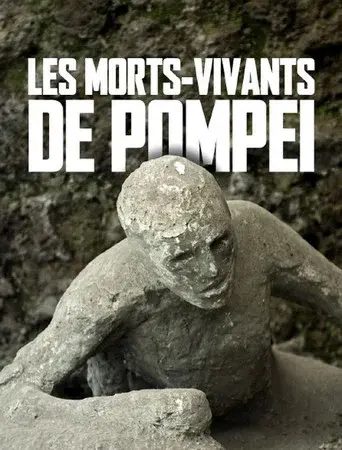
Restoration expert Giancarlo Napoli takes on the important task of saving 86 plaster casts of Pompeii citizens that were created by archaeologist Carlo Fiorelli in the 1860s.
Pompeii's Living Dead
From the legendary times of Romulus and Remus to the present day, the compelling story of the eternal city's twenty-five centuries of civilization traces the rise of Christianity over paganism through studies of Vatican art treasures.
The Immortal City

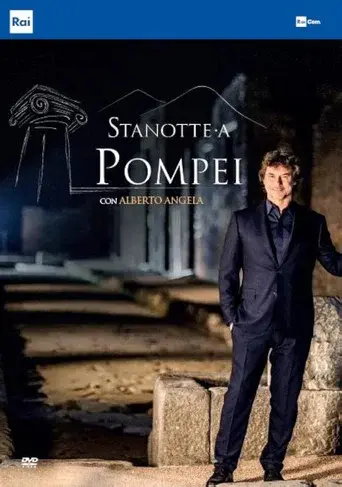
Pompeii, 79 A.D., the night before the eruption. The journey of “Tonight in Pompeii” with Alberto Angela begins here, in the hours leading up to the catastrophe. Minute by minute, we’ll follow the tragedy that forever marked ancient history, recounting the reactions, the emotions, and the flight. And what happened afterward. We’ll see many places frozen in time, just like Pompeii: Herculaneum, with its marvelous, still-intact thermal baths and the fabulous jewels found on the skeletons of those who fled; Stabiae and Oplonti, with their lavish villas featuring swimming pools and views of the Gulf of Naples.
Stanotte a Pompei

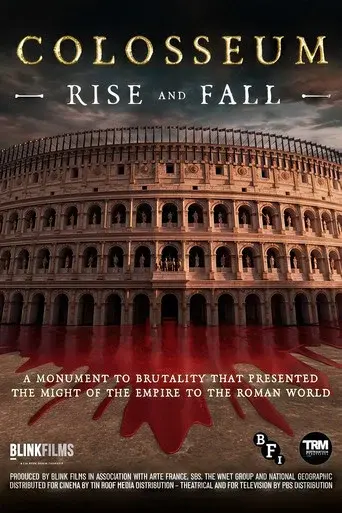
The greatest amphitheatre ever built by the Romans and a monument to blood and brutality. But what were the origins of the Colosseum and the gruesome spectacles performed within? With unique access to new archaeology, Colosseum: Rise and Fall explores the true purpose of the Colosseum and the network of amphitheatres spread throughout the Roman Empire. Visiting sites across Europe and north Africa, exploring finds that reveal both the scope of the games and the secrets of the gladiators, Colosseum: Rise and Fall charts the expansion of Rome and the ultimate decline of one of history’s most barbaric empires, through the most iconic of Roman landmarks, the Colosseum.
Colosseum: Rise and Fall

What is true and what is false in the hideous stories spread about the controversial figure of the Roman emperor Gaius Julius Caesar Augustus Germanicus (12-41), nicknamed Caligula? Professor Mary Beard explains what is accurate and what is mythical in the historical accounts that portray him as an unbalanced despot. Was he a sadistic tyrant, as Roman historians have told, or perhaps the truth about him was manipulated because of political interests?
Caligula with Mary Beard

Who invented time, who invented the clock? Why 1 hour, why 60 minutes, why 60 seconds? Since prehistoric times, man has sought to measure time, to organize social and religious life, to plan food supply... Today we can surf the Internet, geolocate, pay by credit card… All our daily lives depend on time and the synchronization of clocks. The history of the invention of time and of the ways and instruments to measure it is a long story…
The Time Factory

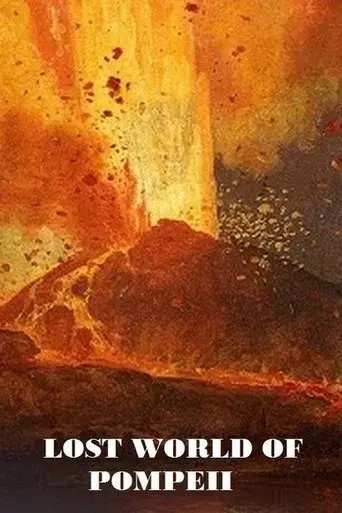
What life was like in the ancient Roman city of Pompeii moments before it was devastated by the eruption of Mount Vesuvius in A.D. 79.
Lost World Of Pompeii

At the time of Nero, the Empire is at the height of its power, but Rome, where a million inhabitants live, is afraid of its enemies, of foreigners, of barbarians. Rome is afraid of the Tyrant and of its own power. And all these fears seem to crystallize in that of fire, more than anything else feared in this megalopolis that so often catches fire. In 64 A.D. the most terrible fire that the city has ever known broke out. It is said that it was set on the orders of Nero, in order to overwhelm the Christians who were accused of it. The watchmen, Celer and Theseus, intervene at the risk of their lives. This fictional documentary tells the story of the adventures of these two "firemen" in Rome during the Empire. An astonishing journey through time, the story of the life of men: customs, family, lifestyle, politics, education, leisure.