
Overview
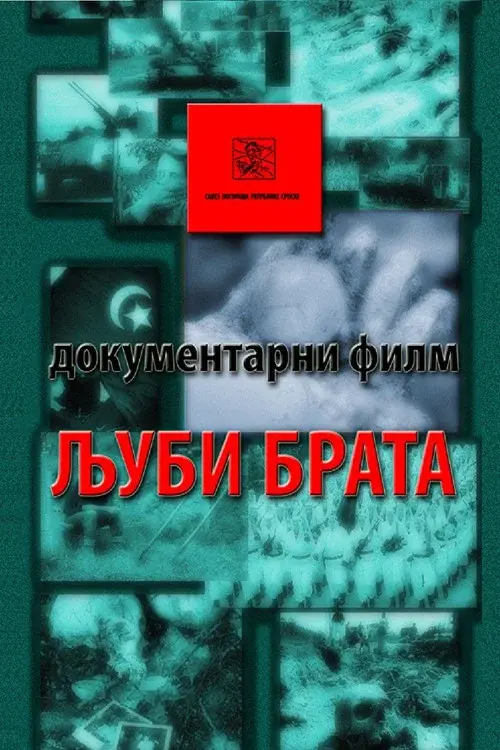
Documentary about the massacre of Bosniak army committed over soldiers of Republika Srpska during 1990s Bosnian wars.
Key Film Crew
Production Stats
You May Also Like

A film director from Israel interviews fellow veterans of the 1982 invasion of Lebanon to reconstruct his own memories of his term of service in that conflict.
Waltz with Bashir

The film delves into an almost forgotten event that took place in Kfar Qasim in October 1956, when 47 innocent civilians were shot and killed by Israeli Border Police soldiers. Through a gripping narrative structure, like a suspenseful legal drama, the film unfolds the historical, political, and psychological reality that shaped and triggered the event. A cinematic montage created by the intertwined plotlines, emphasizes immense gaps, conflicting narratives, and deep divides between Jews and Arabs who are destined to live together on the same land. If we begin to recognize these gaps, will there be hope for reconciliation?
The 1957 Transcripts

The carnage in Sarajevo provides the focus of this French documentary which seeks to call attention to the terrible conflict in the hopes of finally ending it. The film is divided into five parts. Each part covers a time frame ranging from April 4, 1992, the beginning of the war, to the present. The major issues that occur are three-fold. It depicts the systematic genocide of Bosnians, the silence of Western countries, and the determination of the Bosnians to resist. They refuse to be seen as victims, even though the filmmakers portray them so. Also included are the origins and political aspects of the war. It offers interviews with participants. It also reveals how the U.S. State Department censored reports about Serbian death camps.
Bosnia!

Jabir, Usama and Uzeir are three young brothers in a Sunni family of shepherds. Since childhood, their father Ibrahim has rigidly trained them in the principles of the Quran and has filled their minds with stories of the Bosnian War.
Brotherhood
The Cove tells the amazing true story of how an elite team of individuals, films makers and free divers embarked on a covert mission to penetrate the hidden cove in Japan, shining light on a dark and deadly secret. The shocking discoveries were only the tip of the iceberg.
The Cove

Paul Pawlikowski's award-winning documentary on life behind Serbian lines in Bosnia. The film observes the roots of the extreme nationalism which has torn apart a country and provides a chilling examination of the dangerous power of ancient nationalist myths.
Serbian Epics


Filmmaker Sabina Vajraca documents her Bosnian Muslim family's return to their home of Banja Luka, Bosnia, to recover their stolen belongings many years after being forced to flee to the United States. In Bosnia, they witness the devastation of the city, visit war crimes sites, and confront the family that has been living in their former apartment -- with all their furnishings -- for a decade.
Back to Bosnia

From May to August of 1992, during the Bosnian War, more than 3000 Bosnian Muslims--known as Bosniaks--and Croats were murdered by Serbian authorities in the town of Prejidor, Bosnia, and its surroundings and in the Omarska concentration camp near the city.
Bosnia: The Camp

In July 1995, Srebrenica falls into the hands of Bosnian Serb forces led by General Ratko Mladić. Within a few days, thousands of Bosniak men and boys are separated from their families, killed, and buried in mass graves. Through Roberta Biagiarelli’s theatrical monologue, survivors’ testimonies, archival footage, and documents from the International Criminal Tribunal for the former Yugoslavia, the film reconstructs the story of the siege and the Srebrenica genocide. Shot in 2005 at the sites of the massacre, including the battery factory in Potočari, the film brings together memory, testimony, and historical documentation.
Souvenir Srebrenica

This film documents four delegated performances/castings, featuring participants who are both directly and indirectly actors of war: veterans, civilian victims, disabled individuals, or those traumatised by conflict. Applicants that have been seduced to participate in four castings of imaginary movie altogether agreeing to be part not only of an experimental film, but also of a subversive cinematic social experiment. They signed up for battle in the movie, and got an unexpectedly brutal lesson about conflict. They certainly, but so do we who watch it.
The Final Battle


Images of Argentinian companies and factories in the first light of day, seen from the inside of a car, while the director reads out documents in voiceover that reveals the collusion of the same concerns in the military dictatorship’s terror.
Corporate Accountability
A hotel in the centre of town is a war-time home and refuge for many of Sarajevo's homeless people. Every morning they leave the hotel and wander around the destroyed city gathering again at the defunct hotel in the afternoon. This film follows their separate fates through the bitter comparing of images of the bums with those of dogs abandoned by their owners and now left et the mercy of the war ravaged streets of Sarajevo.