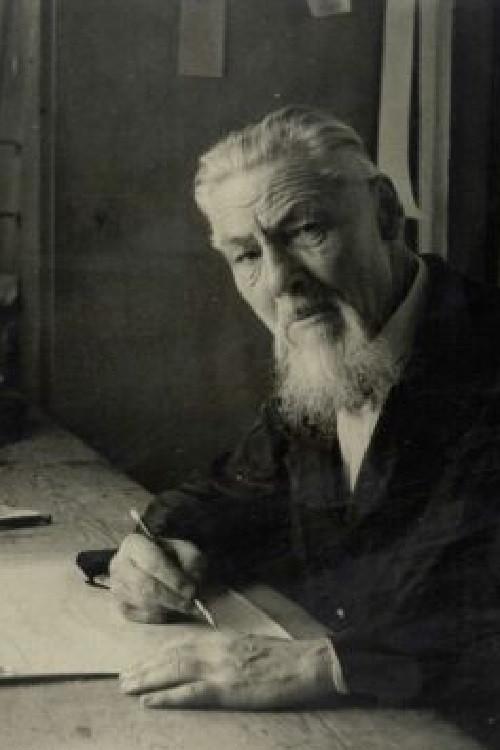
Architect Joze Plecnik: 1872-1957
Original Title: “Arhitekt Jože Plečnik: 1872-1957”
“Architect Joze Plecnik: 1872-1957”
Overview
Plečnik in photographs, Plečnik's house, Trnovo bridge, Trnovo port, Ljubljana castle, shoemaking bridge, triple bridge, market, lock, church of St. Jožef, church in Šiška, Church of Cyril and Methodius in Bežigrad, football stadion, baptistery of the church in Črnuče, church at Barje, NUK, Roman wall, Križanke, Vegova, Peglezen, Tivoli, Chamber of Crafts, mutual insurance company, Žale.
Key Film Crew
Production Stats
You May Also Like

Catalan architect Antonio Gaudí (1852-1926) designed some of the world's most astonishing buildings, interiors, and parks; Japanese director Hiroshi Teshigahara constructed some of the most aesthetically audacious films ever made. With camera work as bold and sensual as the curves of his subject's organic structures, Teshigahara immortalizes Gaudí on film.
Antonio Gaudí

Postwar life of eight remaining inhabitants of Strmec, a village located in the very corner of Slovenian Alps near Italian border. When local partisans killed a German officer, the Nazi occupiers shot all males in the village as an act of revenge; those who remained are seven women of different age who traditionally wear black scarves, and young boy who hasn't any friends to play with.
Black Scarves

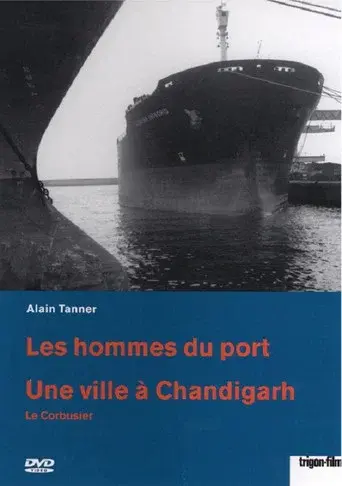
Documentary on the construction of Chandigarh, the new capital of the Indian Punjab region, planned by Albert Mayer and Swiss architect Le Corbusier.
A City at Chandigarh


Documentary two men united in creating a social and architectural experiment unique in its kind.
Villaggio Eni

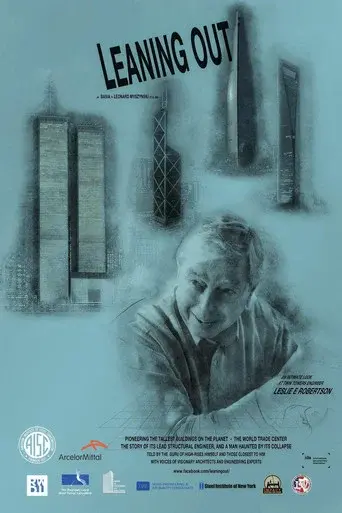

A portrait of the Canadian architect Luc Durand (1929 – 2018), who, after studying with Eugène Beaudoin in Switzerland, began his career in India. This period would be decisive for his career and would influence many of the projects he designed in Quebec, including the Quebec Pavilion at Expo 67, Place Dupuis, and the Olympic Village for the 1976 Olympic Games. Durand then decided to return to his roots in 2012, traveling from Montreal to Geneva, from New Delhi to Chandigarh. A portrait of an eminent figure in Quebec architecture.
Luc Durand Leaving Delhi

Documentary about a utopian housing project in Rio de Janeiro by architect Affonso Eduardo Reidy.
Pedregulho
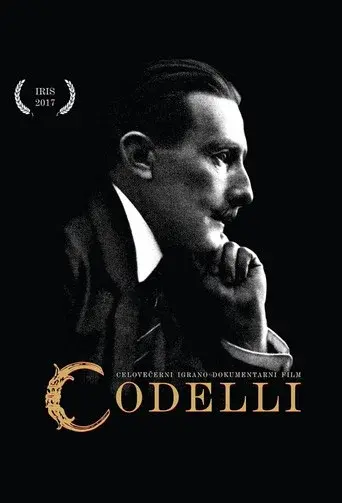
Codelli is a feature-length docudrama about a little-known film project by Slovenian inventor Baron Anton Codelli. Together with filmmaker and adventurer Hans Schomburgk he filmed in Togo in 1914 the first live-action film in Africa, which possibly inspired James Rice Burroughs for his novel on Tarzan. In the company of three Codelli’s descendants and actor Primož Bezjak, we traced the fate of Codelli’s film, brought the remains from Togo and Berlin to Ljubljana and used the Green Screen technology to bring to life 15 live-action scenes based on 600 Codelli’s museum photographs.
Codelli
The documentary follows seven stories from the set of deadly sins and virtues. The concepts have been interpreted through the ambiguity, associations and meanings triggered by various social contexts. Using phenomena from our recent history, the story focuses on justice, prudence, sloth, greed, gluttony, temperance, pride. With regard to each phenomenon, i.e. each sin or/and virtue, there is the question of the duality of borders. If virtue is a desire subdued, and sin a desire that goes too far and crosses the border, this necessarily implies an area of ambiguity, of borders and questions about what is right and what isn’t.