Overview
The film speaks of student demonstrations in Belgrade, 1969 and of the critical quality, enthusiasm and discipline of this form of protest. It was the most powerful public criticism of "red bourgeoisie" - members of communist apparatus, who suppressed creativity and affirmation of new generations throughout Eastern block.
Top Cast

Dragoljub Vojnov
Stevo Žigon

Dragoljub Mićunović
Key Film Crew
Production Stats
You May Also Like
In 1969, the Renovación Universitaria movement and the subsequent raid on the Central University of Venezuela by the government of Rafael Caldera, triggered a strong wave of protest in the Institutes of Higher Education in Venezuela. This documentary collects part of the events that took place in the city of Mérida, Mérida State, where the University of the Andes is located.
La autonomía ha muerto

Contrasting radical mobs, anarchy, and 1960s counterculture with footage of American manufacturing and innovation, this film celebrates the concept of American exceptionalism and argues that anti-Vietnam War protesters were influenced by communism, atheism, and immorality. Set mostly in a university library, this political debate between a medical student, his 1770s ancestor, and a history professor is a sequel to the 1972 National Education Program film, Brink of Disaster! Two additional characters appear in this drama: a 19th-century steamboat captain, and the student’s grandfather - an early 20th-century automobile worker. The National Education Program at Harding College in Searcy, Arkansas created a variety of widely-distributed anti-communism films from the mid-1940s to the early 1970s.
Tragedy or Hope

A student is held up in the library while a riot rages outside. As SDS protesters head to burn the library down, he has to fend them off with his baseball bat. This film opens with actual footage of civil disturbances in the 1960s, and moves on to images of historical American figures.
Brink of Disaster!
Three college students start a social experiment to prove that reality changes according to the words we use to describe it. Through research, activist actions, and artistic interventions, they analyze the importance of language in the way we understand the world. The documentary includes analysis from more than 20 international experts and leaders in the fields of political communication and information.
The Brave Class



Oxana is a woman, a fighter, an artist. As a teenager, her passion for iconography almost inspires her to join a convent, but in the end she decides to devote her talents to the Femen movement. With Anna, Inna and Sasha, she founds the famous feminist group which protests against the regime and which will see her leave her homeland, Ukraine, and travel all over Europe. Driven by a creative zeal and a desire to change the world, Oxana allows us a glimpse into her world and her personality, which is as unassuming, mesmerising and vibrant as her passionate artworks.
I Am FEMEN
Documentary film about the protests against the 1968 Davis Cup tennis match between Sweden and Rhodesia, in Båstad, Sweden. In a series of interviews, demonstrators and members of the Swedish government give their views on sport, politics and civil disobedience.
The White Game

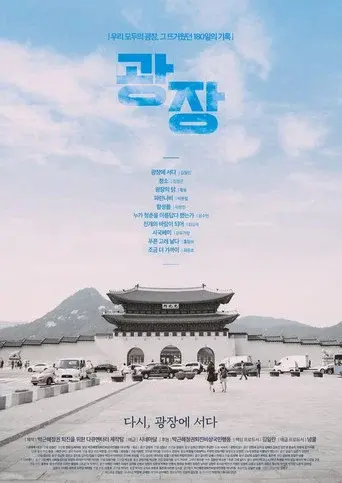
Project 1 _ Hong Hyung-sook The children who are enthusiastically painting and cutting a doll. What stories will be told at the Square? - Project 10 _ Kim Jeong-geun The janitorial worker from the Busan Subway Station, Kim Young-ja talks about how she hopes to see a clean world, just like how she cleans everywhere in the subway.
Candle in the Wave
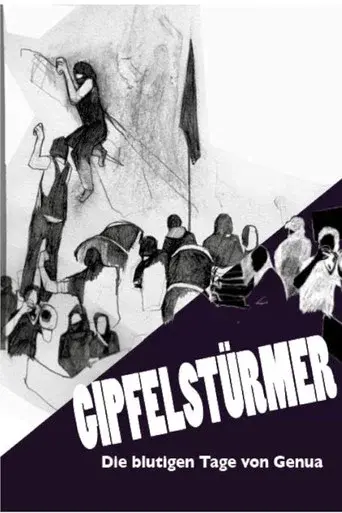
Students from nine nations unite on August 7, 1950 at the Franco-German border near Germanshof, tear down the barriers and remove the border posts and barriers, which they burn in a ceremony. This act is a commitment to Europe and a protest against the arbitrariness of borders between nations.
Ein Fenster in die Welt

“What kind of person do you think former President Park Geunhye is?” Sohn Seokhee, a journalist, gives a clear and sharp answer that he “shares the common ideas that people in our country have.” That common idea has led millions to bring candles to the streets, correcting a thread of history that has gone awry, and gather a sense of hope among people. Candlelight Revolution portrays the voices of citizens from various generations, political figures of different parties, and the witnesses of an administration under improper influence. It is a documentary that identifies the genuine structure of politics and society by following how Park entered politics along with government records up until March 10.
Candlelight Revolution

A month after the Wall Street occupation, a number of protesters follow their example and set up their tents in front of the Ljubljana stock market. The protesters are united in the critique of representative democracy and global financial capitalism under the slogan ‘nobody represents us’. Their organisation is based on the principles of direct democracy. In absence of other social alternatives, a community starts to emerge in the camp in front of the stock market where everyone has an equal say, and everyone is united in their diversity. After the initial euphoria the great idea of direct democracy clashes against the contemporary individual; antagonisms surface, similar to those of the system which the protesters fight against. The story about the Slovenian version of the ‘occupy’ movement is portrayed with the stories of a few protagonists, who despite several defeats do not lose hope in a different world.