La autonomía ha muerto
Overview
In 1969, the Renovación Universitaria movement and the subsequent raid on the Central University of Venezuela by the government of Rafael Caldera, triggered a strong wave of protest in the Institutes of Higher Education in Venezuela. This documentary collects part of the events that took place in the city of Mérida, Mérida State, where the University of the Andes is located.
Key Film Crew
Production Stats
You May Also Like



Mayami Nuestro goes beyond the slogan "tá barato, dame dos" (“it’s cheap, give me two”) to force a rethinking of Venezuela’s relationship with oil and national identity. Produced at the height of the oil boom, this 34-minute documentary examines Venezuelan lifestyles in the 1970s and early 1980s, questioning the consumerist fantasies fueled by petro-wealth. Through interviews with merchants, bankers, U.S. academics, and the testimonies of Venezuelans themselves, the film maps the era’s version of the “American Dream” as lived—and projected—abroad. Winner of national and international awards and directed by Carlos Oteyza, Mayami nuestro offers a sharp, historically grounded critique and an open invitation for new generations to reflect on the legacy of oil and its cultural consequences.
Mayami nuestro
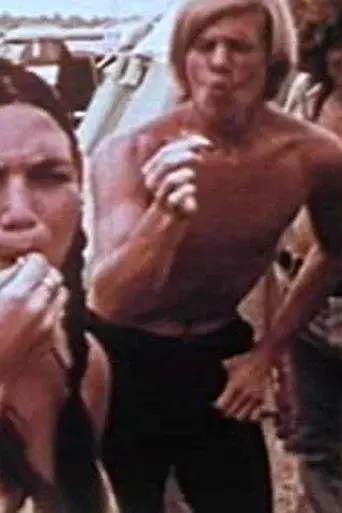
Contrasting radical mobs, anarchy, and 1960s counterculture with footage of American manufacturing and innovation, this film celebrates the concept of American exceptionalism and argues that anti-Vietnam War protesters were influenced by communism, atheism, and immorality. Set mostly in a university library, this political debate between a medical student, his 1770s ancestor, and a history professor is a sequel to the 1972 National Education Program film, Brink of Disaster! Two additional characters appear in this drama: a 19th-century steamboat captain, and the student’s grandfather - an early 20th-century automobile worker. The National Education Program at Harding College in Searcy, Arkansas created a variety of widely-distributed anti-communism films from the mid-1940s to the early 1970s.
Tragedy or Hope

A student is held up in the library while a riot rages outside. As SDS protesters head to burn the library down, he has to fend them off with his baseball bat. This film opens with actual footage of civil disturbances in the 1960s, and moves on to images of historical American figures.
Brink of Disaster!
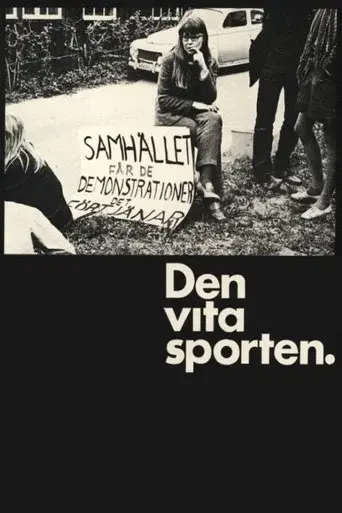
Documentary film about the protests against the 1968 Davis Cup tennis match between Sweden and Rhodesia, in Båstad, Sweden. In a series of interviews, demonstrators and members of the Swedish government give their views on sport, politics and civil disobedience.
The White Game

Cruz Quinal, "the mandolin king," lives near Cumana in a mountain valley surrounded by sugarcane fields. Perpetuating 16th century Spanish traditions of guitar-making, Cruz fashions such musical instruments as cuatros, marimba, escarpandola, and his own creation, a mandolin with two fretboards. He is an accomplished musician as well. In this moving portrait, Cruz compares himself to a decaying colonial church across the street: revered yet neglected, the village altar stands, paint peeling, under the open sky.
El rey del bandolín

Students from nine nations unite on August 7, 1950 at the Franco-German border near Germanshof, tear down the barriers and remove the border posts and barriers, which they burn in a ceremony. This act is a commitment to Europe and a protest against the arbitrariness of borders between nations.
Ein Fenster in die Welt

Students seeking greater control over the hiring of faculty occupy the offices of the Political Science Department at McGill University. The film crew lives with the students and follows their action through confusion, argument, dissent, and negotiations with faculty. The result is an intimate view of a student political action.
Occupation

Produced within the framework of the “Programmi Sperimentali” of Italian public television (structure of the RAI which allowed, in the 1970s, the production of films such as Lutte en Italie by the Dziga Vertov Group, Cancer by Glauber Rocha or Perché pagare per essere felici by Marco Ferreri), Cronaca di un gruppo tells the story of a group of young French revolutionaries who, between Paris and the Pyrenees region, are looking for ways to continue their political activities, through the theater experimental and counter-information, the day after May 68. Produced in collaboration with Gianni Toti, Didier Sandre and the Nanterre experimental theater group.
Chronicle Of A Group

A film considered almost lost even by Garrel, who recently found his negatives. Shot during the events of the May 68, it was made collectively; the film is a merge of Garrel’s and his partners’ points of view, all of them students and filmmakers that participated in the revolt.
Actua 1

With his film Generation '68, the author makes a homage to the generation with which he shares his youthful enthusiasm and the idea about a revolution that will change the world, while being "realistic and demanding the impossible". At the same time he questions the true impact of these changes on social and - probably more important - private level. Having ideas is easy; making them look credible to the generations that follow is somewhat more difficult. By rejecting the ideals of the 1968 as unworkable, the new generations are coming up with some of their own, maybe even more unrealistic ones...