

Overview
Whitwell, TN is a small, rural community of less than two thousand people nestled in the mountains of Tennessee. Its citizens are almost exclusively white and Christian. In 1998, the children of Whitwell Middle School took on an inspiring project, launched out of their principal's desire to help her students open their eyes to diversity in the world and the horrors and enormity of the holocaust.
Key Film Crew
Production Stats
You May Also Like

Filmed in 1983, during the presentation of Peter Weiss' play at the Fred Barry theater at UQAM. This document exposes us to a play dealing with the Shoah, and its intention to present the medium of video as a specific language.
L'instruction

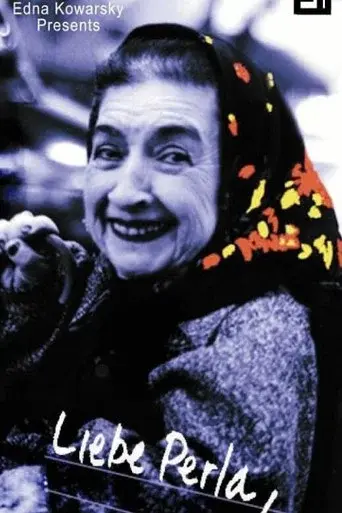
Researcher Hannelore Witkovsky searches for the notorious Nazi war criminal Dr. Joseph Mengele's lost film about his experiments on a family of little people in Auschwitz including Holocaust survivor Perla Ubitsch, whom she befriends.
Liebe Perla


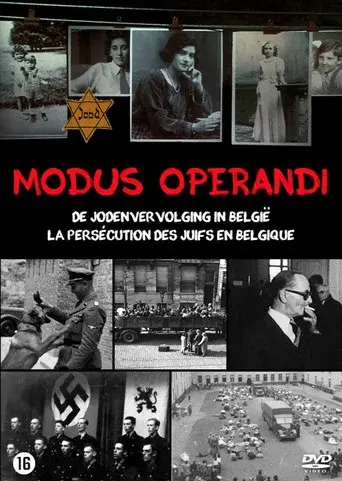
Between 1942 and 1944 some 24,916 Jews were deported from Belgium to Auschwitz. The roundups and deportations were organized and carried out by the Nazis with the - not always conscious - cooperation of Belgian authorities. The attitude of the authorities here varied from outright resistance to voluntary or unwitting collaboration.
Modus Operandi

For doctors “MARASMA” was a diagnosis: a state of deep organic deterioration, total loss of strength. In mental hospitals, people did not die of mental illness, but of marasmus. This is what the medical records say, which today reveal the most difficult stories: those of the last among the weakest, children and women. Through their testimonies we can also give voice to those who do not know, who do not want or can not remember.
Marasma

A documentary exploring how Albanians, including many Muslims, helped and sheltered Jewish refugees during WWII at their own risk, and trying to help the son of an Albanian baker that housed a Jewish family for a year return some Hebrew books that the family had to leave behind.
Besa: The Promise


The Polish city of Łódź was under Nazi occupation for nearly the entirety of WWII. The segregation of the Jewish population into the ghetto, and the subsequent horrors are vividly chronicled via newsreels and photographs. The narration is taken almost entirely from journals and diaries of those who lived–and died–through the course of the occupation, with the number of different narrators diminishing as the film progresses, symbolic of the death of each narrator.
Łódź Ghetto
A powerful and emotional new episode of ESPN E60 will look back 50 years to one of the darkest moments in sports history – the Munich Massacre, when Palestinian terrorists murdered 11 Israeli sportsmen at the 1972 Summer Olympics. E60 will tell the story of one Israeli athlete, now 86, who survived, just as he had survived World War II and the Holocaust when he was a child.
The Survivor

A pig farm in Lety, South Bohemia would make an ideal monument to collaboration and indifference, says writer and journalist Markus Pape. Most of those appearing in this documentary filmed in Slovakia, the Czech Republic, Poland, France, Germany and Croatia have personal experience of the indifference to the genocide of the Roma. Many of them experienced the Holocaust as children, and their distorted memories have earned them distrust and ridicule. Continuing racism and anti-Roma sentiment is illustrated among other matters by how contemporary society looks after the locations where the murders occurred. However, this documentary film essay focuses mainly on the survivors, who share with viewers their indelible traumas, their "hole in the head".
A Hole In The Head

The documentary portrays Erich Finsches, a true Viennese original and Holocaust survivor. Based on over six years of collected material by director Matthias Jaklitsch, who supported Erich on his travels, the film shows him as a positive, humorous, but also argumentative and unique personality in all his humanity. At 97, Erich continues to tirelessly advocate for remembrance of the past, attending memorial ceremonies and schools to spread his message of "Never Again." Instead of a traditional "eyewitness narrative," the film not only documents Erich's life, his youth during Nazi persecution, and his rebuilding of a new life after the war, but also the relationship between the director and the protagonist.
