

"KZ Buchenwald. Aushalten. Wir eilen euch zur Hilfe"
Overview
Former inmates and American soldiers remember the cruel conditions in Buchenwald concentration camp.
Top Cast

Milton Harrison
Self
Kurt Baum
Self
Kurt Goldstein
Self
Helmut Haag
Self
Ernst Jende
Self
Gisela Hemman
Self
Margot Pommerenke
Self
Wolfgang Held
Self
Thomas Crawford
Self

Dwight D. Eisenhower
Self (archive footage)
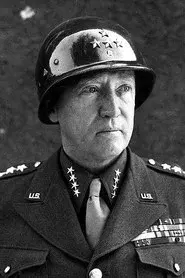
George S. Patton
Self (archive footage)
Key Film Crew
Production Stats
You May Also Like

In 1944 Rudolf Breslauer documented the everyday life in the Westerbork transit camp on film, commissioned by the German camp commander Albert Gemmeker. The Westerbork Film was never completed, but much of the raw footage is preserved.
Westerborkfilm

Most 72 is the very first film essay directed and produced by The Markerists and the inaugural installment in the series 'Most'. The footage and the audio were recorded in a single day on June 17th, 2013 on location in Auschwitz-Birkenau with post-production being completed within 72 hours. Surbhi Goel, a professor of cultural studies from India on her first trip outside of her homeland, recorded extemporaneous impressions as she walked the grounds of the death camp with the filmmakers. These were later used as the voice-over narration. The project serves as the template in which future Markerists film essays will be produced--shot and recorded on location and completed immediately afterwards, staying relevant in this age of instant global communication.
Most 72


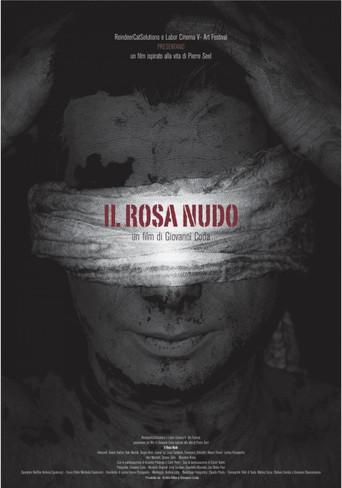
Among the millions of victims of the Nazi madness during the Second World War, Pierre Seel was charged with homosexuality and imprisoned in the Schirmeck concentration camp. He survived this terrifying experience of torture and humiliation, and after the war he married, had three children, and tried to live a normal life. In 1982, however, he came to terms with his past and his true nature and decided to publicly reveal what he and thousands of other homosexuals branded with the Pink Triangle had undergone during the Nazi regime. Il Rosa Nudo (Naked Rose), inspired by the true story of Pierre Seel, depicts in a theatrical and evocative way the Homocaust, focusing on the scientific theories of SS Physician Carl Peter Værnet for the treatment of homosexuality, which paved the way for the Nazi persecution of gay men.
Naked Rose
In 1994, film producer Patrick Sobelman recorded the testimony of his grandmother Golda Maria Tondovska, a Polish Jewish survivor of the Shoah.
Golda Maria

One journalist described it as a chance "to see justice catch up with evil." On November 20, 1945, the twenty-two surviving representatives of the Nazi elite stood before an international military tribunal at the Palace of Justice in Nuremberg, Germany; they were charged with the systematic murder of millions of people. The ensuing trial pitted U.S. chief prosecutor and Supreme Court judge Robert Jackson against Hermann Göring, the former head of the Nazi air force, whom Adolf Hitler had once named to be his successor. Jackson hoped that the trial would make a statement that crimes against humanity would never again go unpunished. Proving the guilt of the defendants, however, was more difficult than Jackson anticipated. This American Experience production draws upon rare archival material and eyewitness accounts to recreate the dramatic tribunal that defines trial procedure for state criminals to this day.
The Nuremberg Trials
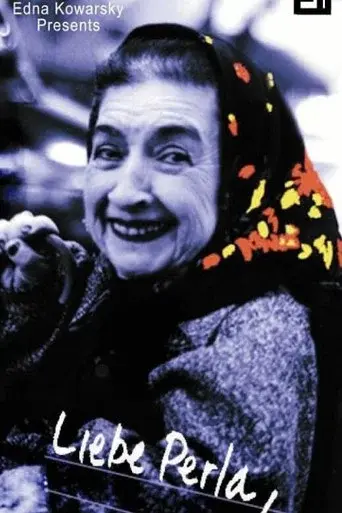
Researcher Hannelore Witkovsky searches for the notorious Nazi war criminal Dr. Joseph Mengele's lost film about his experiments on a family of little people in Auschwitz including Holocaust survivor Perla Ubitsch, whom she befriends.
Liebe Perla

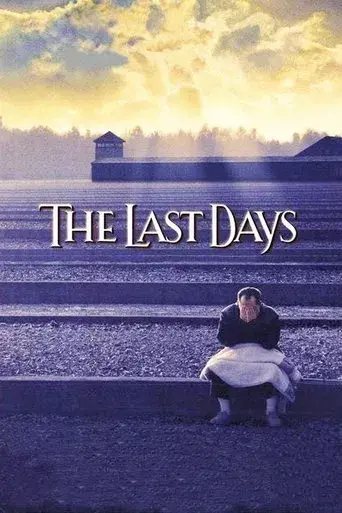
This Oscar-winning documentary recounts the harrowing stories of five Hungarian Jews who endured the horrors of the Holocaust and Hitler's reign.
The Last Days
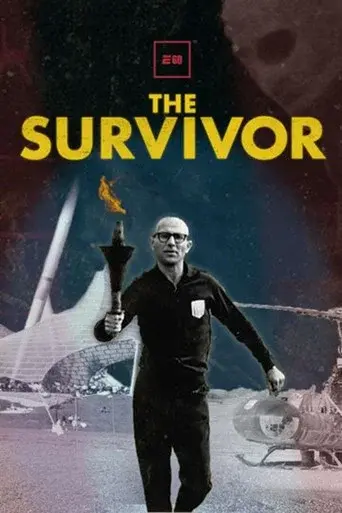
A powerful and emotional new episode of ESPN E60 will look back 50 years to one of the darkest moments in sports history – the Munich Massacre, when Palestinian terrorists murdered 11 Israeli sportsmen at the 1972 Summer Olympics. E60 will tell the story of one Israeli athlete, now 86, who survived, just as he had survived World War II and the Holocaust when he was a child.
The Survivor
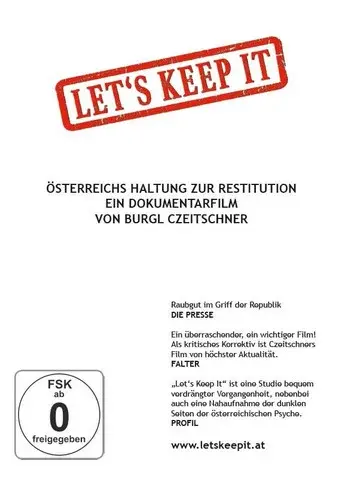
Let's keep it is a cinema documentary (99') about the still problematic attitude of the Republic of Austria towards the restitution of "aryanized" real estate which - for whatever reason - became the property of Austria after 1945. The film is also the director's bow to the victims of the darkest chapter of Austria's recent history. A chapter that seems to have been extended to a certain extent when it comes to restitution of looted property to the descendants of Holocaust victims.
