

Attention danger travail
Overview
With the energy of the dying, those in power apply themselves to reasserting the value of work – with force, if need be. But more and more workers have understood that, to truly value their work, they have to do without it. They also have to get rid of the society of consumption that goes along with it. It may not be easy, but it is certainly amusing. We present a panorama of a mass desertion destined to spread.
Top Cast

Christophe Coello
Himself
Stéphane Goxe
Himself
Key Film Crew
Production Stats
You May Also Like
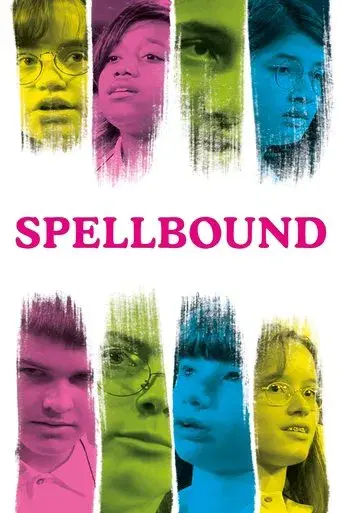
This documentary follows 8 teens and pre-teens as they work their way toward the finals of the Scripps Howard national spelling bee championship in Washington D.C.
Spellbound

In 1984, eleven miners entrenched themselves underground to protest for better working conditions in the mining village of Almaden in southern Spain. The strike, deep within the toxic mercury mine, lasted for eleven long days, during which the whole village showed its solidarity with the men protesting underground. The mine was the heart of Almaden, around which everything revolved – until it longer existed. The mercury mine was closed for good at the beginning of the 21st century. As a consequence, the area has experienced mass unemployment and slow decline.
11 Underground

The Show Must Go On is a personal journey behind the scenes that confronts the epidemic of mental health issues in the Australian entertainment industry.
The Show Must Go On
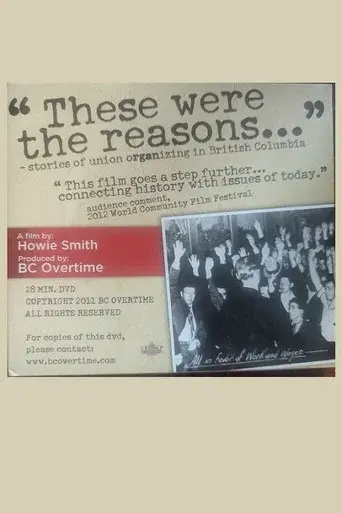
This film takes us into the harsh realm of BC's early coal mines, canneries, and lumber camps; where primitve conditions and speed-ups often cost lives. Then, the film moves through the unemployed' struggles of the '30s, post WWII equity campaigns, and into more recent public sector strikes over union rights.
These were the reasons

A documentary about the closure of General Motors' plant at Flint, Michigan, which resulted in the loss of 30,000 jobs. Details the attempts of filmmaker Michael Moore to get an interview with GM CEO Roger Smith.
Roger & Me

What is it like to be young and grow up on a reserve? Focussing on music lessons, the film reveals the complex relationships that Indigenous youth can have with their “white” teachers. How can two cultures come together? A question the film asks, while inviting us into the private worlds of three Atikamekw teenagers, Myrann, Wapan and Seskin, who are trying to build their future and find a place in this world.
We are not legends

The Amsterdamse Bos (Amsterdam Forest), located between Amstelveen and Schiphol, was constructed during the years of economic crisis. In 1934, Amsterdam had 50,000 unemployed residents, who were put to work on the project as part of a government relief scheme. Annette Apon made this short documentary about the creation of the Amsterdamse Bos for the Amsterdams Stadsjournaal.
Het bosplan

Taking the demise of a textile factory in Austria’s Waldviertel region as its starting point, with the antiquated manufacturing plant initially shown in full operation, this film poses the question of what work means for people’s self-image and character. After the factory goes bankrupt and closes, the filmmaker accompanies some of its employees as they continue to make their way, questioning them about their daily routines, the circumstances in which they live, about looking for work or the new jobs they find. One woman’s situation is precarious, but that doesn’t prevent her from bringing up her grandchildren. Another woman works here and there, flexible and resourceful. One man blossoms visibly in his newly unemployed state. Bit by bit, different aspects of their private lives and personal misfortunes emerge.
Over the Years

They're young, unemployed and on the march - from Glasgow, Liverpool and Swansea to London.
Right to Work March

After losing his job during lockdown, Natan signs up to a microtask website. Having become a “Turker” alongside tens of thousands of others, he is paid a cent for each face he erases on Google Street View. Under the guise of Otto, a fictional character, he embarks on an experimental and playful investigation into “clickworkers”, haunted by the spectre of Beckett.
Human Not Human

Kuwait’s constitution says that every person has the right to a job, so in some places 20 people are employed for one person’s job. In South Korea, they work so much that a policy has been introduced to turn off computers at the end of the day so that employees can’t work any more. In the US, they give up over 500 million holiday hours each year, while Amazon’s drivers are trying to form a union. Meanwhile, robots are poised to take over most jobs and put the rest of us out of work. Work is so crucial to our identity and what we spend our waking hours on that it is barely noticed anymore. A lot has happened since a group of Puritan priests invented the concept of work ethic in the 1600s, and in the 21st century the very concept of work is in many ways disintegrating. A perfect situation for a filmmaker like Swedish mastermind Erik Gandini, who travels the world to explore what the concept of work means today – if it means anything at all.
After Work

Burning Out is literally a drama about life and death. For two years, the Belgian director Jérôme le Maire followed the members of a surgical unit in one of the biggest hospitals in Paris. Constantly under severe stress, understaffed and subject to severe budget cuts, employees fight each other for resources. Meanwhile the management imposes ever more stringent efficiency and profitability targets. All over Europe burnout has reached epidemic proportions among employees in the public and private sectors. Will we end up killing ourselves? Or will we be able to find meaning and joy at work?
Burning Out

Sean McAllister's bleak, extraordinarily intimate film offers an insight into the lives of 35 year old Kevin, who hasn't worked in 18 years, and his 19 year old girlfriend Robbie, who earns 70 pounds a week as a seamstress.
Working for the Enemy


A historical perspective to understand Neoliberalism and to understand why this ideology today so profoundly influences the choices of our governments and our lives.

