

Overview
Workers, peasants, soldiers, students and merchants were five groups of Chinese society in the 1950s, after the so-called elimination of the exploited class. Borrowing this concept, the umbrella is taken as the clue to rediscover changes in various social classes after the economic reform, and to analyze the social problems in China. Workers making umbrellas, merchants selling umbrellas, students looking for jobs in the rain. Umbrella is used as a metaphor that can be seen everywhere. As the raindrop, what we see is sometimes clear, sometimes untraceable.
Key Film Crew
Production Stats
You May Also Like
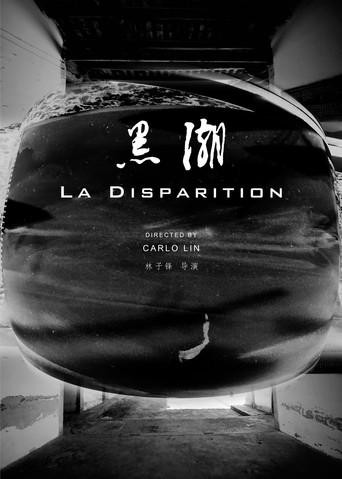
Yu Tian (played by Hu Tian) is a senior this year. He hasn't returned home for a few years while studying in a big city. The estrangement between him and his mother (Lin Jiehua) is somehow getting bigger and bigger. He is immersed in his artistic dreams and is not practical, but his mother, who has always been conservative, does not understand. His friends remained the same, still the same young people in the small town. Friends booed that he would be the most promising one among them, but he himself was convinced. He told his sister (played by Sun Nan) that he would go to the big city to make a fortune.
Disappearance
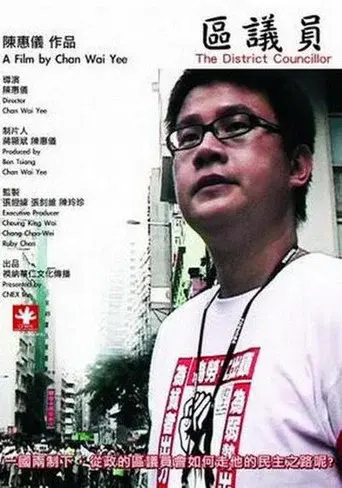
The year 2003 is a rather turbulent period for Hong Kong – the economy was in recession, the government constantly implemented futile policies, the SARS outbreak, and, on July 1st, 500,000 people went on strike opposing the adoption of Article 23 of the Basic Law. It was against this political atmosphere that YIN Zhao-Jian gave up his social worker job, a 10 year long and steady career, and joined the political circle and participated in the district councilor election, which he had no idea about.
The District Councillor
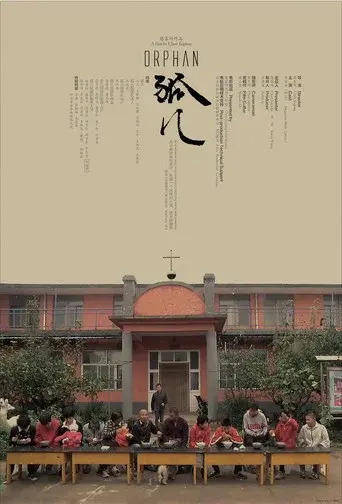
Early in the morning, the priest read in the church at the disabled orphanage. At dawn, the villagers entered the funeral ceremony during the prayer ceremony. In disabled orphanages, there are babies in the youngest children. Two children attending school together did not attend the class normally. More children with reduced mobility can only be dazed and crawl on the ground. But they are also God's people and attend worship services in the church. The autumn mist was hazy, and a new cathedral was being built in the village. Insects, kittens, puppies, orphans, villagers who worship, all life is safe. At night, the tired priest went to sleep after finishing writing. In his dream, he reached a graveyard and remained silent with his dying mother. Seasons are changing, rainy days, winter snow, orphans wear thick winter clothes, making movement more difficult. The cathedral was built, and people celebrated the biggest Christmas day of the year.
Orphan

In the summer of 2007, Gan Xiaoer led an independent film projection team, using projectors and self-made screens, to tour villages in Henan province to show his feature film "Raised from dust" for 8 times, and recorded the process. The 81-minute version of Church Cinema records only one stop, the Qiliying Church, where "Raised from dust" was shot.
Church Cinema

The documentary Building Archeology (jiànzhú kǎo) (2011) considers the more recent past. It’s made up of three vignettes about different buildings in Beijing: a museum, an abandoned hospital, and a detention center. The latter two vignettes are especially interesting. In the second, a woman wanders around the ruins of a hospital built in a week to deal with the 2003 SARS outbreak. The third concerns a former prisoner, tracing out a map of the detention center where he was held in 2011.
Building Archaeology
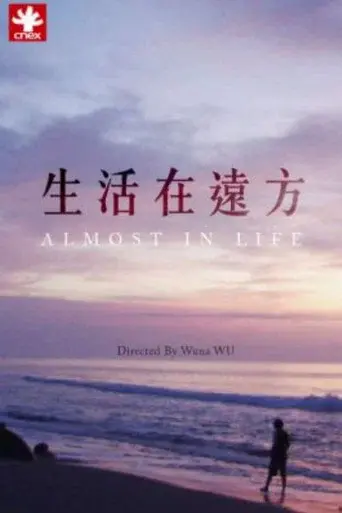
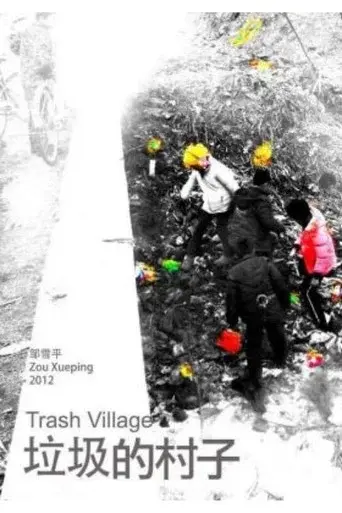
This is the fourth film in my Zoujiacun series within the Folk Memory Project. In 2013, I came back to my village and faced the trash all over the village. The children and I tried to improve the environment of our village. This was a tough fight against the trash and ideas of villagers. I felt like that the trash was in my heart. The 95-year-old grandma Sha and her 49-year-old son Xizhu, their lonely solitary life is also in this film. This film is about the progress that I fight with myself.
Trash Village
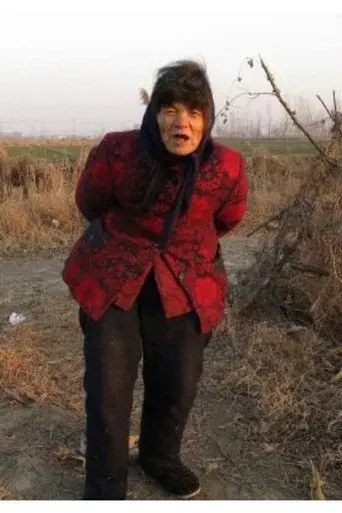
This is my fifth time coming back to my own village, where I was born and brought up. After I graduated from college, when I was staying in my village, I was always suspected and judged by the village people. Xizhu grandpa was called ‘fool’ by other villagers, and Zengxiang aunty was looked down by others. They come into my life, and I stayed with them. Their naïve and strange thought made think about my village in a new way. In this quite ‘normal’ village, who are normal people? In those normal people’s eyes, am I another fool of this village?
Foolish Village
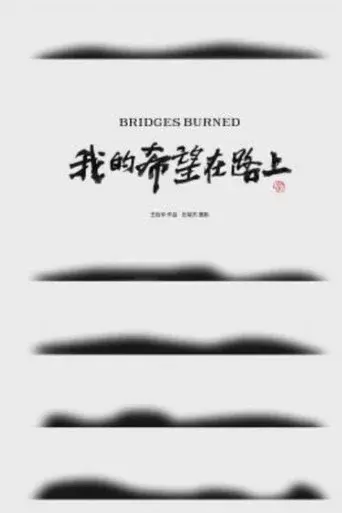
In the autumn of 2010, the poet Xiaozhao set off from Beijing and took a national tour of his personal poem collection "My Hope is on the Road" printed at a print shop. All the way up and down, full of ambition. Photographer Zhuang Ruijie went to Guangdong halfway to shoot. He recorded a trip to Guangzhou, Shenzhen, Chengdu, Shaanxi Shanyang, Huashan, Zhongnanshan, Xi'an and returned to Beijing for about 15 days.
Bridges Burned

This film mainly records the story of two adolescent children receiving primary education of Peking Opera in Shanghai Opera School in a documentary form. As they are in their adolescence, they gradually form their own plans and ideals for the future. On this unusual learning path, they face the problem of choice between reality and ideals, and gradually learn to accept and grow up.
Cutting My Teeth
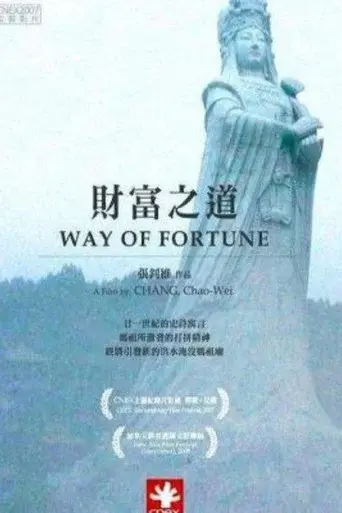
"Mazu" or "The Sea God" has been the most important religious belief of ordinary people in my hometown for four hundred years. Along the coast of China and even in the Nanyang region, there is at least one temple dedicated to Mazu in various seaside cities-this geographical and historical distribution coincides with the contemporary economic or industrial area of Chinese society. It is frustrating that rapid economic development has led to global warming. The factories located on the coast of southern China from all over the world will eventually cause flooding and inundate these temples dedicated to Mazu. This is indeed a very ironic discovery for our civilization, "We", not only Chinese or all human beings, now or in the past, how can we Chinese avoid this upcoming tragedy?
Way of Fortune


The story of a girl attempted suicide for love and finally returned to religion.
WHO IS MY LORD
This story is about the group's marvellous life without money.The film tell this story from six points of view: the screenwriter, the recording, the photography, the art, the performer and the director.
MAGUEY
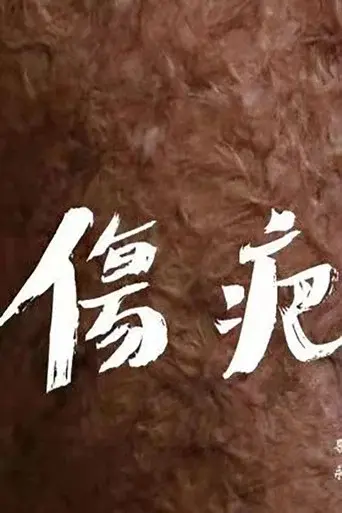
Scars, which are unfortunate or unexpected results, are also signs of healing. This new connective tissue replaces the process of injured tissues, and at the same time it becomes a metaphor for the pain and frustration of life: the sadness of the body, the union of pain... In short, scars have become a proof, a proof of existence, a proof of alive, a proof of pain, and a proof of a certain age. Beginning in 1949, in this vast land, these various scars, these healing marks, patterns, sad shapes, bring personal memories, collective pains, the marks of history, and come together Gaze, the meaning of the record. This film is the first part of the "Scar" project, the story of 110 Chinese scars.
SCAR

The baby is a temporary floating population. He works diligently, from a small restaurant owner to a tea shop manager to a bar manager. This film records the survival state of children centered and gay comrades: trivial, messy, boring, and entertaining themselves. The camera calmly captures every bit of their daily life for more than two years, and as time goes by, the changes the baby presents are more ordinary. The film calmly explains the relationship between "comrades" and "society", and the various small details interpenetrated in the film also metaphorically reflect the changes of today's society