

Overview
The film depicts the marriage between the mad Charles VI of France and his wife Queen Isabeau.
Top Cast

Fern Andra
Königin Isabeau
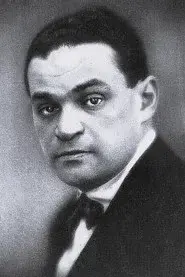
Fritz Kortner
Connetable
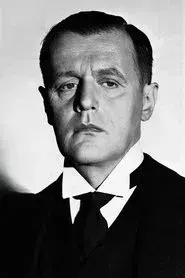
Hans Heinrich von Twardowski
Page

Elsa Wagner

Lothar Müthel
Jehan

John Gottowt
Buckliger Narr

Alexander Moissi
King Karl VI.

Harald Paulsen
Key Film Crew
Production Stats
You May Also Like

An adventure film with Benshi performers. Sometimes considered the 'first Japanese feature film', it survives today as a compilation of scenes from various different 1910s adaptations totaling nearly three hours in length. The bulk of the content comes from the 1911 adaptation by legendary Japanese filmmaker Makino Shozo.
The 47 Loyal Ronin

Pompeii 79AD, mere days before the Vesuvian eruption. Glaucus and Jone are in love with each other. Arbaces, the Egyptian High Priest, is determined to conquer Jone. Glaucus purchases Nydia, the blind and long-suffering slave. Nydia falls in love with Glaucus and asks Arbaces for his help. He gives her a potion to make Glaucus fall in love with her-- In fact, a poison which will cause violent insanity.
The Last Days of Pompeii

The first part tells the story of Moses leading the Jews from Egypt to the Promised Land, his receipt of the tablets and the worship of the golden calf. The second part shows the efficacy of the commandments in modern life through a story set in San Francisco. Two brothers, rivals for the love of Mary, also come into conflict when John discovers Dan used shoddy materials to construct a cathedral.
The Ten Commandments

Released in five parts (The Persecution of the Children of Israel by the Egyptians, Forty Years in the Land of Midian, The Plagues of Egypt and the Deliverance of the Hebrews, The Victory of Israel, The Promised Land), 4 December 1909 to 19 February 1910. A Vitagraph advertisement in the Moving Picture World (31 Dec. 1909) refers to The Life of Moses as a "Biblical Film-de-Luxe". It is preserved in the Library of Congress collection.
The Life of Moses
The Devil of Comparisons (original title: El Demonio de las Comparaciones), was a 30-hour black & white silent film from 1929 by Narding Salome Exelsio (1883-1949). It explores the cyclical lives, deaths, and rebirths of Jose Rizal and his characters (played by hitherto unidentified actors) in a wasteland ruled by demons.
The Devil of Comparisons

A king grows suspicious of his favored woman's affection for an Italian troubadour. After confirming their secret romance, he takes a cruel revenge by sealing the lovers inside a secluded tower chamber with no means of escape.
The Sealed Room

Carmine Gallone and Amleto Palermi’s The Last Days of Pompeii 1926 stages in sumptuous colour tinting the epic fall of the ancient city buried by Mount Vesuvius’ eruption. Adapted from Edward Bulwer-Lytton’s love story, the film was innovative in its special effects and an early major box-office hit. A beautiful tinted restoration print was prepared using photochemical processes by Centro Sperimentale di Cinematografia-Cineteca Nazionale in the mid-1990s and the premiere screening of the restoration print was held in the amphitheatre in Pompeii, followed by a screening at the major restoration festival ‘Il Cinema Ritrovato’ in Bologna in 1998.
The Last Days of Pompeii

The first Chinese film ever made, a sung representation of Battle of Mount Dingjun.
Dingjun Mountain

In the midst of the Russian Revolution of 1905, the crew of the battleship Potemkin revolt against the brutal, tyrannical regime of the vessel's officers. The resulting street demonstration in Odessa brings on a police massacre.
Battleship Potemkin


This film is a story from the Mahabharatam where Draupadi, the wife of the Pandavas, resists the advances of Keechaka, a lustful general in the court of King Virata. The confrontation leads to Keechaka's death, highlighting Draupadi's resilience during the Pandavas' exile.
Keechaka Vadham
Two families, abolitionist Northerners the Stonemans and Southern landowners the Camerons, intertwine. When Confederate colonel Ben Cameron is captured in battle, nurse Elsie Stoneman petitions for his pardon. In Reconstruction-era South Carolina, Cameron founds the Ku Klux Klan, battling Elsie's congressman father and his African-American protégé, Silas Lynch.
The Birth of a Nation
A biopic of former Emperor of France, Napoleon Bonaparte, tracing the Corsican's career from his schooldays (where a snowball fight is staged like a military campaign) to his flight from Corsica, through the French Revolution (where a real storm is intercut with a political storm) and the Terror, culminating in his triumphant 1797 invasion of Italy.
Napoleon
France, on the eve of the French Revolution. Henriette and Louise have been raised together as sisters. When the plague that takes their parents' lives causes Louise's blindness, they decide to travel to Paris in search of a cure, but they separate when a lustful aristocrat crosses their path.
Orphans of the Storm

A re-enactment of the Jules Durand case. In 1910, Jean Jaurès [leader of the French socialist movement] took the lead in defending a working-class coal miner, Jules Durand, accused of complicity in and condemned to death for the murder of a labor leader. As in the Dreyfus Affair, a false dossier had been used to convict Durand. Jaurès argued that the memory of the Dreyfus Affair saved Durand, calling the case the working class’s Dreyfus Affair.
The Old Docker
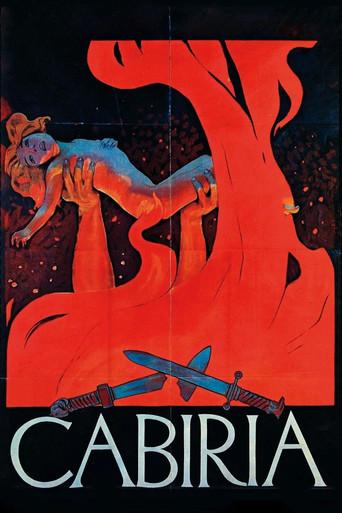
Young Cabiria is kidnapped by pirates and sold as a slave in Carthage. Just as she's to be sacrificed to Moloch, Cabiria is rescued by Fulvius Axilla, a good-hearted Roman spy, and his powerful slave, Maciste. The trio are broken up as Cabiria is entrusted to a woman of noble birth. With Cabiria's fate unknown, Maciste punished for his heroism, and Fulvius sent away to fight for Rome, is there any hope of our heroes reuniting?