

Heading For Glory
Overview
The 1974 finals in West Germany saw the emergence of "Total Football" in the shape of the classy Dutch led by the legendary Johan Cruyff. The Dutch swept all before them until they came up against the solid hosts in the final. Beckenbauer led West Germany to a tense 2-1 victory.
Top Cast
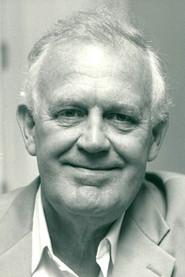
Joss Ackland
Self - Narrator (voice)

Johan Cruijff
Self

Franz Beckenbauer
Self

Grzegorz Lato
Self

Kazimierz Deyna
Self

Gerd Müller
Self

Ronnie Hellström
Self
Ruud Krol
Self
Johnny Rep
Self
Wim Suurbier
Self
Arie Haan
Self
Key Film Crew
Production Stats
You May Also Like





Filmmaker Alain Resnais documents the atrocities behind the walls of Hitler's concentration camps.
Night and Fog


The film tells the story of the Rote Zora, a militant women’s group in the FRG, which in the 1970s and 1980s carried out actions against various facets of patriarchal power relations. Narrations by various contemporary witnesses, interviews with a historian and former Zoras bring the history of the Rote Zora and the women’s movement of the time back to life. The film shows that many of the Rote Zora’s themes are highly topical and offers exciting material for discussion on how to deal with this history today.
Frauen bildet Banden

Behind the scenes and with the fans of West Ham United as they move to a new home after 112 years at Upton Park.
Iron Men

Crowds is a feature documentary that records popular events of Uruguay where thousands of people gather spontaneously, called by faith, passion, celebration and memory. What happens when we set aside our individuality to act collectively? This documentary observes the passions that draw thousands of people close in order to join in a choral character. It discovers the crowd while it transgresses and experiences catharsis, while it seeks miracles and hopes; in continuous movement it splits and rejoins... until they dissipate and individuals re-emerge in their own solitude.
Crowds


The crowd is the focus of this documentary, which presents historical scenes of the Brazilian Championship. Irreverent and poetic, the movie pays homage to the spectacle provided by football.
Todomundo

Documentary focusing on the Wales national football team and their first Major Tournament since 1958 at the Euro's 2016 in France. going beyond expectations and reaching the Semi Final, Making a Country Proud
Don't Take Me Home


A sport like football is primarily a passionate celebration, but one that is so massive (economically, politically and socially) that it, of course, also brings many problems. Olallo Rubio's third documentary (and fourth film in total), Ilusión Nacional, is a take on how the world's most popular sport relates to Mexican society and politics.
Ilusión Nacional

One journalist described it as a chance "to see justice catch up with evil." On November 20, 1945, the twenty-two surviving representatives of the Nazi elite stood before an international military tribunal at the Palace of Justice in Nuremberg, Germany; they were charged with the systematic murder of millions of people. The ensuing trial pitted U.S. chief prosecutor and Supreme Court judge Robert Jackson against Hermann Göring, the former head of the Nazi air force, whom Adolf Hitler had once named to be his successor. Jackson hoped that the trial would make a statement that crimes against humanity would never again go unpunished. Proving the guilt of the defendants, however, was more difficult than Jackson anticipated. This American Experience production draws upon rare archival material and eyewitness accounts to recreate the dramatic tribunal that defines trial procedure for state criminals to this day.
The Nuremberg Trials
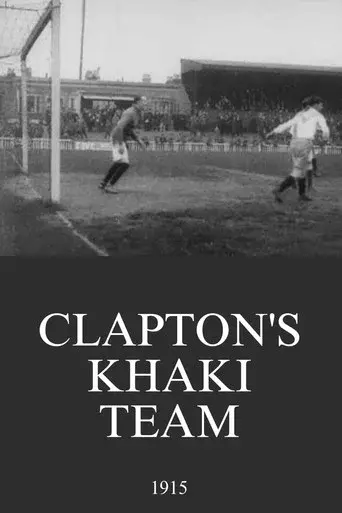
After playing their last match of the season, ten Clapton Orient players enlist for the 'Footballer's Battalion'.
Clapton's Khaki Team



“We were born in Liverpool but grew up in Hamburg”, John Lennon once said. This feature documentary seeks to find the truth in those words. The long and winding road that the Beatles took to worldwide fame passed through Hamburg, Germany in the early 1960s. Only a couple of years before they became household names, the former Quarrymen were cutting their musical teeth on nightclub stages in the city. Hamburg had become the vice capital of Europe after World War Two, its neon-lit streets home to sailors, sex workers, drug dealers, gangs and low life. Meanwhile, the English band was still developing, still young and virtually unknown. By the time of their last German visit in 1966, the Beatles were an international phenomenon. 'No Hamburg, No Beatles' explains how learning their trade in this fascinating city helped propel them to global stardom.