What Would Jesus Buy?
Overview
A serious docu-comedy about the commercialization of Christmas. What Would Jesus Buy? follows Reverend Billy and the Church of Stop Shopping Gospel Choir as they go on a cross-country mission to save Christmas from the Shopocalypse: the end of mankind from consumerism, over-consumption and the fires of eternal debt!
Top Cast

Reverend Billy
Reverend Billy
James Solomon Benn
Choir Director
Savitri Durkee
Church Director
Key Film Crew
Production Stats
You May Also Like
Record high oil prices, global warming, and an insatiable demand for energy: these issues define our generation. The film exposes shocking connections between the auto industry, the oil industry, and the government, while exploring alternative energies such as solar, wind, electricity, and non-food-based biofuels.
Fuel
Four friends tired of protests are thinking about another way to shake up capitalist society. Driven by fiction, they decide to blow up a Brussels shopping center. How to think the attack? What roles do they need to play in order to imagine taking action? Is their friendship reconcilable with such a radical act?
On sourira de nous



Gimme Green is a humorous look at the American obsession with the residential lawn and the effects it has on our environment, our wallets and our outlook on life. From the limitless subdivisions of Florida to sod farms in the arid southwest, Gimme Green peers behind the curtain of the $40-billion industry that fuels our nation's largest irrigated crop-the lawn.
Gimme Green


Over the past 25 years, Lauren Greenfield's documentary photography and film projects have explored youth culture, gender, body image, and affluence. Underscoring the ever-increasing gap between the haves and the have-nots, portraits reveal a focus on cultivating image over substance, where subjects unable to attain actual wealth instead settle for its trappings, no matter their ability to pay for it.
Generation Wealth

A young boy plays an accordion in a shopping mall. Béla Tarr picks up the camera one more time to shoot his very last scene. It is his anger about how refugees are treated in Europe, and especially in Hungary, that drove him to make a statement.
Muhamed
An essay about middle America and the destruction caused by mindless mass consumption.
American Wasteland

Programming the Nation? takes an encompassing look at the history of subliminal messaging in America. According to many authorities, since the late 1950s subliminal content has been tested and delivered through all forms of mass-media including Hollywood filmmakers Alfred Hitchcock and William Friedkin. Even our modern military has been accused of these practices in the "war on terror" against soldiers and civilians both abroad and at home. With eye-opening footage, revealing interviews, humorous anecdotes, and an array of visual effects, the film categorically explores the alleged usage of subliminals in advertising, music, film, television, anti-theft devices, political propaganda, military psychological operations, and advanced weapons development. Director Jeff Warrick makes it his personal mission to determine if these manipulative tactics have succeeded in "programming the nation?" Or, if subliminal messaging belongs in the category of what many consider urban legend.
Programming the Nation?
A Eurovision singer, Iceland's strongest woman, a male model, a plumber who wants to direct movies. They all work in the shopping mall that this documentary focuses on ... most of them want to get out, even just to the bigger mall down the road.
Small Mall
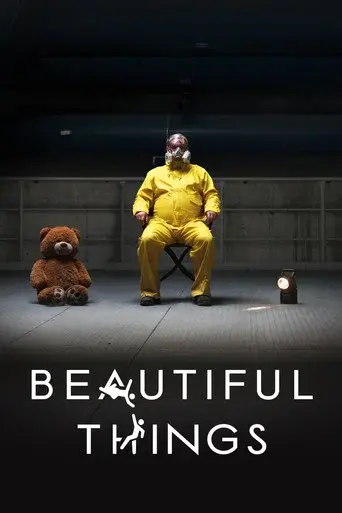
A symphonic journey into our obsessive consumption. The many objects we accumulate begin their production journey in silent secluded industrial site where borderline men work in isolation without any interference. These men trigger, unconsciously, the long chain of creation, transport, commercialization and destruction of the objects feeding our bulimic lifestyle.
Beautiful Things


Two students from the Czech Film Academy commission a leading advertising agency to organize a huge campaign for the opening of a new supermarket named Czech Dream. The supermarket however does not exist and is not meant to. The advertising campaign includes radio and television ads, posters, flyers with photos of fake Czech Dream products, a promotional song, an internet site, and ads in newspapers and magazines. Will people believe in it and show up for the grand opening?