Algiers, the Mecca of Revolutionaries (1962-1974)
Original Title: “Alger, la Mecque des Révolutionnaires (1962-1974)”
Overview
From the early 1960s to the mid-1970s, independent Algeria provided significant support to anti-colonial movements and revolutionaries worldwide. Successive presidents, Ahmed Ben Bella and then Houari Boumédiène, made Algiers a haven for activists fighting against colonial and racial oppression. Algiers the White became Algiers the Red. The internationalist Che Guevara established his base of operations there for his guerrilla activities in Africa. The African-American leader Eldridge Cleaver made it the international headquarters of the Black Panther Party. During this period, Algiers was known as "The Mecca of Revolutionaries."
Top Cast

Ahmed Ben Bella
Self
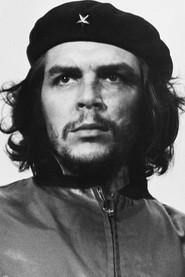
Che Guevara
Self

Nelson Mandela
Self

Houari Boumédiène
Self

Eldridge Cleaver
Self

Patrice Lumumba
Self

Kathleen Cleaver
Self
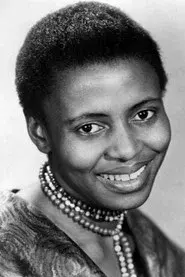
Miriam Makeba
Self
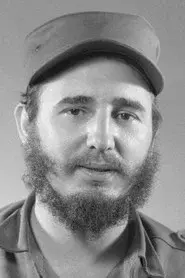
Fidel Castro
Self

Yasser Arafat
Self

Johnny Makatini
Self

M'Hamed Yazid
Self
Key Film Crew
Production Stats
You May Also Like

Immigrated to the Paris region since 1964, Kader decides to spend the summer holidays with his family in his native village, not far from Algiers. These few weeks, so eagerly awaited by both sides, constitute a special moment full of strong emotions. The camera follows the family in their meetings, their reunions, their difficulties, their visions of the country and its region, the celebrations, the weddings, their return to France… This film raises many questions. Within this family itself, between those who stayed in the country and those who emigrated to France, how do we perceive the situation in Algeria? What hopes do each of them have for their country? What about the Franco-Algerian relationship? Contemporary immigration? The desire for exile of Algerians today? Different discourses on both sides of the Mediterranean? The desires of each of them…
Holidays Despite All
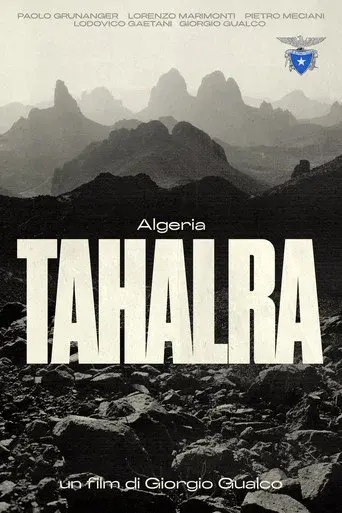
Five young Italian climbers, Paolo Grunanger, Lorenzo Marimonti, Pietro Meciani, Lodovico Gaetani and Giorgio Gualco, members of the expedition organized under the patronage of the Milanese section of the Italian Alpine Club, reached Tamanrasset, in Hoggar, the Tuareg kingdom. From there, with a caravan of camels, they head towards the mountainous volcanic chain of Tahalra, little known to Westerners. During the exploration, climbers will climb seven virgin peaks via very difficult routes and at the same time carry out topographical surveys.
Tahalra

Between 1954-1962, one hundred to three hundred young French people refused to participate in the Algerian war. These rebels, soldiers or conscripts were non-violent or anti-colonialists. Some took refuge in Switzerland where Swiss citizens came to their aid, while in France they were condemned as traitors to the country. In 1962, a few months after Independence, Villi Hermann went to a region devastated by war near the Algerian-Moroccan border, to help rebuild a school. In 2016 he returned to Algeria and reunited with his former students. He also met French refractories, now living in France or Switzerland.
CHoosing at Twenty

Starting in 1881 this film shows the personal battle between Lenin's Ulyanov family and the royal Romanovs that eventually led to the Russian revolution.
The Russian Revolution
This video takes a particular viewpoint, with the camera placed behind a zone of blur. Slowly, we experience the perception of an expanded time. An expectation is created and resolved in the observation of the passage of boats that dissolve into the nebulousness, disappearing from our sight like a mirage.
Dissolution


Made just three years after the end of the French-Algerian War (1954-1962), Gillo Pontecorvo's The Battle Of Algiers instantly ignited discussions of this complex historical period. Using the film as a point of reference, this 2004 documentary attempts to reconstruct the Algerian experience of the battle for independence.
Remembering History
When the revolution in Nicaragua won its victory nearly 40 years ago, the world began to dream. A young generation was taking the reins in a country of grand utopias. From West Germany alone, 15,000 “brigadists” travelled to help rebuild the war-torn country: liberals, greens, unionists, social democrats, leftists and church representatives harvested coffee and cotton, built schools, kindergartens and hospital wards. No movement has mobilised so many people. What became of the hopes and dreams of the revolutionaries and their supporters?
Ein Traum von Revolution

The Desert Rocker is an intimate, witty and profound portrait of the extraordinary Hasna El Becharia, a pioneer Gnawa artist. The first musician to break through the social barrier of this culture, she empowers and inspires women of all ages by reclaiming a musical tradition reserved for men for centuries . A singularly talented artist, she leads women to redefine their roles and challenge cultural norms , one musical performance at a time.
The Desert Rocker

A short documentary that emerge at the center of round table debate, participating in it there's three students from the Superior School of Arts and Design, Caldas da Rainha - Portugal. This conversation go along with a video essay about Afrofuturism and Pop Culture. Also, during the debate, an interview with another student gives some real example of how afrofuturism can be applied when it comes to in taking control of the colonial narratives into a black person perspective.
Sankofa

This documentary film by Pierluca Rossi recounts a journey to the southern Algerian Sahara, near Amguid, a small Tuareg village renowned for its unusual nearby crater. In the Tefedest massif, with its mythical summit, Garet el Djenoun, on the slopes of a vast sand dune rising to over 400 meters, one can practice an unusual sport: sandboarding, a new technique to try. Surprising speeds can be reached, and participants can familiarize themselves with the equipment of this new sport, perhaps paving the way for new practices.