Key Film Crew
Production Stats
You May Also Like
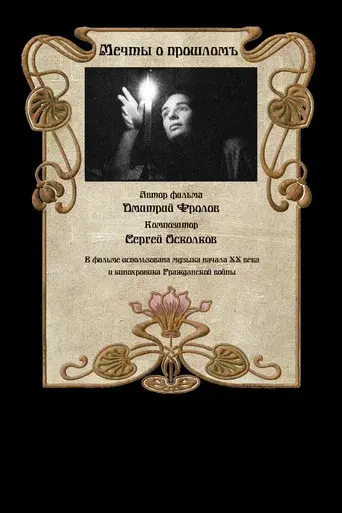
A film about peace, love and war. Dedicated to the 100th anniversary of the end of the Civil War in Russia. The film takes place at the end of the summer of 1917, when Russia and the whole world were at a crossroads between two eras. None of the people could even imagine how much his life would change in the very near future. In a strange way, the atmosphere of the film echoes our current reality and what is happening in Russia today. According to the form of visualization, the film belongs to experimental mockumentary cinema. To give greater authenticity to what is happening on the screen, the shooting was carried out on black-and-white negatives of 16 and 35 mm, hand-operated cameras were used and the material was developed in manual spiral tanks. The documentary chronicle of the Kolchak army of 1919 and the White army in the Far East of 1922 is embedded in the finale of the film.
Dreams of the Past
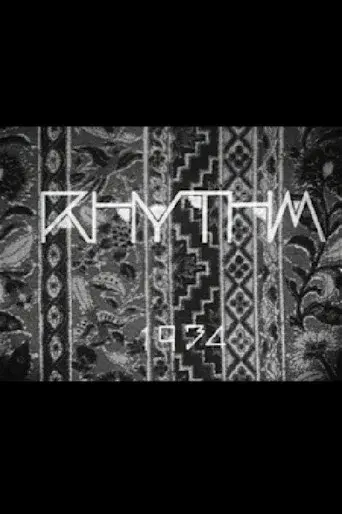
A comfortable rhythm composed of light and shadow. Director Ogino-style absolute movie which freely manipulates geometric figures.
Rhythm
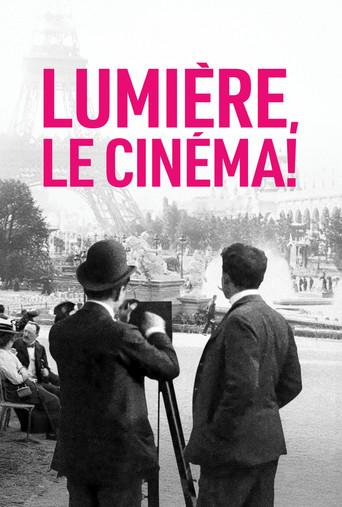
In one of those wonderful coincidences of history, lumière, the French word for “light,” was also the last name of brothers Auguste and Louis, whose brilliant invention, the cinematograph, helped to inaugurate the most beloved art form of the last 130 years. Institute Lumière director Thierry Frémaux uses Lumière, Le Cinema! to guide the viewer through over a hundred shorts—some famous, some forgotten, some never before seen—directed by Lumière and company. In the process, Frémaux illuminates how the brothers employed the camera as a creative instrument as they (and their operators) mastered framing, staging, and subject selection for quotidian and exotic microdocumentaries as well as the first ever fictional motion pictures. The result is not only a glorious re(telling) of the genesis of cinema but a profound meditation on the beautiful world captured—and the mysterious world imagined—by the Lumières.
Lumière, Le Cinéma!

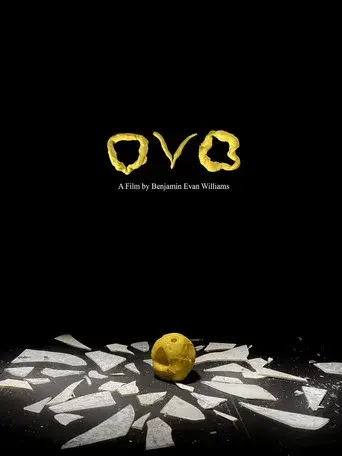
An exploration of entering and leaving consciousness from the perspective of non-human bodies trapped in everlasting cycles of abuse.
OvO

American cartoons are the starting point for Martin Arnold's new work. Sequences of short films form the basis of a process of fragmentation, deconstruction, dismantling and repetition. Arnold uses fun, family entertainment to create films with open-ended possibilities for association. His pieces, such as Hydra (2013), Charon (2013), Nix (2013) and Self Control (2011), feature characters whose anatomy is no longer recognizable as such, but rather resemble puppets, remotely controlled from the outside. Trembling hands, dancing tongues, blinking eyes and snoring mouths move like ghosts against an abyss-like deep black background, in which bodily elements constantly disappear, only to reappear once more.
Nix
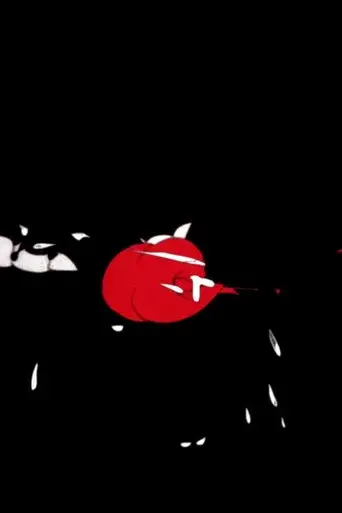
American cartoons are the starting point for Martin Arnold's new work. Sequences of short films form the basis of a process of fragmentation, deconstruction, dismantling and repetition. Arnold uses fun, family entertainment to create films with open-ended possibilities for association. His pieces, such as Hydra (2013), Charon (2013), Nix (2013) and Self Control (2011), feature characters whose anatomy is no longer recognizable as such, but rather resemble puppets, remotely controlled from the outside. Trembling hands, dancing tongues, blinking eyes and snoring mouths move like ghosts against an abyss-like deep black background, in which bodily elements constantly disappear, only to reappear once more.
Hydra

American cartoons are the starting point for Martin Arnold's new work. Sequences of short films form the basis of a process of fragmentation, deconstruction, dismantling and repetition. Arnold uses fun, family entertainment to create films with open-ended possibilities for association. His pieces, such as Hydra (2013), Charon (2013), Nix (2013) and Self Control (2011), feature characters whose anatomy is no longer recognizable as such, but rather resemble puppets, remotely controlled from the outside. Trembling hands, dancing tongues, blinking eyes and snoring mouths move like ghosts against an abyss-like deep black background, in which bodily elements constantly disappear, only to reappear once more.
Charon
Chronicles the powerful friendship between two young Black teenagers navigating the harrowing trials of reform school together in Florida.
Nickel Boys

Light Pharmacy: 4.1 is part of a series of 'film haiku' concerned primarily with the reflection and refraction of sunlight, and dream representation.---AGN "A surreal fantasy - almost a homage to Maya Deren. Nigrin has a fine feeling for imagery and pacing."---William Sloan, Museum of Modern Art, New York City, 1988.
Light Pharmacy Part 4

Sistine Chapel is an audio-visual collage of new footage and samples from Paik’s past videos, which featured many of his friends, collaborators, and public figures. It was Paik’s own way of summarizing his artistic career with video. The film installation consists of fast-paced and overlapping images that completely cover the gallery walls and ceiling—one of the most under-appreciated parts of architecture, according to Paik. With its electronic visuals and booming audio, interspersed with periods of silence, the immersive installation stands in stark contrast to the experience of its namesake.
Sistine Chapel

Shifting Margin Part 1 (1991) Produced, Directed, Photographed, and Edited by Albert Gabriel Nigrin Special Thanks: Brodsky and Treadway and DAK Productions Length: 3 minutes A statue of a horse [located in the Luxembourg Gardens in Paris, France] shot at 18fps on Kodachrome color super 8mm film transferred to high quality video. The film camera was shaken at various intensities to simulate the various forms of horse locomotion -- walk, trot, gallop, etc. The film is silent yet one hears the rhythm of hooves. The green color of the statue's faded bronze was amplified, as was the blue sky in post-production. A homage to Pegasus, Le Magnifique in Cocteau's Beauty and the Beast, and Eadweard Muybridge.---AGN
Shifting Margin Part 1

Scratched lines and shapes bloat around this footage of an unknown businessman, sometimes forming hats, clown noses, arrows, etc. He becomes a kind of pawn in my cruel little game. Sound is a musicbox which helps lift this once painfully boring footage to the level of high art. –H. M.
Scratchman #2
Experimental documentary focusing on the design of the buildings of the Technical High School in Eindhoven. Through the visual means of film and the technical possibilities of camera and photography, reality becomes pure abstraction.
University Building


A Documentary film, following a group of friends going through their college life. with 3 months of filming starting in August 25th to November 1st 2024. most of everything was filmed in Boston. the purpose of the movie isn't to look amazing and have great story telling, but instead its meant to stamp a period in time. so that in 50 years we can look back and notice the human growth in a movie format. I hope you like the movie and thank you for watching :)