

Roads of Fire
Overview
The lives of a human smuggler transporting refugees to the Darién Gap, an asylum seeker in New York City, and frontline humanitarian volunteers interweave in a harrowing examination of the global migration crisis.
Key Film Crew
Production Stats
You May Also Like


A close look at what really means to be part of Haus of Fraimpark, an alternative drag family in Panama City. Daughters and Nieces of Miss Veneno Fraimpark share their experience in belonging to one of Panama's most acclaimed drag houses.
Fraimpark


A small community of lovers of freestyle rap begins to grow in the parks and squares of Panama. From rapping on buses to on stage, the love of Hip-Hop abounds in their hearts.
Panamá, Tírate un Free

The Perfect Story offers a riveting, intimate look at the ethical and moral challenges sparked by the relationship between a foreign correspondent and a young Somali refugee. By revealing the boundaries of journalism and filmmaking, the film questions what stories are told, why, and who gets to tell them.
The Perfect Story

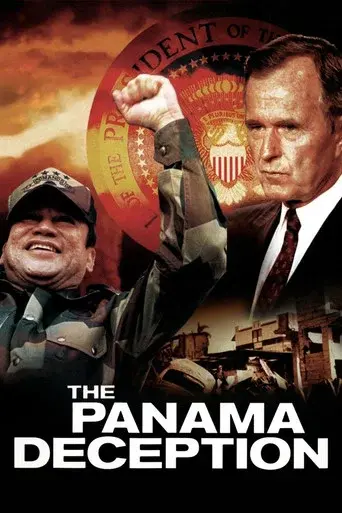
This winner of the 1993 Academy Award for Best Documentary Feature details the case that the 1989 invasion of Panama by the US was motivated not by the need to protect American soldiers, restore democracy or even capture Noriega. It was to force Panama to submit the will of the United States after Noriega had exhausted his usefulness.
The Panama Deception
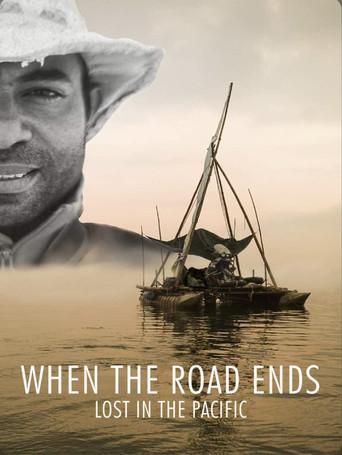
Growing up in poverty as a child, Dylan dreamt of travelling the world on a motorcycle. Many years later he broke the shackles of a normal life and took to the road. After journeying 200,000km across four continents, the road from Panama to Colombia comes to an end, swallowed up by an impenetrable jungle. Dylan has no choice but to take to the sea, building a raft powered by his motorcycle engine in the hope of reaching Colombia's road network 700km away. He must brave strong ocean currents and storm batterings in his journey from Central to South America.—Journeyman Pictures
When the Road Ends
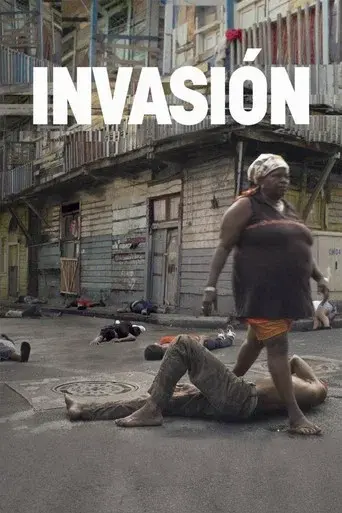
INVASION is a documentary about the collective memory of a country. The invasion of Panama by the U.S in 1989 serves as an excuse to explore how a people remember, transform, and often forget their past in order to re-define their identity and become who they are today.
Invasion

Documentary on the Panamanian struggle for the rescue of the lands of the so-called Canal Zone, militarily occupied by the forces of the American army.
Panamá


This feature documentary follows three newly arrived people in Canada and their experiences with the Canadian Refugee process. As claims are assessed and paperwork is double checked, we begin to examine exactly who can be considered a refugee.
Asylum

Filmmaker Azad Larki, who is undocumented, follows his mother during her final days in Sweden after his family has lived without legal status for two years. Facing deportation to Iran, they have survived in hiding, without rights or security. When his mother decides to flee alone to London - leaving her husband and son behind - the film captures a dangerous farewell where humor becomes a final survival strategy against fear, separation, and uncertainty.
Escape from Sweden

Four rejected asylum seekers relive the hearing on their reasons for fleeing their home countries, shedding light on the core of the asylum procedure. Will the interviewees be able to describe their traumatic experiences in a way that satisfies the official criteria?
The Hearing

A Russian mother and her queer son try to cope with their new situation, as the son, a political activist and radical artist, applies for political asylum in Europe.
Grey Violet: Odd One Out

What does it mean to belong to a place, a country? In a south Tel Aviv elementary school, that question is addressed head-on by a fourth-grade class and their teacher. The children are asylum seekers whose families mostly do not have a legal status in Israel, yet learn, sing and play in Hebrew all the while examining their identity and sense of belonging.
Temporary Identity

Examines how the Immigration and Naturalization Service decides who will be granted asylum in the United States. The applicant must have a "well-founded fear" of persecution in his or her home country. Despite true and terrifying stories of torture and mistreatment, it's often up to how well the translator presents the case and how sensitive are the ears of the asylum officer to decide a person's fate.

