For My Right To Choose And Be Chosen
Original Title: “Por Mi Derecho A Elegir Y Ser Elegida”
Overview
Panamanian women tell their struggle to overcome inequality and discrimination in the political and public sphere and for the right to universal suffrage which they obtained in 1946.
Top Cast

Mireya Moscoso
President
Balbina Herrera
President of the National Assembly
Silvia Carrera
General Cacique of the Ngöbe-Buglé Comarca
Petita Ayarza
Indigenous Deputy of the Guna Yala Region
Dalia Bernal
Parliamentarian
Teresita de Arias
Parliamentarian
Nadine González
Mayor
Kayra Harding
Afro-descendant MP
Yesenia Rodríguez
Parliamentarian
Walkiria Chandeck
Parliamentarian
Yara Campos
Judge of the Electoral Tribunal
Key Film Crew
Production Stats
You May Also Like
A film about a woman who doesn’t exist. Moroccan Hind was raped and consequently denied an official identity – she has no other choice but to work as a prostitute and traditional wedding dancer, but despite the odds of her situation, refuses to give up her dream of dignity, motherhood and love. This is a story of modern day outlaws, children of prostitutes, abandoned child brides and those who have had to escape to the fringes of patriarchal Moroccan society. Through the eyes of one young woman we see a life of constant struggle, but also a life free of the society’s norms and boundaries. The woman in the centre of the film, Hind, is both vulnerable and courageous as she tries to regain her life, her children and her mere right to live as an equal human being in the 21st century.
Dance of Outlaws
Three young Irish women struggle to maintain their spirits while they endure dehumanizing abuse as inmates of a Magdalene Sisters Asylum.
The Magdalene Sisters
A docu-drama shot in 1970, but not completed until 1973, the film sought to encapsulate in an experimental form issues that were under discussion within the Women’s Liberation Movement at this time and to thus contribute to action for change. In its numerous community screenings, active debate was encouraged as part of the viewing experience.
A Film for Discussion

The funeral procession of suffragette Emily Davison - fatally injured at the Epsom Derby - passes through London to her final resting place in Morpeth.
Miss Davison's Funeral

In 1972, 16-year-old Marie-Claire Chevalier was raped and became pregnant. Helped by her mother to have a clandestine abortion, she was finally denounced and arrested. Both faced imprisonment. Gisèle Halimi, their lawyer, transformed their trial into a historic battle. By denouncing an unjust law, they mobilized public opinion and paved the way for the Veil law, legalizing abortion in France. This forgotten struggle resurfaced almost half a century later, in 2019, when schoolchildren proposed that Marie-Claire be made a Chevalier de la Légion d'Honneur, transforming what had long been her shame into a source of pride and a symbol for future generations.
Hors la loi
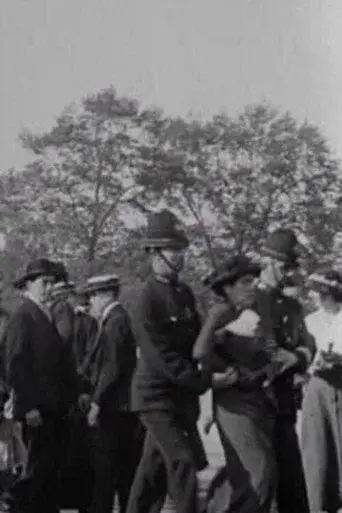
The campaign for women's suffrage steps up as Emmeline Pankhurst is arrested at the gates of Buckingham Palace.
Palace Pandemonium


Four women are on an existential journey in Morocco, connecting with local women from all walks of life bonding in sisterhood, and share their common quest for empowerment.
To my sisters

A close look at what really means to be part of Haus of Fraimpark, an alternative drag family in Panama City. Daughters and Nieces of Miss Veneno Fraimpark share their experience in belonging to one of Panama's most acclaimed drag houses.
Fraimpark

Examines the 40-year evolution of gender inequality and discrimination in the workplace since the 1980 release of the comedy film “9 to 5” starring Jane Fonda, Lily Tomlin, Dolly Parton, and Dabney Coleman.
Still Working 9 to 5

In the years following the Civil Rights movement and the passage of Title IX in 1972, Dr. Donnis Thompson (a headstrong African-American female coach), Patsy Mink (the first Asian-American U.S. congresswoman), and Beth McLachlin (the team captain of a rag-tag female volleyball team), battled discrimination from the halls of Washington D.C. to the dusty volleyball courts of the University of Hawaii, fighting for the rights of young women to play sports.
Rise of the Wahine
An insightful sit down chat with five of Malta's influential female trailblazers, some of whom are artists, all of whom are paving the way for change.
No Woman Is an Island
11 JUNE 2013 is one hundred years since Norwegian women got full voting rights on an equal basis with men. Norway was among the first countries in the world to introduce universal suffrage for both women and men. The work for universal suffrage for women went on for many years and was an issue that many people got involved in. The Voting Rights Committee has chosen to highlight four women who played a decisive role in the suffrage issue.
Four Votes

Nearly three years have passed since the "Woman, Life, Freedom" protests in Iran. Many who took part in the 2022 (1401) demonstrations paid a heavy price: some were killed, many were permanently injured, others were sentenced to long prison terms, and many lost their jobs. Among the well-known figures who supported the protests was Taraneh Alidoosti, one of Iran’s most prominent film actresses. After she posted an unveiled photo of herself and later protested the execution of Mohsen Shekari, she was imprisoned. Following her release, she became ill and remained out of the public eye for some time. Alidoosti has also been banned from acting in cinema. For the first time, in the documentary Taraneh, produced by Pegah Ahangarani, Alidoosti speaks about her decision to join the protest movement after the killing of Mahsa Amini. She talks about the day she was arrested at home in front of her little daughter and about the loss of her skin due to an autoimmune disease.
Taraneh: A Documentary
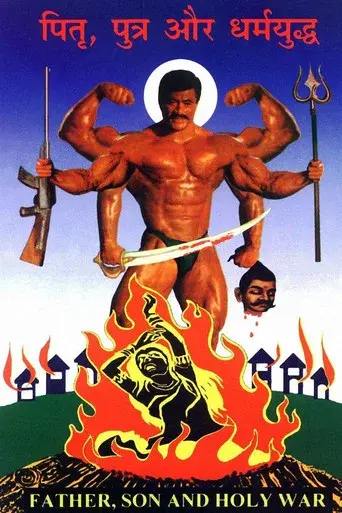
Filmmaker Anand Patwardhan looks to history and psychology as he delves into the possible reasons behind the demolition of the Babri Mosque.
Father, Son and Holy War
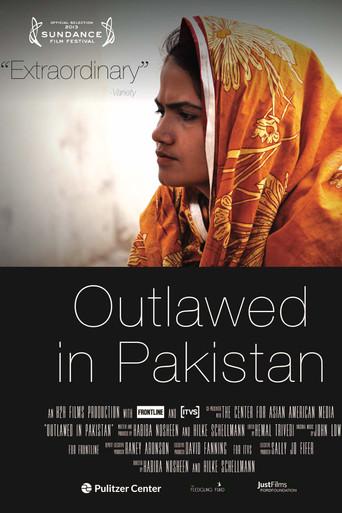
Outlawed in Pakistan tells the story of Kainat Soomro as she takes her rape case to Pakistan's deeply flawed court system in hopes of getting justice. The 13-year-old Kainat accuses four men of gang rape and shortly after is ordered to be killed by her village elders. Spanning over five years, the story is told through the perspective of Kainat and the four men accused of her rape.