

Il Grande Cretto di Gibellina
Overview
An enormous shroud of white cement covers a hillside in the remote of western Sicily. It is both land art and a memorial to the town of Gibellina that was devastated by an earthquake in January 1968. It’s a work by the Italian artist Alberto Burri. He covered the ruins of the town with white cement and fissures function as pathways that wind through an area of roughly 20 acres. Petra Noordkamp captures Il Grande Cretto di Gibellina by Alberto Burri as an experentiental work of art filled with a sense of place and history.
Key Film Crew
Production Stats
You May Also Like


Uli Köhler and Nick Golücke have visited the protagonists of the 1990 World Cup 20 years after their championship win and looked back together. The Writers Nick Golücke and Uli Köhler have, 20 years after World Cup triumph of the German national soccer team in Rome in 1990, visited the protagonists of back then once again and indulge with them together in memories.
Italia '90

Shows how classical Rome, the church, and the life and times of the people have influenced Italian artists. The Gates of Paradise by Ghiberti, the Arena Chapel in Padua. Giotto's frescoes, and other historic Italian monuments and works of art are pictured. For junior and senior high school, college, and adult groups.
Art and Life in Italy
Global warming in context. What the climate of the past tells us about the climate of the future.
A Global Warning?
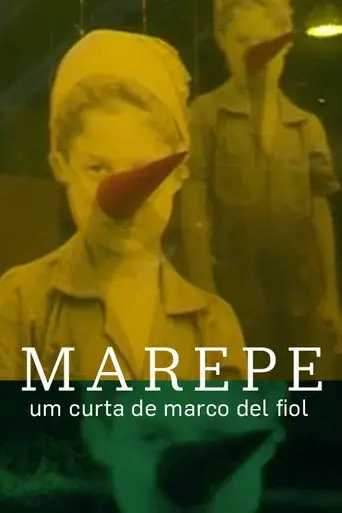
Marepe, an artist from Bahia, produces art with anything he comes across in the town he lives in, Santo Antônio de Jesus. Packs of cigarettes, coconut palms, walls, and memories taken from the streets, go into putting together a personal archeology for this young artist.
Marepe
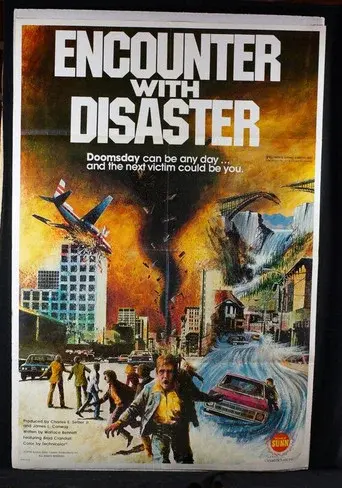
Depicts assorted natural and human disasters, including the crash of the Hindenburg (1937), earthquakes in Alaska (1964) and Long Beach (1933), the LeMans auto racing crash at which 82 people were killed (1955), Hurrican Camille (1964), the eruption of the Mt. Etna volcano (1971), a tornado (1974), the collapse of Idaho's Teton Dam (1976), the sinking of the Andrea Doria (1956) and the Texas City explosion which devastated Galveston (1947).
Encounter with Disaster

Johan van der Keuken went against the grain in 1980: from Amsterdam (on April 30 with the coronation riots and squatting actions) via Paris, southern France and Italy to Egypt. He made his personal travelogue in three parts for VPRO television. Later, he fused the three parts into one long movie.
The Way South


Ring of Fire is about the immense natural force of the great circle of volcanoes and seismic activity that rings the Pacific Ocean and the varied people and cultures who coexist with them. Spectacular volcanic eruptions are featured, including Mount St. Helens, Navidad in Chile, Sakurajima in Japan, and Mount Merapi in Indonesia.
Ring of Fire
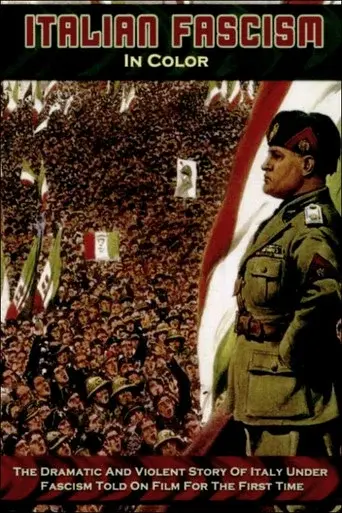
After the World War I, Mussolini's perspective on life is severely altered; once a willful socialist reformer, now obsessed with the idea of power, he founds the National Fascist Party in 1921 and assumes political power in 1922, becoming the Duce, dictator of Italy. His success encourages Hitler to take power in Germany in 1933, opening the dark road to World War II. (Originally released as a two-part miniseries. Includes colorized archival footage.)
Fascism in Colour
In 1988, art student Damien Hirst and a group of like-minded associates mounted an exhibition in a building in the East End of London. Entitled Freeze, it was a huge critical and commercial success, propelling Hirst and the group into the spotlight of the avant-garde. More than five years later, Hirst exhibits to international acclaim and is regularly derided in the tabloid press. This portrait of Hirst, which resumes the Omnibus season, is presented as a drug-induced nightmare after Hirst has been put to sleep by a sinister dentist, played by Donald Pleasence. In between interviews with fellow Freeze artists including Angus Fairhurst , Sarah Lucas and Tracey Emin , Hirst is seen preparing Mother and Child Divided, his work for last year's Venice Blennale. The piece consists of a cow and a calf, each sawn in half, pickled in formaldehyde and exhibited in four tanks.