A Bright Nowhere: Journeying Into Improvisation
Overview
An important audio-visual record of a landmark series of four concerts staged in London in 2022 when more than 30 musicians joined improviser, percussionist and animateur Eddie Prévost to mark his 80th birthday. The film takes a close look at improvisers who create music in the moment, free from the authority of a composer, score or conductor. Ranging from profound delicacy to subversive atonality, the “awkward wealth” of this music raises vital questions about artistic freedom, individual responsibility and what it means for people to make music together in the 21st Century. Featuring performances by John Butcher, Sue Lynch, Ute Kanngiesser, Marjolaine Charbin, Nathan Moore, Seymour Wright, Veryan Weston, Alan Wilkinson, John Tilbury and Eddie Prévost amongst others. Plus readings by musician and author David Toop. The film includes the last ever concert by AMM, the pioneering improvising group co-founded by Eddie Prévost in the mid-1960s.
Top Cast

Eddie Prévost
Sue Lynch
Ute Kanngiesser
John Butcher
Marjolaine Charbin
Nathan Moore
Seymour Wright
Veryan Weston
Alan Wilkinson
John Tilbury
Ross Lambert
Chris Hill
Key Film Crew
Production Stats
You May Also Like
With noise-canceling headphones, they communicate with an inaudible counterpart. Decoupled, they move around the room and meet their surroundings. Intimate stories and needs are discussed. The personal blends into a shared portrait.
Taube Feuer

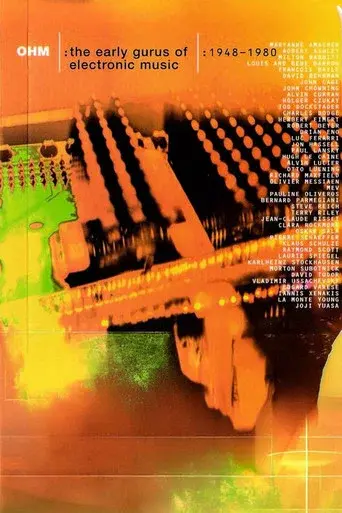

Blue for a Moment is a documentary portrait of Swedish-born, Berlin-based musician Sven-Åke Johansson, a key figure in European improvised and experimental music. Active as a jazz drummer, composer, poet and visual artist, Johansson has spent decades challenging artistic conventions and genre boundaries. Born in 1943, he moved to Berlin in the late 1960s and became involved in the city’s experimental scene, including the Zodiak Free Arts Lab. During the 1970s and 1980s he played an important role in the West Berlin free jazz movement around the FMP/SÅJ label, collaborating with musicians such as Alexander von Schlippenbach and Rüdiger Carl. Influenced by Fluxus and modernist traditions, Johansson developed a distinctive approach based on noise, reduction and the use of everyday materials, anticipating the Echtzeitmusik scene that emerged in Berlin after 1990. The film explores his creative process, artistic philosophy and lasting impact on contemporary experimental music.
Blue For a Moment

Cranes and Voices follows, on one side, people who hear voices and share their daily lives, and on the other, a collective of tenants who investigate their neighbourhood through its noises, its vibrations and its construction sites. The film moves through apartments, streets, meetings and moments of sound creation, where voices, urban noises and recorded materials are transformed into collective sound compositions and spaces for exchange. Sound appears here as an ambivalent force, at once invasive and generative, shaping the way we inhabit the city, other people and ourselves. Cranes and Voices invites us to pay attention to these singular listening experiences, to hear what they reveal about the housing crisis, about how mental health is viewed and about the ways we organise our shared spaces.
Cranes and Voices
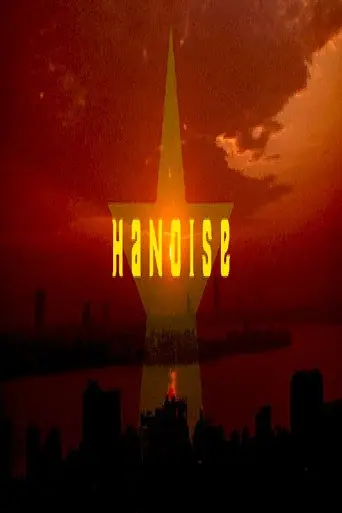
Hanoise is a portrait of the little known, but very rich, experimental music scene from Hanoi, the capital of Vietnam. It showcases a diverse array of the city's musical mavericks and avant-garde explorers, merging the sounds of the city and the experimentations of a young community braving the local cultural prohibitions.
VIET≈NAM ≈ HANOISE

After concluding the now-legendary public access TV series, The Pain Factory, Michael Nine embarked on a new and more subversive public access endeavor: a collaboration with Scott Arford called Fuck TV. Whereas The Pain Factory predominantly revolved around experimental music performances, Fuck TV was a comprehensive and experiential audio-visual presentation. Aired to a passive and unsuspecting audience on San Francisco’s public access channel from 1997 to 1998, each episode of Fuck TV was dedicated to a specific topic, combining video collage and cut-up techniques set to a harsh electronic soundtrack. The resultant overload of processed imagery and visceral sound was unlike anything presented on television before or since. EPISODES: Yule Bible, Cults, Riots, Animals, Executions, Static, Media, Haterella (edited version), Self Annihilation Live, Electricity.
FUCK TV
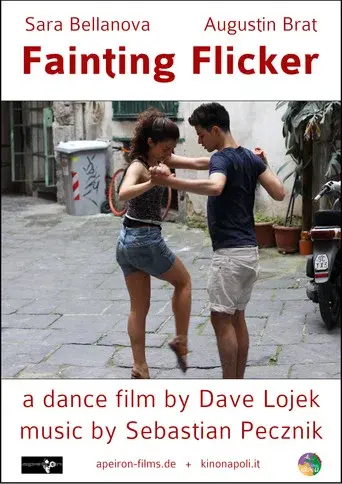
Two young strangers meet in Naples and begin to flirt and dance in the street.
Fainting Flicker

Three basketball players step onto the court, each with a rhythm of their own. As their movements are studied and reimagined, their game is then recontextualized into jazz, revealing the artistry within sport and the music hidden in motion.
LIVE at the Court
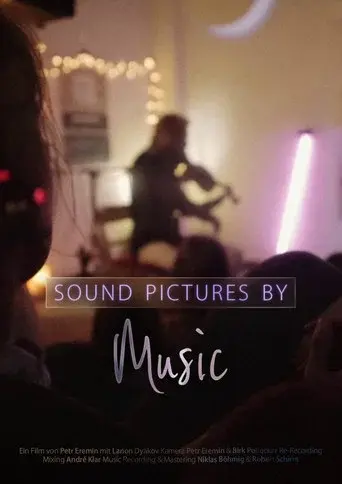
Larion Dyakov is a painter, but he doesn't use paint; instead, he "paints pictures through music." He plays the viola and connects it to a chain of various effects devices to loop his phrases and alter the original sound of his classical instrument. The result is a mixture of classical and modern ambient music that can transport you to another world and paint a new picture in your mind's eye, if you let it.
Sound Pictures by Music
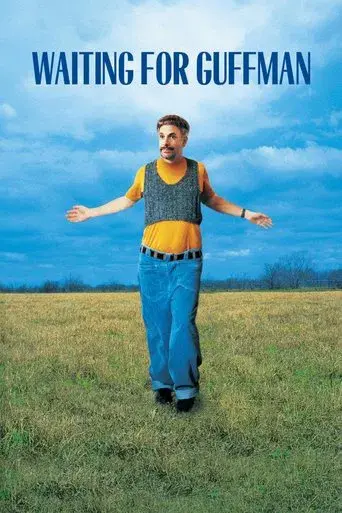
Aspiring director Corky St. Clair and the marginally talented amateur cast of his hokey small-town musical production go overboard when they learn that Broadway theater agent Mort Guffman will be in attendance.
Waiting for Guffman

Outtakes, commentary from Zefier's third film: Jo; or The Act of Riding a Bike.
Outtakes from Jo
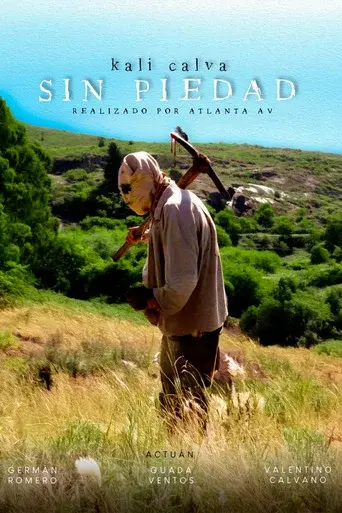
Under the relentless sun, a killer stalks through the mountains, where the innocence of a young couple becomes prey. With no shadows to hide their fate, the hunt is a macabre game in broad daylight, where fear is not hidden in the darkness, but burns with the rawness of the unperturbed noon.
Sin piedad
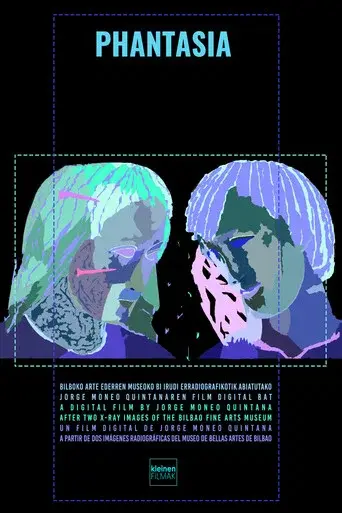
X-ray images were invented in 1895, the same year in which the Lumière brothers presented their respective invention in what today is considered to be the first cinema screening. Thus, both cinema and radiography fall within the scopic regime inaugurated by modernity. The use of X-rays on two sculptures from the Bilbao Fine Arts Museum generates images that reveal certain elements of them that would otherwise be invisible to our eyes. These images, despite being generally created for technical or scientific purposes, seem to produce a certain form of 'photogénie': they lend the radiographed objects a new appearance that lies somewhere between the material and the ethereal, endowing them with a vaporous and spectral quality. It is not by chance that physics and phantasmagoria share the term 'spectrum' in their vocabulary.
Phantasia

Toshio and Shizuko Omiro, both over seventy years old, have lived in Kawasaki, Japan since 1981. With their free-spirited lifestyle, the improvisaton duo continues to pursue their vision of changing the world into a more peaceful one in an inappropriate and unseemly way.
Sound and Silence
Recognizing that we are all equal helps us to create a culture of diversity and inclusivity. Free of prejudice. Love is love. We must help our fellow white people heal their inner whiteness and put an end to white supremacy and hate. Teach children to disarm themselves from bigotry. This is going to be the grooming of the next generation.