Sacred Vessels: Navigating Tradition and Identity in Micronesia
Overview
A 1997 documentary by Micronesian scholar, Vicente M. Diaz, that follows a new generation of traditional outrigger canoe builders and navigators from Polowat, Central Carolines, Federated States of Micronesia, and Guam in their respective efforts to continue and resuscitate an ancient tradition of outrigger canoe carving and sailing in the late twentieth century. Like the motif of water that flows through the documentary and blurs lines between surface and depth, and between water, land and air, an indefatigable tradition and aesthetic of seafaring is shown to also challenge pat and problematic distinctions between past and present, tradition and modernity, indigenous and Christian religiosity and spirituality, that prevail in conventional understandings of Micronesian culture and history.
Key Film Crew
Production Stats
You May Also Like

After 30 years of dreaming to sail around the world alone, a humble Romanian sailor starts a 1,200-mile journey with unexpected turns and challenges.
A Voyage to Cuba

The story is set at the beginning of the 20th century in Sicily. Salvatore, a very poor farmer, and a widower, decides to emigrate to the US with all his family, including his old mother. Before they embark, they meet Lucy. She is supposed to be a British lady and wants to come back to the States. Lucy, or Luce as Salvatore calls her, for unknown reasons wants to marry someone before to arrive to Ellis Island in New York. Salvatore accepts the proposal. Once they arrive in Ellis Island they spend the quarantine period trying to pass the examinations to be admitted to the States. Tests are not so simple for poor farmers coming from Sicily. Their destiny is in the hands of the custom officers.
Golden Door
A quiet island, lost in the pacific ocean. Nothing worth of interest, until the day a stroke of luck, phosphate, provided by the island's coral core, led the country to incredible heights: in 1975, it became the second richest country per inhabitant in the world after Saudi Arabia... Only to plunge into ruins a few years later.
Nauru, an Island Adrift

Between spring and autumn, thousands of ships traversed the Roman Empire to transport goods and troops. For a long time, it was assumed that they primarily followed coastal routes. The Bissula team has reached different conclusions.
The Roman Fleet


The untold story of Micronesian citizens fighting America's wars. Through the personal odyssey of the Nenas, one family experiences the consequences of military service, as they represent a pristine Pacific island on the brink of economic collapse.
Island Soldier

"Kon-Tiki" was the name of a wooden raft used by six Scandinavian scientists, led by Thor Heyerdahl, to make a 101-day journey from South America to the Polynesian Islands. The purpose of the expedition was to prove Heyerdal's theory that the Polynesian Islands were populated from the east- specifically Peru- rather than from the west (Asia) as had been the theory for hundreds of years. Heyerdahl made a study of the winds and tides in the Pacific, and by simulating conditions as closely as possible to those he theorized the Peruvians encountered, set out on the voyage.
Kon-Tiki






For the 'Are'are people of the Solomon Islands, the most valued music is that of the four types of panpipe ensembles. With the exception of slit drums, all musical instruments are made of bamboo; therefore the general word for instruments and the music performed with them is "bamboo" ('au). This film shows the making of panpipes, from the cutting the bamboo in the forest to the making of the final bindings. The most important part of the work consists in shaping each tube to its necessary length. Most 'Are'are panpipe makers measure the length of old instruments before they shape new tubes. Master musician 'Irisipau, surprisingly, takes the measure using his body, and adjusts the final tuning by ear. For the first time we can see here how the instruments and their artificial equiheptatonic scale-seven equidistant degrees in an octave-are practically tuned.
Shaping Bamboo
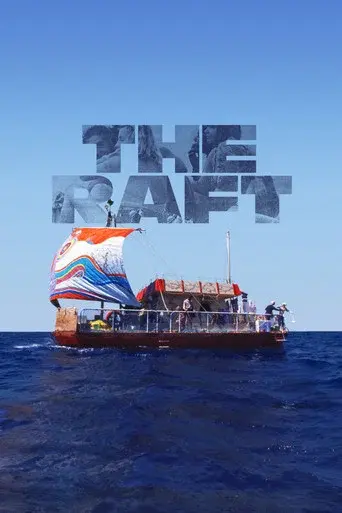
In 1973, five men and six women drifted across the Atlantic on a raft as part of a scientific experiment exploring the origins of violence and sexual attraction. Nobody expected what ultimately took place on that 3-month journey. Through archive material and a reunion of the surviving members of the expedition, this film tells the hidden story of the project.